

Butorides sundevalli
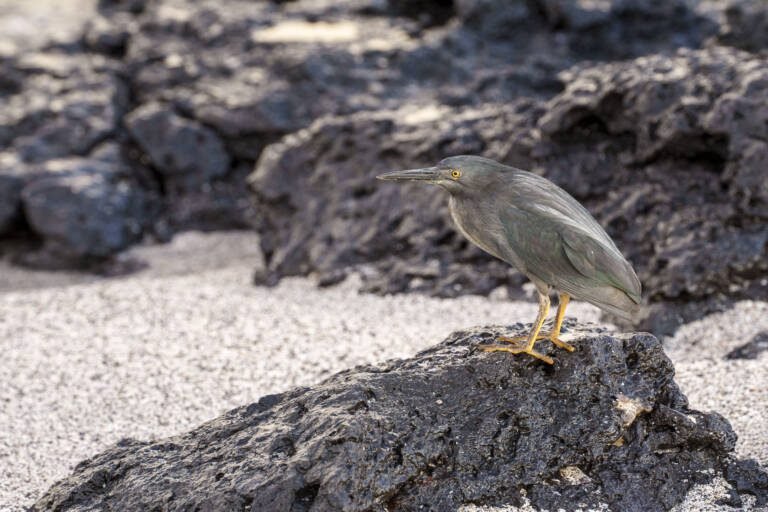
A masterful example of evolutionary camouflage. Unlike most heron species, which tend toward pale or conspicuous plumage, this species has adapted its coloration to blend near-perfectly with volcanic rock substrates.
It possesses short, yellow legs — which become more intensely pigmented during the courtship period — and a long, sharp, dark bill designed to deliver rapid and precise stabbing strikes at prey.
Nests are rudimentary structures built from dry branches and mangrove debris, concealed within lava crevices or among mangrove root systems — providing protection against aerial predators.
Both male and female participate in incubating the clutch — typically 2 to 3 eggs — and in feeding chicks through regurgitation of fish and crustaceans.