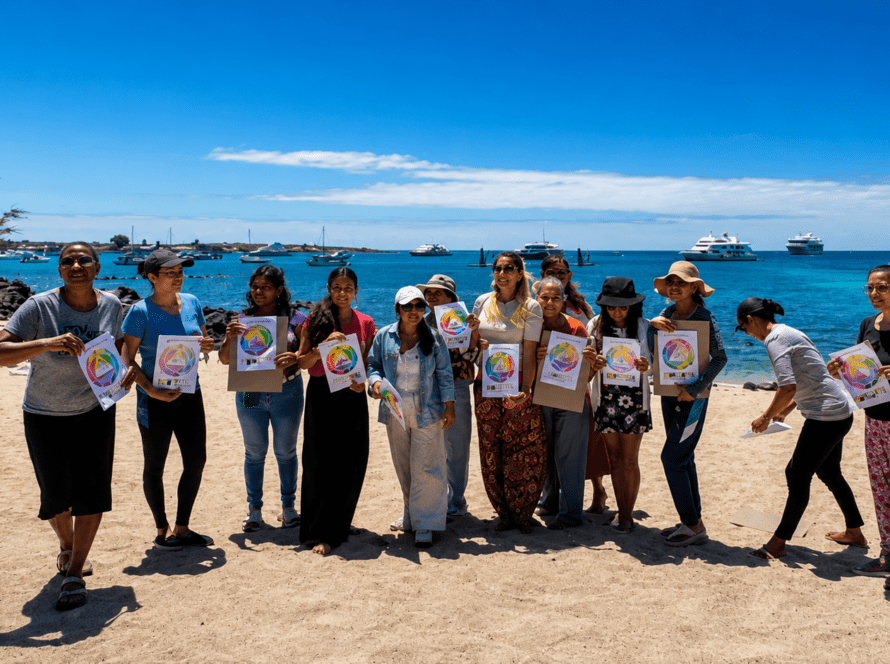


 “I did not know that the law protected my right to a healthy environment. Now I know. And that changes everything.”
— Nancy, Blue Guardian, San Cristóbal
Introduction
Environmental rights are human rights. In Ecuador, the Constitution of 2008 recognized the Rights of Nature for the first time in world history — making Ecuador a global pioneer in environmental law. This module explores what that means for the women of San Cristóbal and how they can use these rights.
What we learned
Rights of Nature:
Articles 71–74 of the Ecuadorian Constitution recognize nature as a subject of rights, including the right to exist, to be maintained, and to regenerate its vital cycles. Any person or community can demand these rights before a court.
Environmental rights of people:
Every Ecuadorian citizen has the constitutional right to live in a healthy and ecologically balanced environment. This right is enforceable.
Special Regime of Galápagos:
The Galápagos Islands are constitutionally protected as a special province. Residency, property ownership, commercial activity, and immigration are all regulated by specific laws designed to protect the ecosystem.
Citizen participation:
Community members have the legal right to participate in environmental decision-making processes that affect their territory, including Environmental Impact Assessments (EIAs) and Management Plan consultations.
How to report:
Illegal fishing, wildlife trafficking, and environmental damage can be reported to the Galápagos National Park Directorate, the Ministry of Environment, or the Public Defender’s Office (Defensoría del Pueblo).
What Science Says
Research on environmental governance confirms that constitutionally embedded environmental rights — when paired with accessible enforcement mechanisms and strong community awareness — produce measurable improvements in conservation outcomes. Ecuador’s constitutional innovation remains a global model studied by legal scholars and conservation scientists worldwide.
Reflect
Did you know these rights existed before this project? How does knowing them change the way you see your role in conserving Galápagos?
Now Do It Yourself
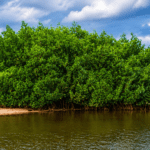
Know your rights — visit the Galápagos National Park website and familiarize yourself with the regulations that protect your territory.
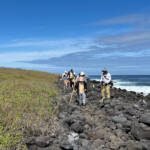
Practice responsible reporting — if you observe something that could be an environmental violation, remember: photograph it, geotag it, and report it to the relevant authority.

References
Asamblea Nacional del Ecuador. (2008). Constitución de la República del Ecuador. Derechos de la naturaleza, artículos 71-74. https://asambleanacional.gob.ec
Asamblea Nacional del Ecuador. (2014). Código Orgánico Integral Penal — COIP. Artículo 247. Delitos contra el ambiente.
Bennett, N. J., Katz, L., Yadao-Evans, W., Ahmadia, G. N., Atkinson, S., Ban, N. C., & Gill, D. (2021). Advancing social equity in and through marine conservation. Frontiers in Marine Science, 8. https://doi.org/10.3389/fmars.2021.694
López, C. (2025). Informe narrativo — Taller de empoderamiento jurídico y derecho ambiental. Proyecto Guardianas Azules.
Martínez, E. (2026). Taller de mecanismos legales y movilización comunitaria. Acción Ecológica — Proyecto Guardianas Azules.
Ministerio del Ambiente del Ecuador. (2017). Código Orgánico del Ambiente.
Naciones Unidas. (2015). Agenda 2030 para el Desarrollo Sostenible. Objetivos de Desarrollo Sostenible 14 y 16. https://sdgs.un.org
Parque Nacional Galápagos. (2024). Normas y regulaciones de la Reserva Marina de Galápagos. https://galapagos.gob.ec
Registro Oficial. (2015). Ley Orgánica de Régimen Especial de Galápagos. Infracciones ambientales, artículos 91, 92 y 93.