

Myiarchus magnirostris
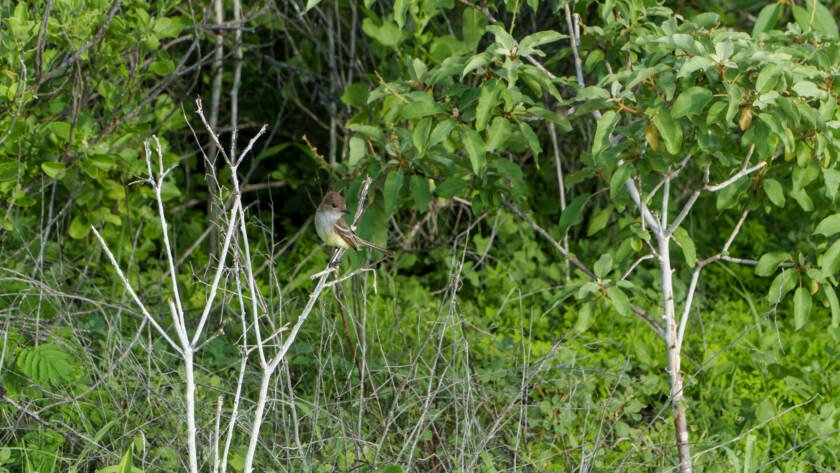
The species possesses a broad-based bill equipped with rictal bristles — tactile feather-like structures resembling whiskers — which aid in detecting and capturing invertebrate prey in flight.
Its plumage is predominantly olive-brown on the upperparts, with a pale yellow underside. This cryptic coloration provides effective camouflage among the branches of palo santo forests and mangroves.
The species employs a classic “sit-and-wait” foraging strategy: it remains stationary on an elevated perch, scanning its surroundings, and upon detecting prey, launches into a rapid aerial pursuit to capture it mid-flight or glean it directly from foliage.
Its primary diet consists of insects — including beetles, flies, and caterpillars. During periods of extreme drought, dietary plasticity has been documented, with individuals supplementing their nutritional intake with small seeds and fruit remnants.