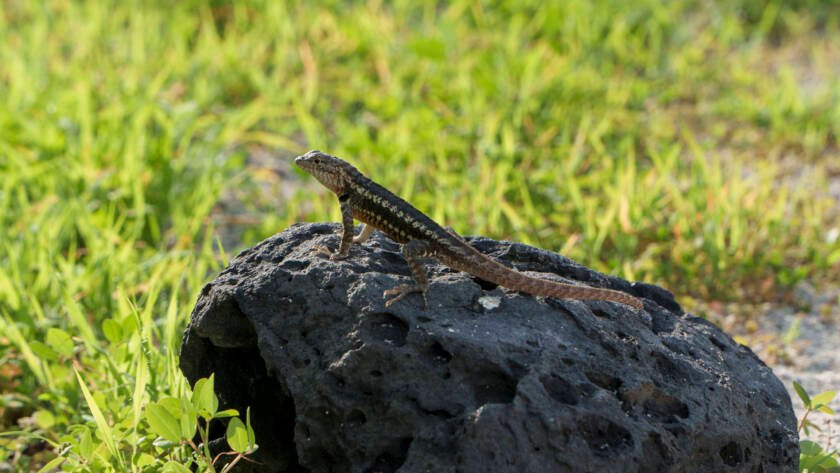


Microlophus bivittatus
One of the clearest examples of adaptive radiation in the Galápagos Islands.
The body is slender with a long tail. The scales are structured to reflect a portion of solar radiation, providing protection against the extreme heat of volcanic rock surfaces.
Males tend to display darker coloration with spotted or striped patterns for camouflage. Females develop a strikingly vibrant red to orange throat and face during the breeding season, signaling reproductive readiness.
Males defend territories through a stereotyped series of push-up displays performed with the forelimbs. As a defense mechanism, individuals can autotomize — voluntarily shedding — their tail when seized by a predator.