

Ipomoea pes-caprae
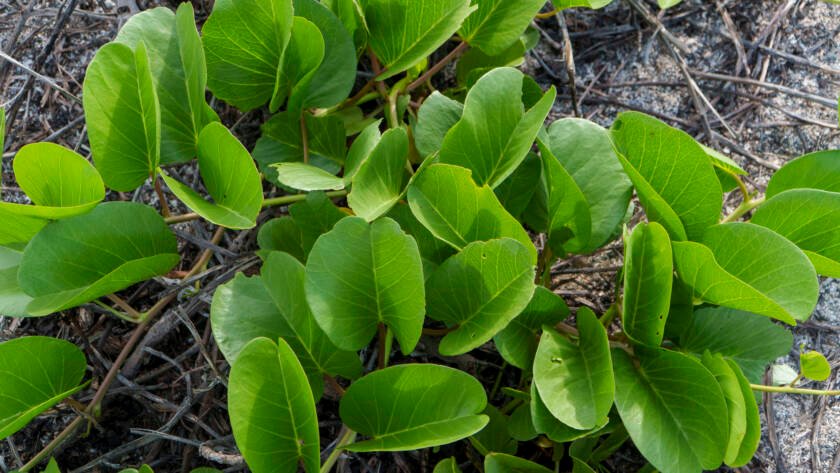
The leaves are thick and coriaceous — leather-like in texture — an adaptation for water retention in environments of intense solar radiation and high salinity. They bear a deep apical notch that gives them the appearance of a cloven hoof print, the origin of the specific epithet pes-caprae (Latin for ‘goat’s foot’).
Rather than growing upright, the plant develops prostrate stems — stolons — that can extend more than 30 meters across the sand, creating a network that stabilizes loose sand substrate.
The species produces funnel to bell-shaped flowers of vibrant purple to pink coloration that open at dawn and close or wither before sunset — a strategy to conserve moisture during the hottest hours of the day.