360° tour · accessible version

La Lobería: accessible 360° tour (text version)

Explore La Lobería in 360°: a sea lion colony with marine iguanas and green sea turtles on San Cristóbal, Galápagos. 10 scenes with wildlife and plant guides.

This page presents all the content of the 360° tour as text, images and links, for use with a screen reader or keyboard.

10 scenes · 44 points of interest

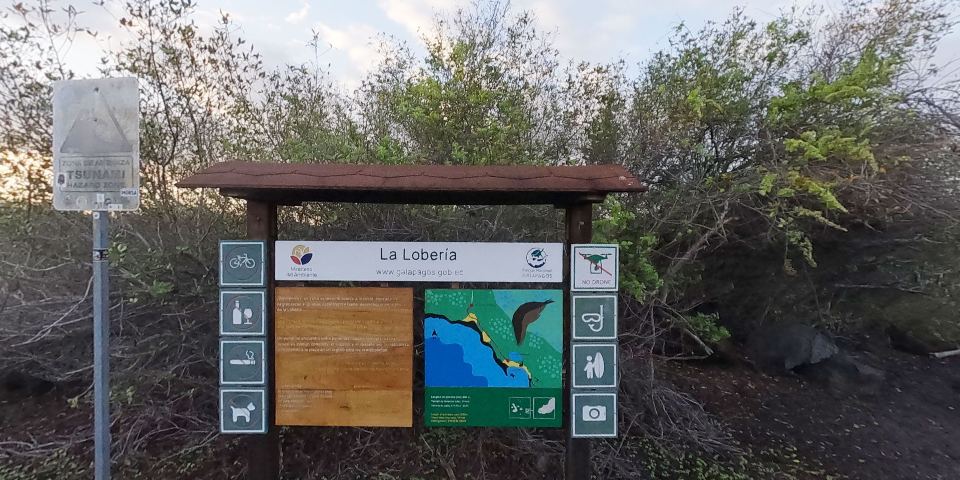
Scene 1Entrance sign to La Lobería

Immersive 360-degree image showing the entrance sign to La Lobería. A point of interest to begin the tour toward the beach can also be seen.

Points of interest

TextLa Lobería

La Lobería, on San Cristóbal Island in Galápagos, is a stunning coral sand beach famous for hosting a large colony of playful sea lions. It is an ideal spot for snorkeling, surfing, and wildlife observation, including large marine iguanas, sea turtles, and blue-footed boobies on its cliffs.
From here you can go to

Back to the list of scenes

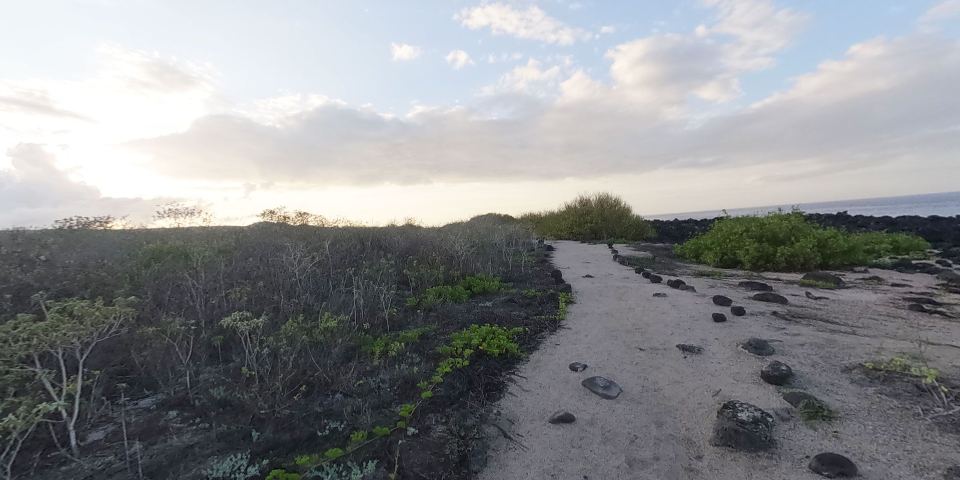
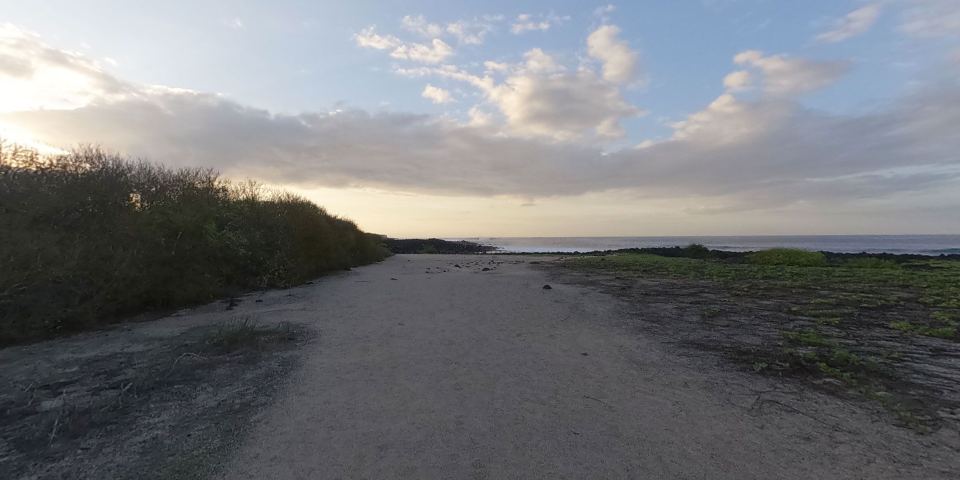
Scene 2Trail leading to Lobería Beach

Immersive 360-degree image showing the trail leading to Lobería Beach, in an area with sand, rocks, and vegetation. Points of interest about local plant species can be seen.

Points of interest

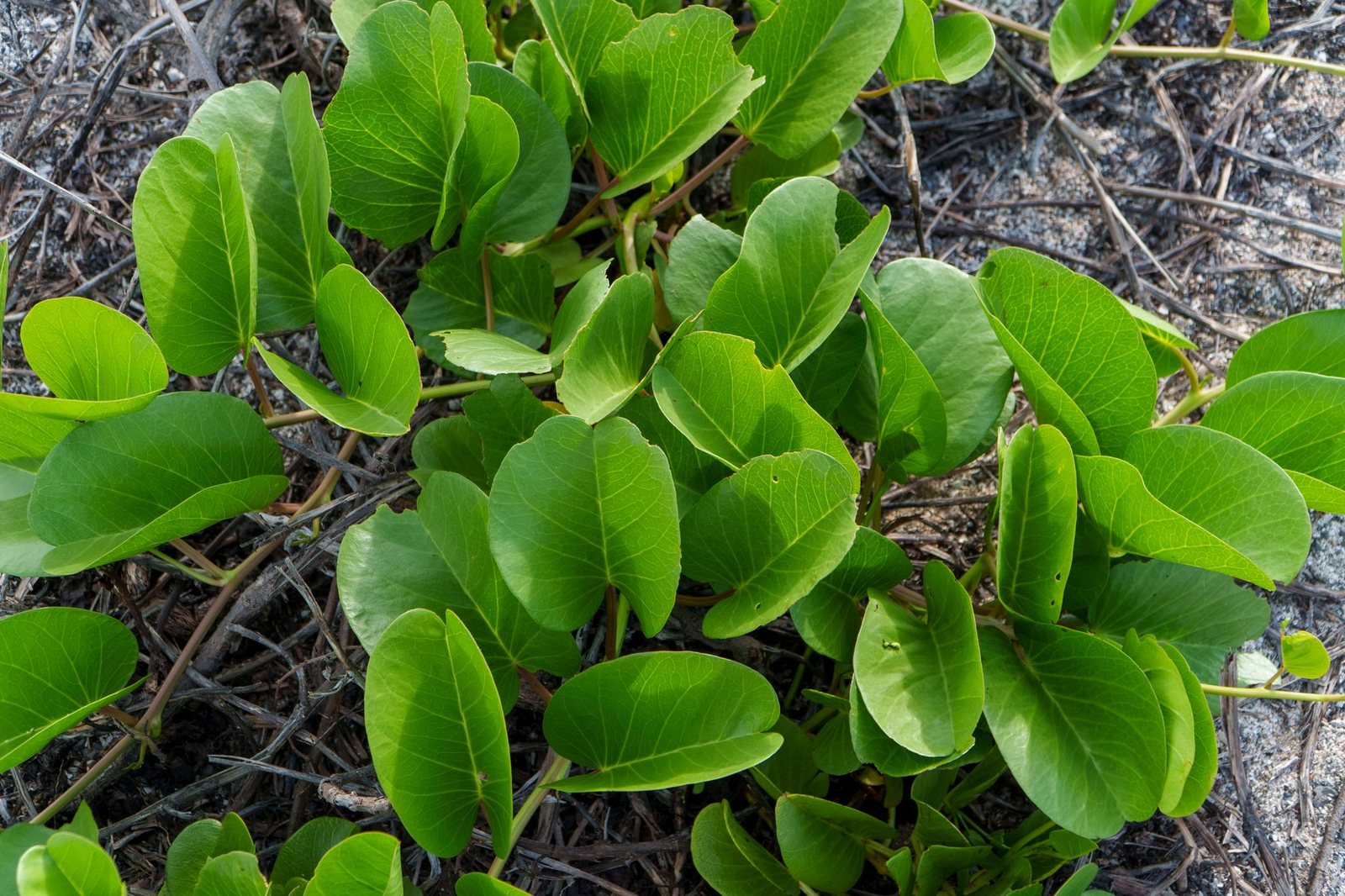
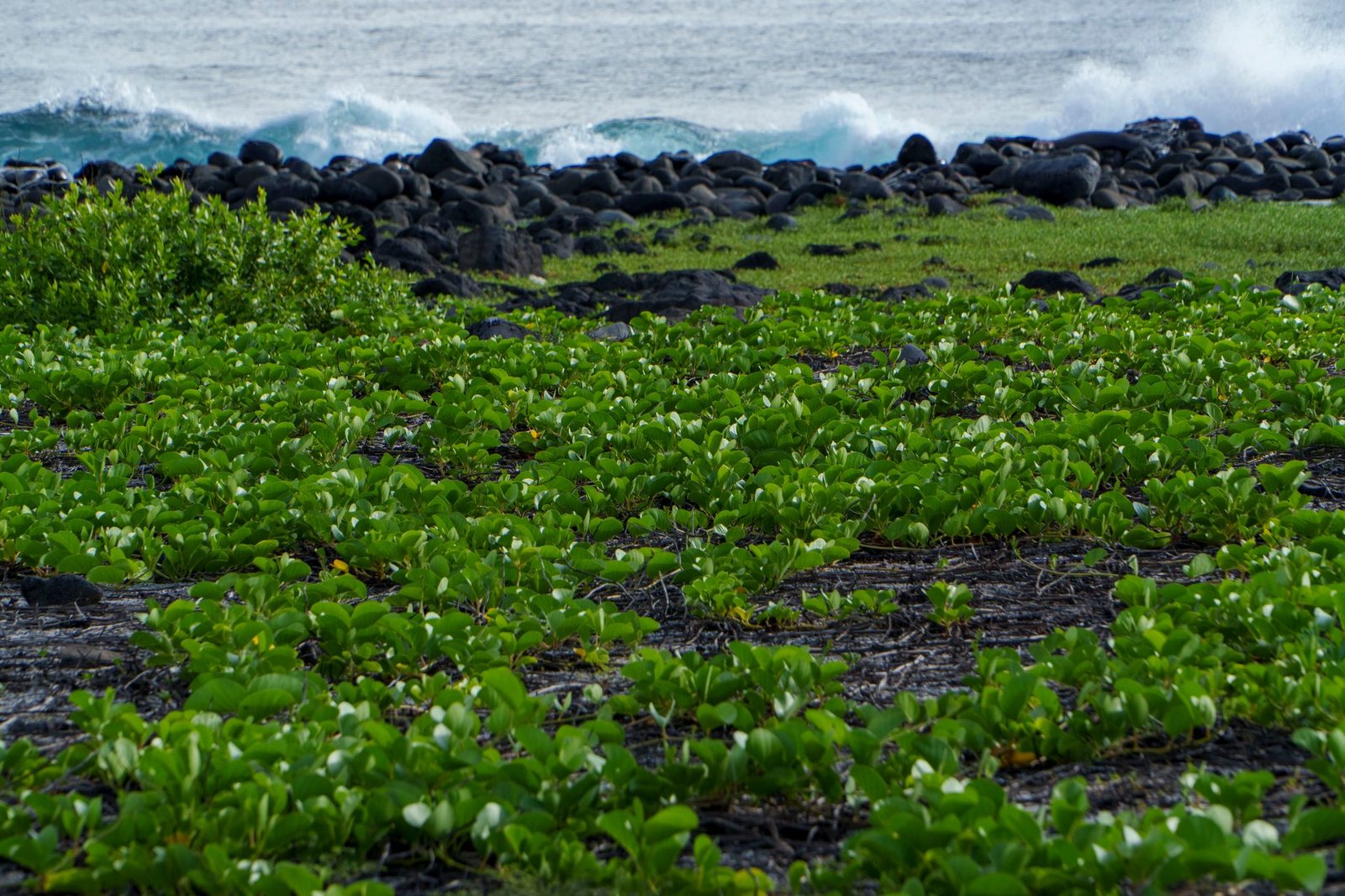
PhotoBeach Morning Glory

Beach Morning Glory ("Ipomoea pes-caprae") - Its leaves are simple, alternate, and leather-like in texture. Their most distinctive feature is a deeply notched tip, giving them a shape resembling a goat's hoof print — hence the specific epithet pes-caprae.

TextCoastal ecosystem

A transition zone between the terrestrial and marine environments, characterized by its biodiversity and dynamism. It includes beaches, mangroves, dunes, and rocky areas, where tides, wind, and salinity interact. These ecosystems harbor a wide variety of plant and animal species adapted to changing conditions, and perform key functions such as erosion protection, climate regulation, nutrient recycling, and supporting human activities such as fishing and tourism.

PhotoBeach Morning Glory leaf

The leaves of beach morning glory are thick, glossy, and resistant to salinity. Their characteristic shape recalls a goat's hoof print, which inspired its scientific name.

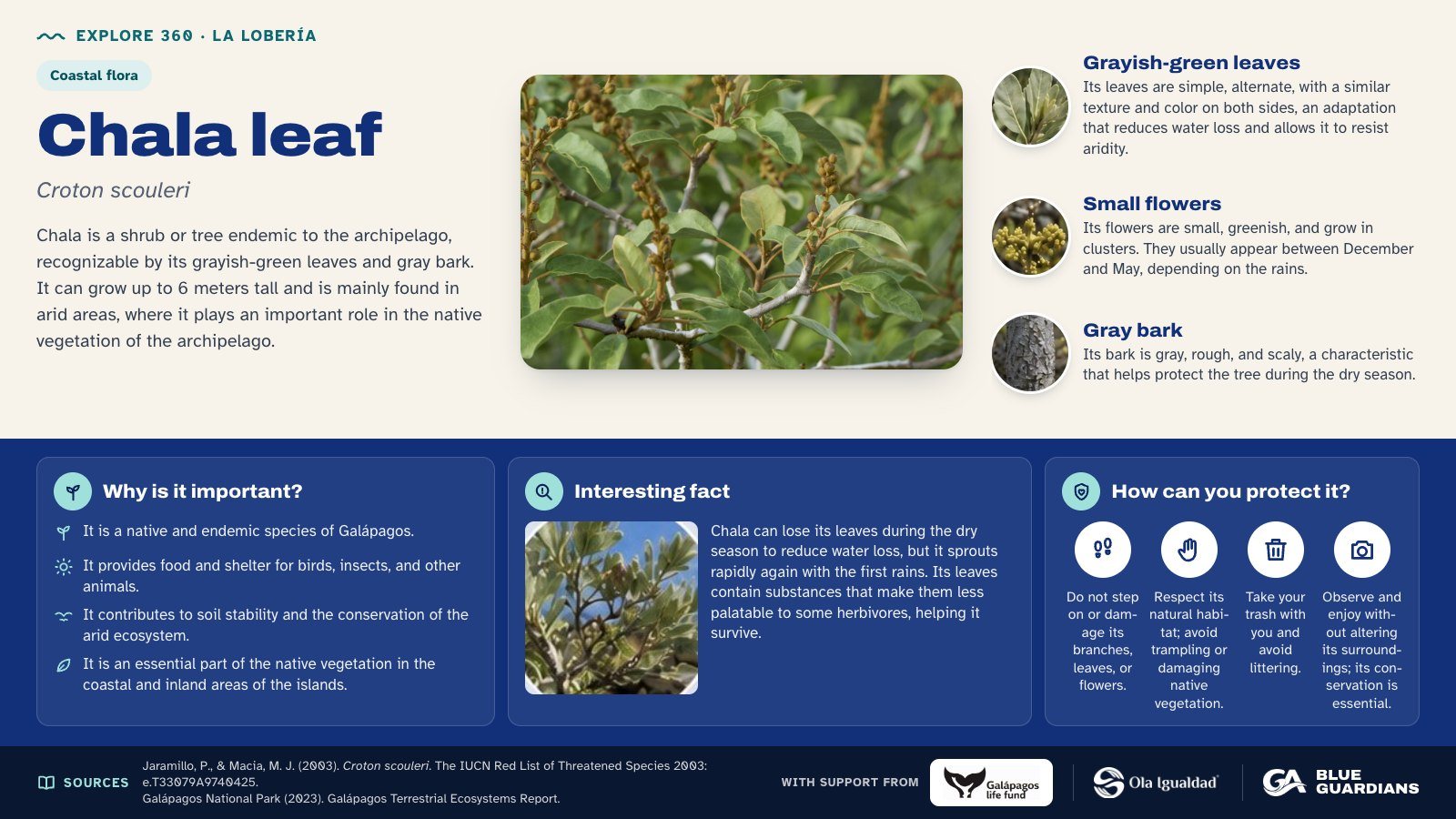
InfographicChala leaf

Infographic about Chala leaf (Croton scouleri): grayish-green leaves, small flowers and gray bark. Also covers: why is it important, interesting fact and how can you protect it.

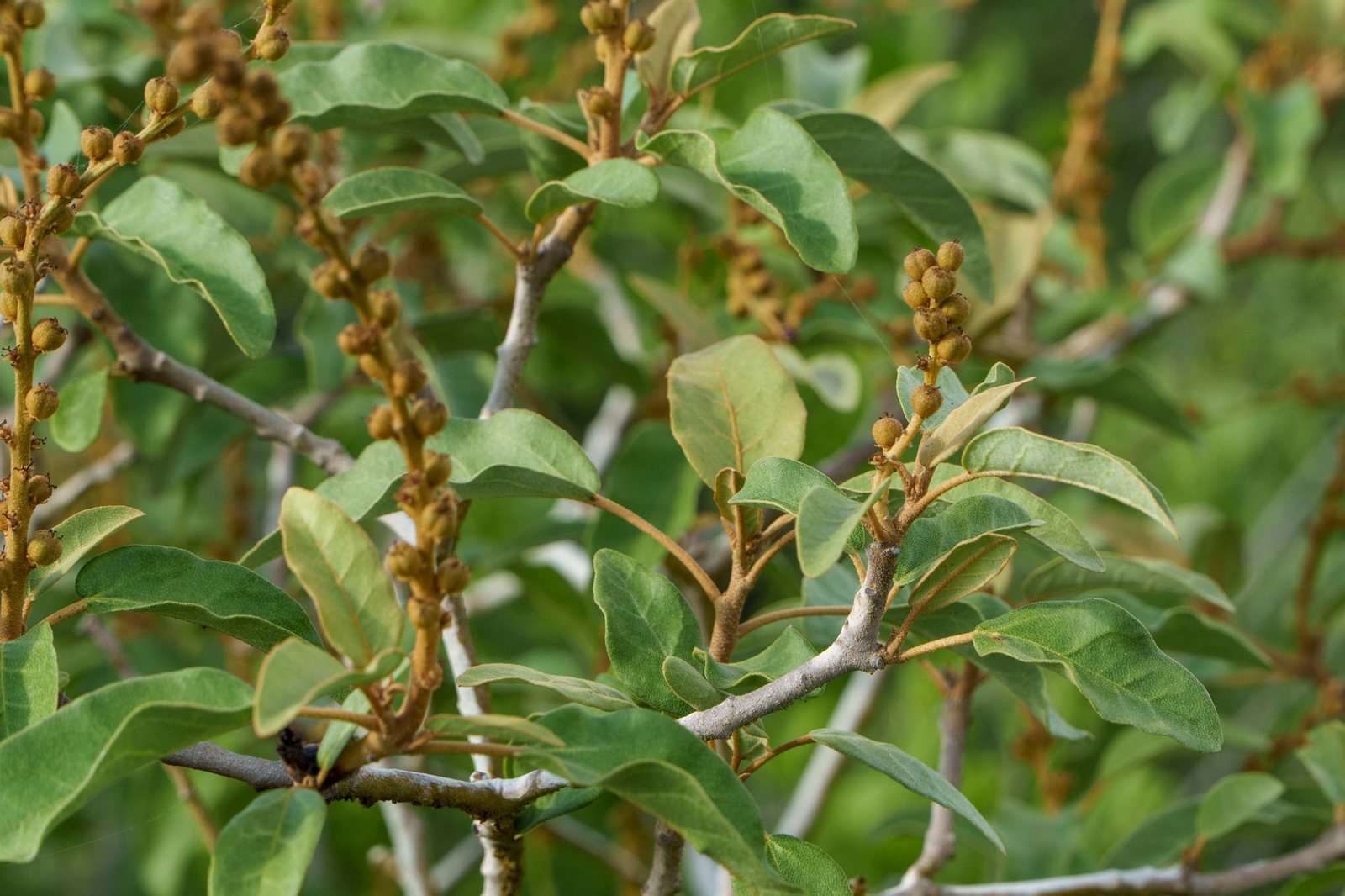
PhotoChala

Chala ("Croton scouleri") - A shrubby plant endemic to Galápagos, adapted to arid zones, tolerating drought and poor soils. It plays an important role in terrestrial ecosystems as shelter and soil protection.
From here you can go to

Back to the list of scenes

Scene 3Continuing the route toward Lobería

Immersive 360-degree image continuing the route toward Lobería. In this section, points of interest about animal species can be seen, while the sea is visible to one side.

Points of interest

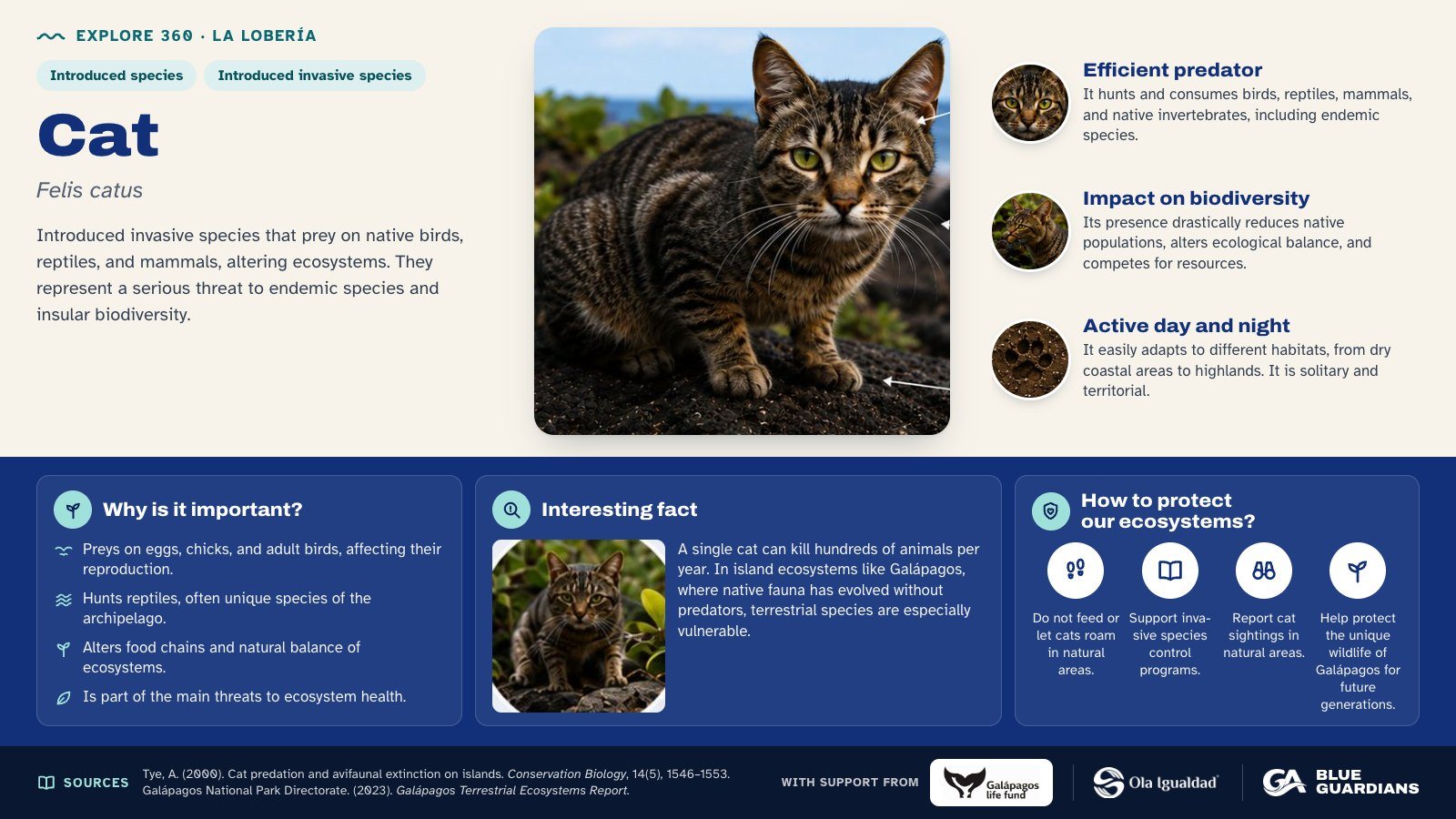
InfographicFeral cat

Infographic about Cat (Felis catus): efficient predator, impact on biodiversity and active day and night. Also covers: why is it important, interesting fact and how to protect our ecosystems.

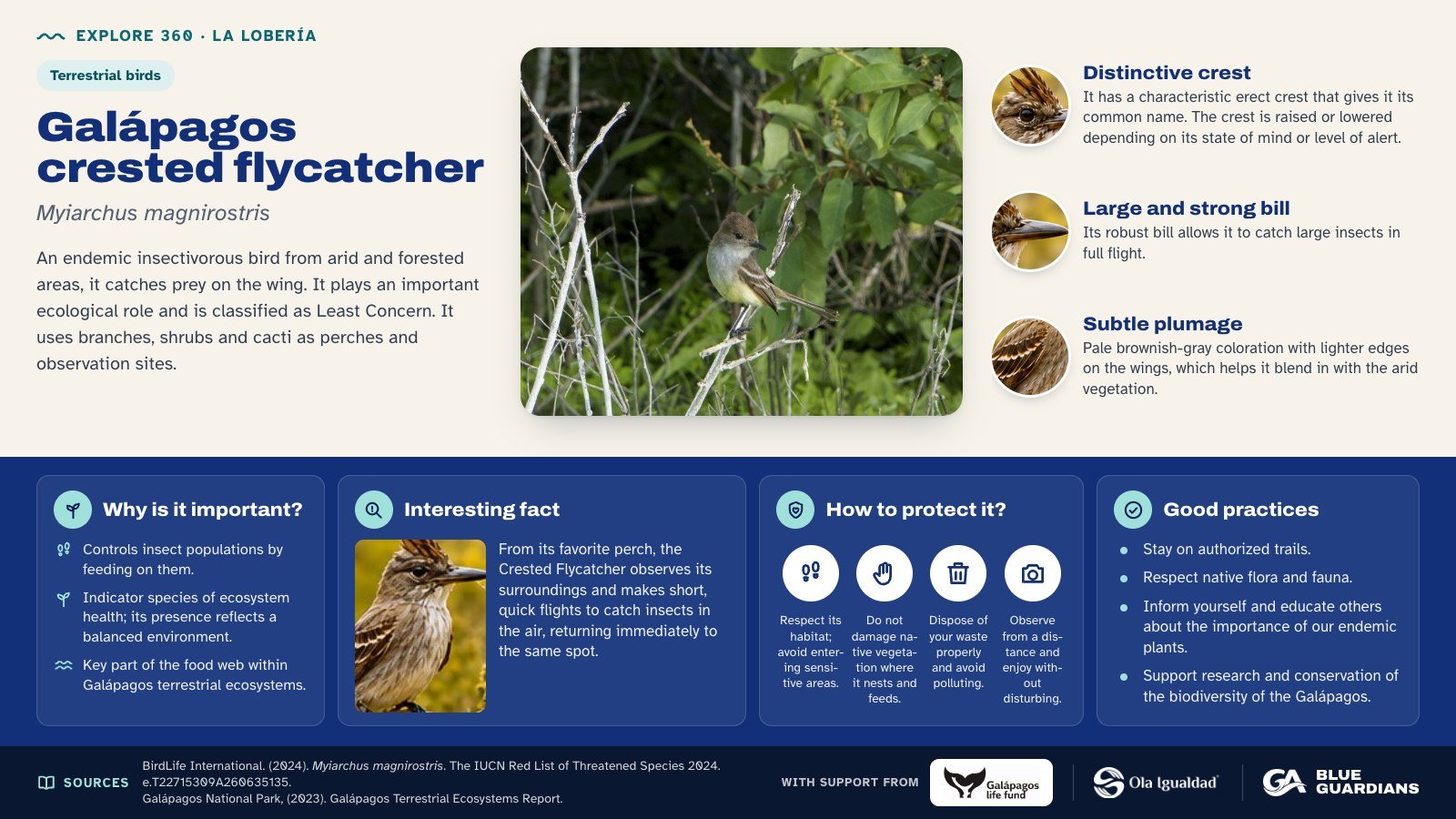
InfographicGalápagos crested flycatcher

Infographic about Galápagos crested flycatcher (Myiarchus magnirostris): distinctive crest, large and strong bill and subtle plumage. Also covers: why is it important, interesting fact, how to protect it and good practices.

From here you can go to

Back to the list of scenes

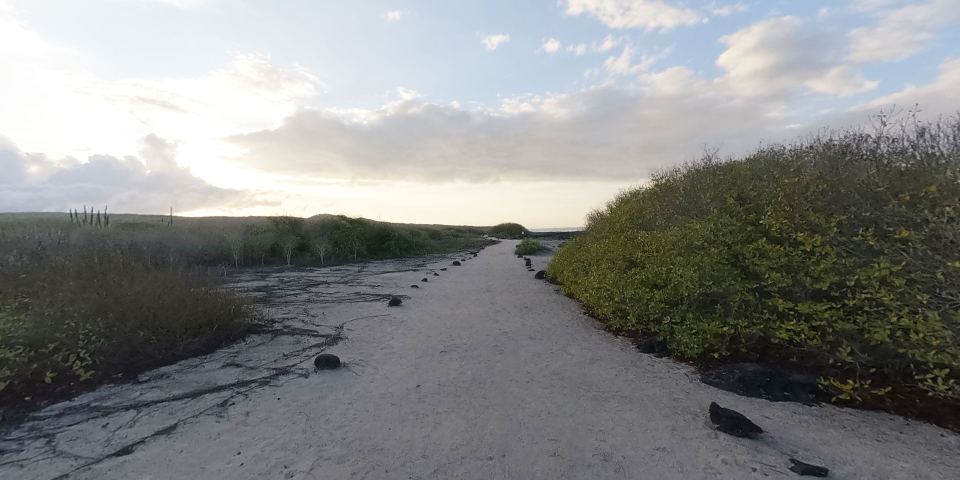
Scene 4Trail toward Lobería Beach

Immersive 360-degree image showing the trail toward Lobería Beach. In this area, the sandy path is marked by several rocks. Points of interest about flora and fauna can be seen.

Points of interest

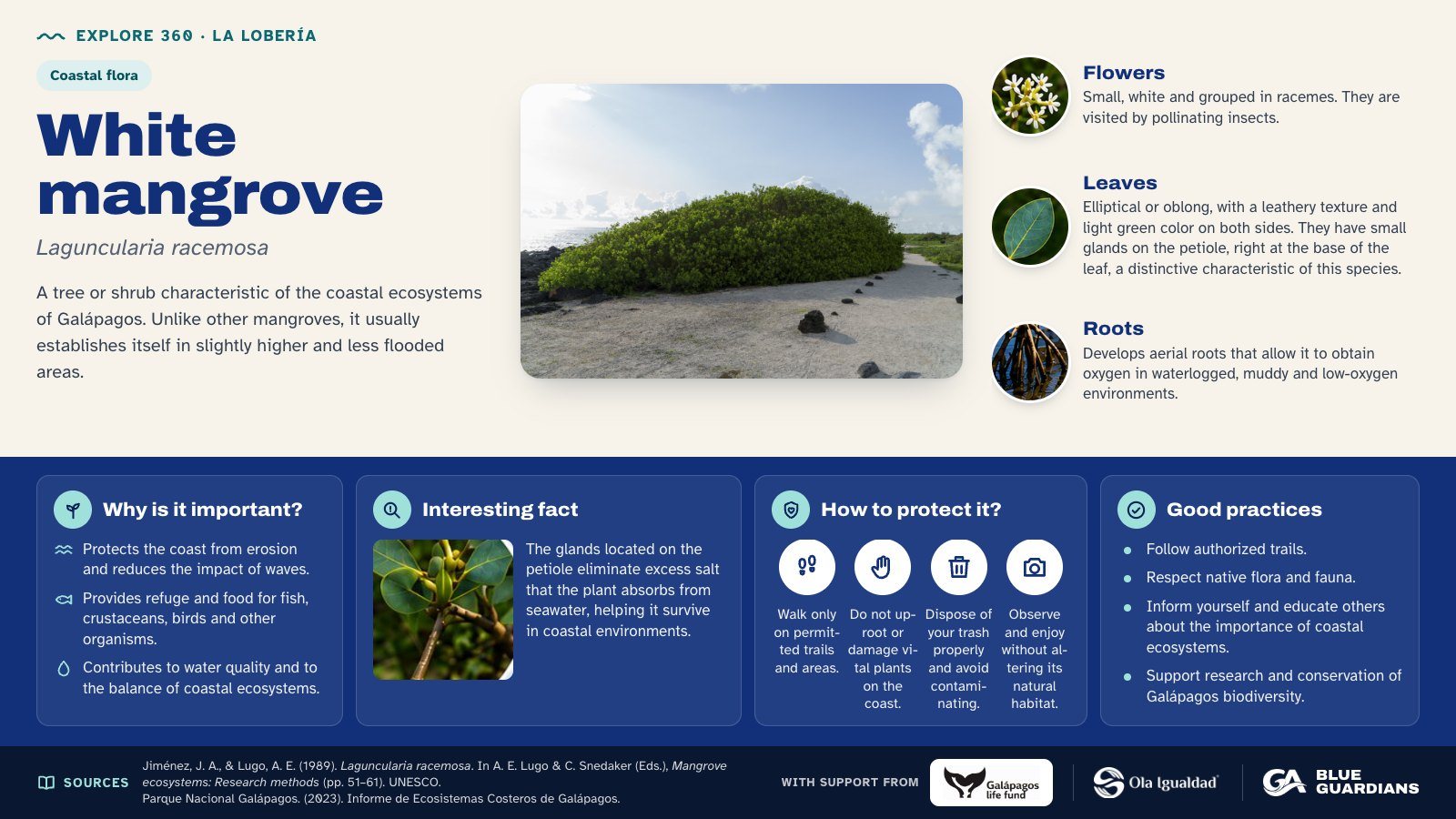
InfographicWhite mangrove

Infographic about White mangrove (Laguncularia racemosa): flowers, leaves and roots. Also covers: why is it important, interesting fact, how to protect it and good practices.

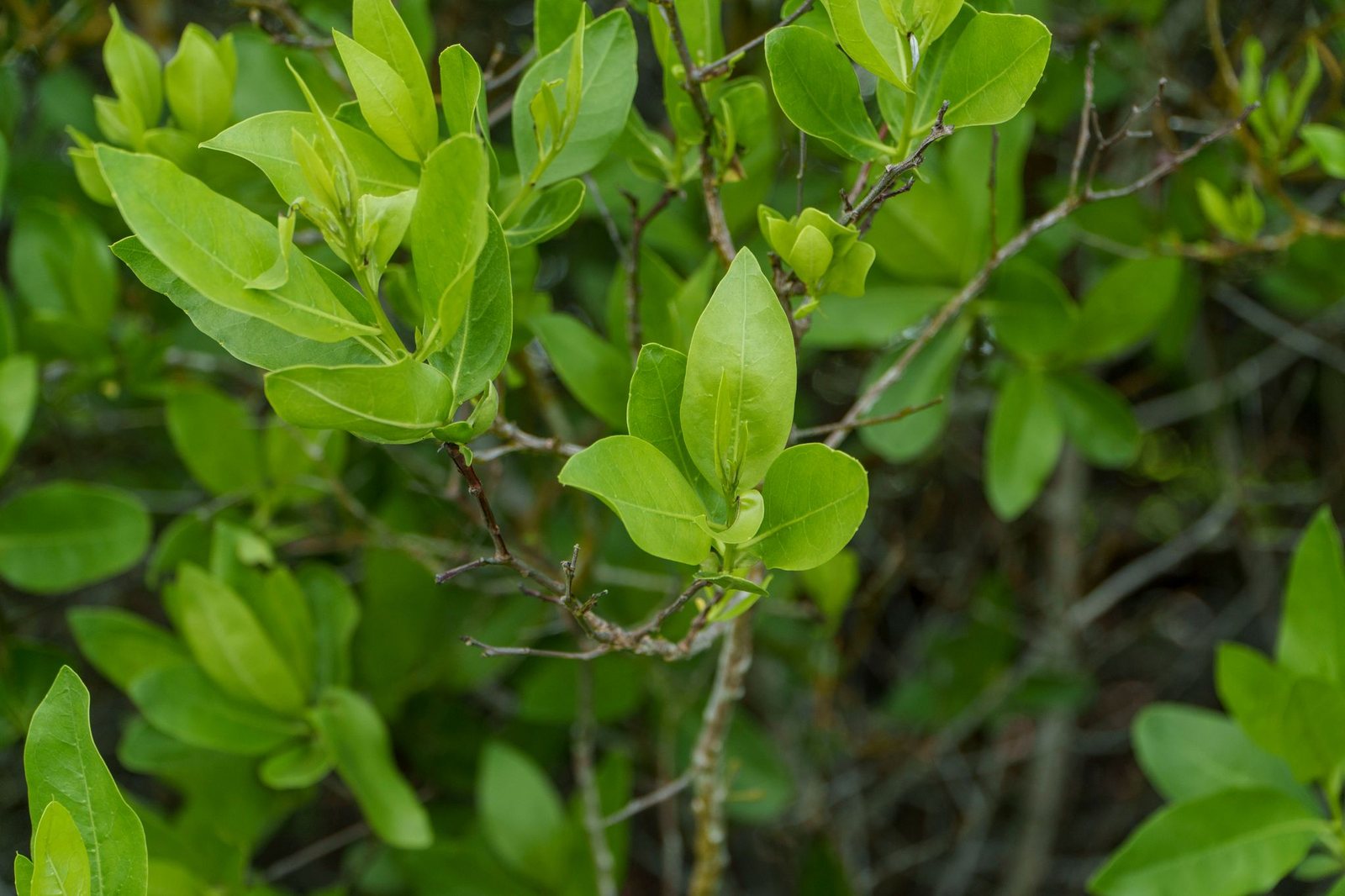
PhotoWhite mangrove leaf

Elliptical to oblong in shape, with a fleshy texture and light green color on both sides. A key feature is the two glands located on the petiole, right at the base of the leaf.

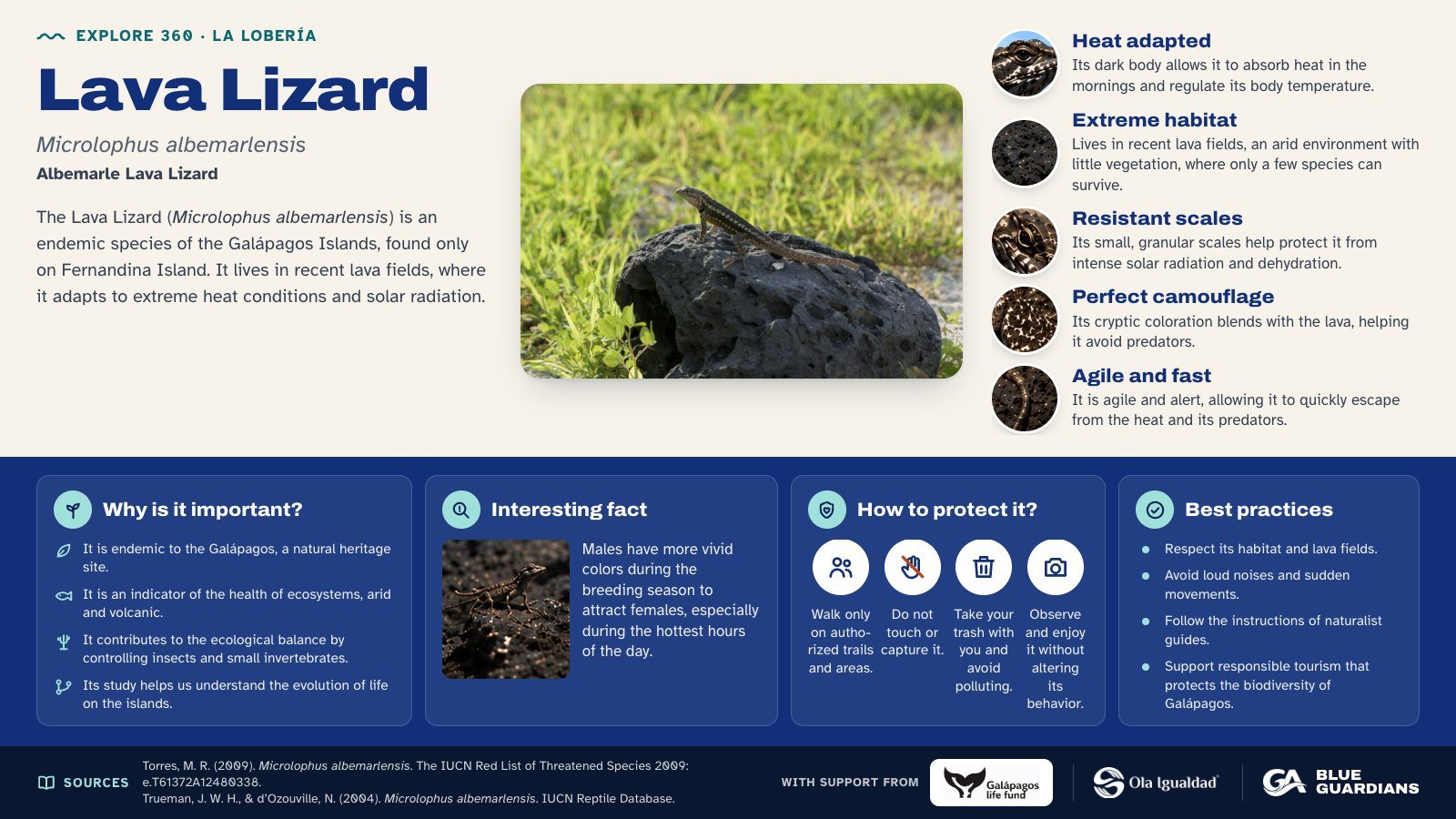
InfographicLava lizard

Infographic about Lava Lizard (Microlophus bivittatus): heat adapted, extreme habitat, resistant scales, perfect camouflage and agile and fast. Also covers: why is it important, interesting fact, how to protect it and best practices.

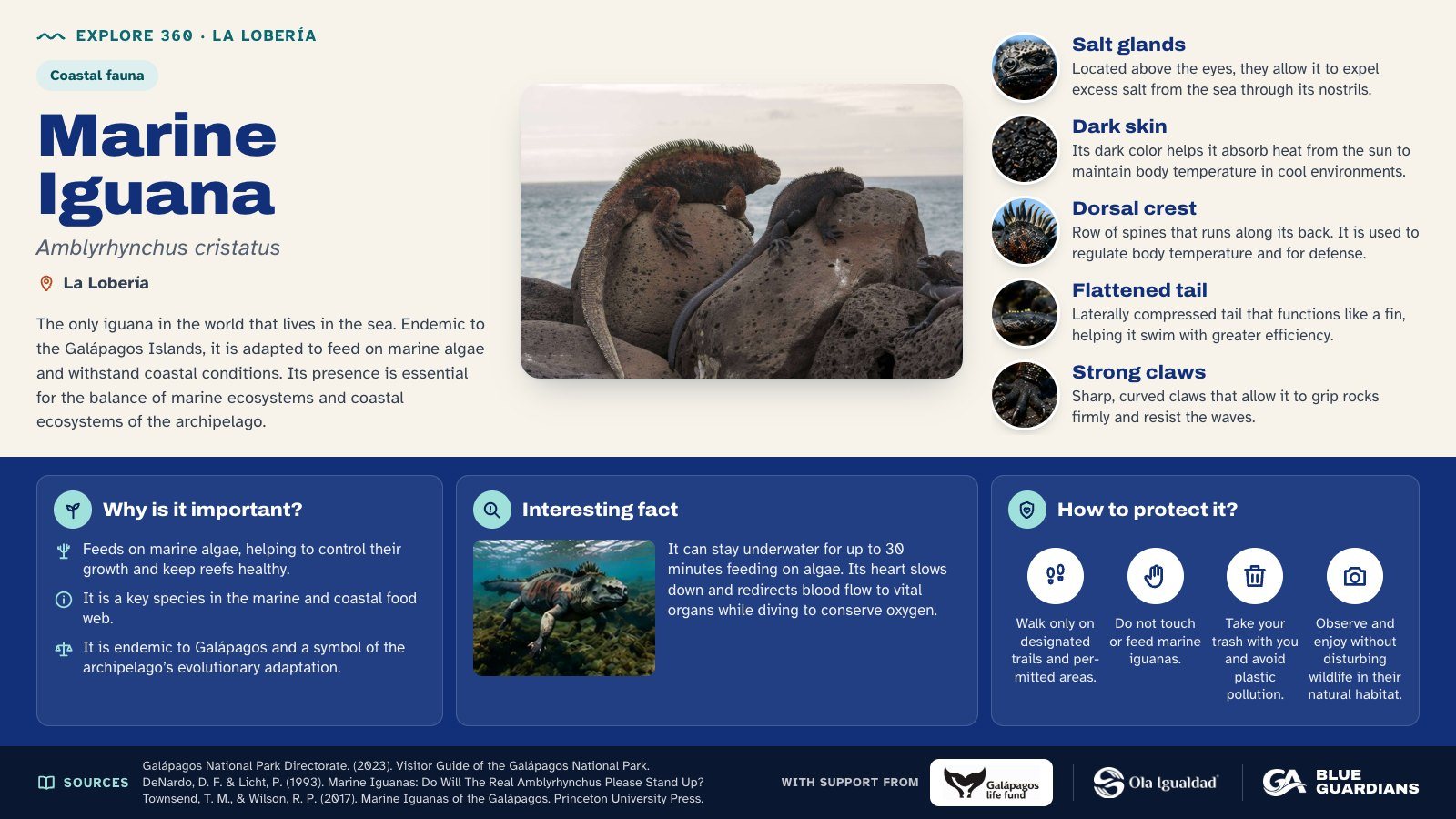
InfographicMarine Iguana

Infographic about Marine Iguana (Amblyrhynchus cristatus): salt glands, dark skin, dorsal crest, flattened tail and strong claws. Also covers: why is it important, interesting fact and how to protect it.

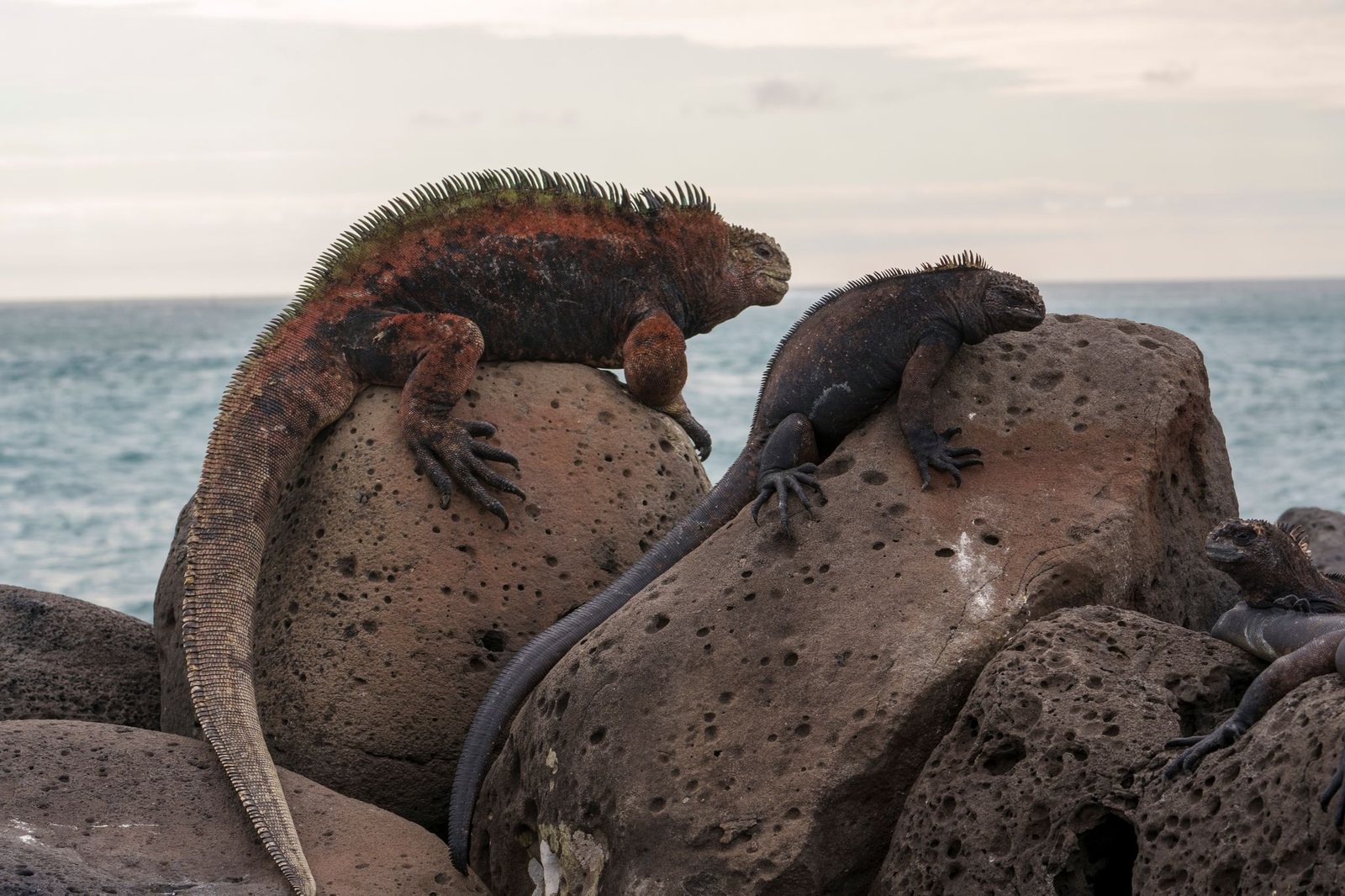
PhotoMarine Iguana

A marine lizard endemic to Galápagos that feeds on algae. It dives in cold waters and has adaptations for swimming and salt excretion, connecting marine and terrestrial ecosystems along rocky shores and volcanic beaches.

From here you can go to

Back to the list of scenes

Scene 5Entrance to Lobería Beach

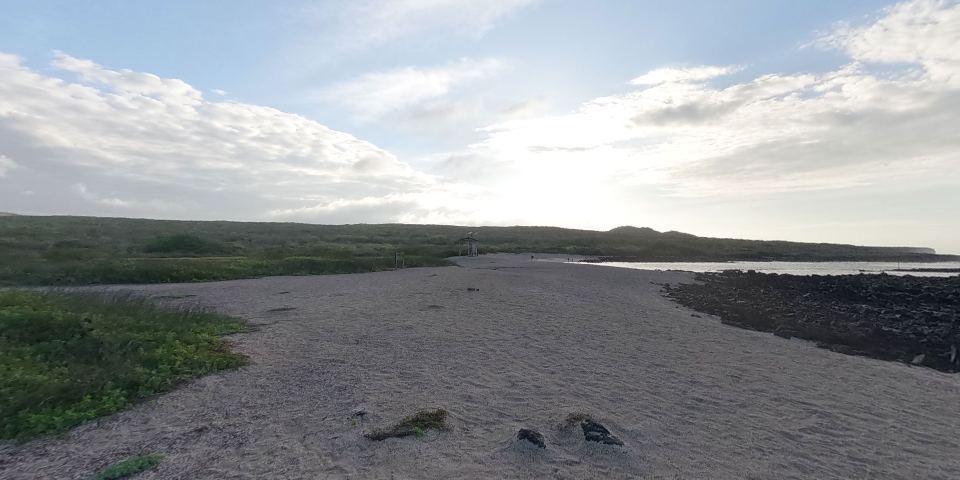
Immersive 360-degree image showing the entrance to Lobería Beach. In this section, points of interest about animal species can be seen. A rocky area next to the beach can also be observed.

Points of interest

TextEcosistema marino

This Galápagos ecosystem, with shallow waters and high biodiversity, is fed by nutrient-rich currents that favour algae and phytoplankton, sustaining fish, invertebrates, turtles and sea lions. The rocky and intertidal zones serve as shelter and nursery, essential for the ecological balance.

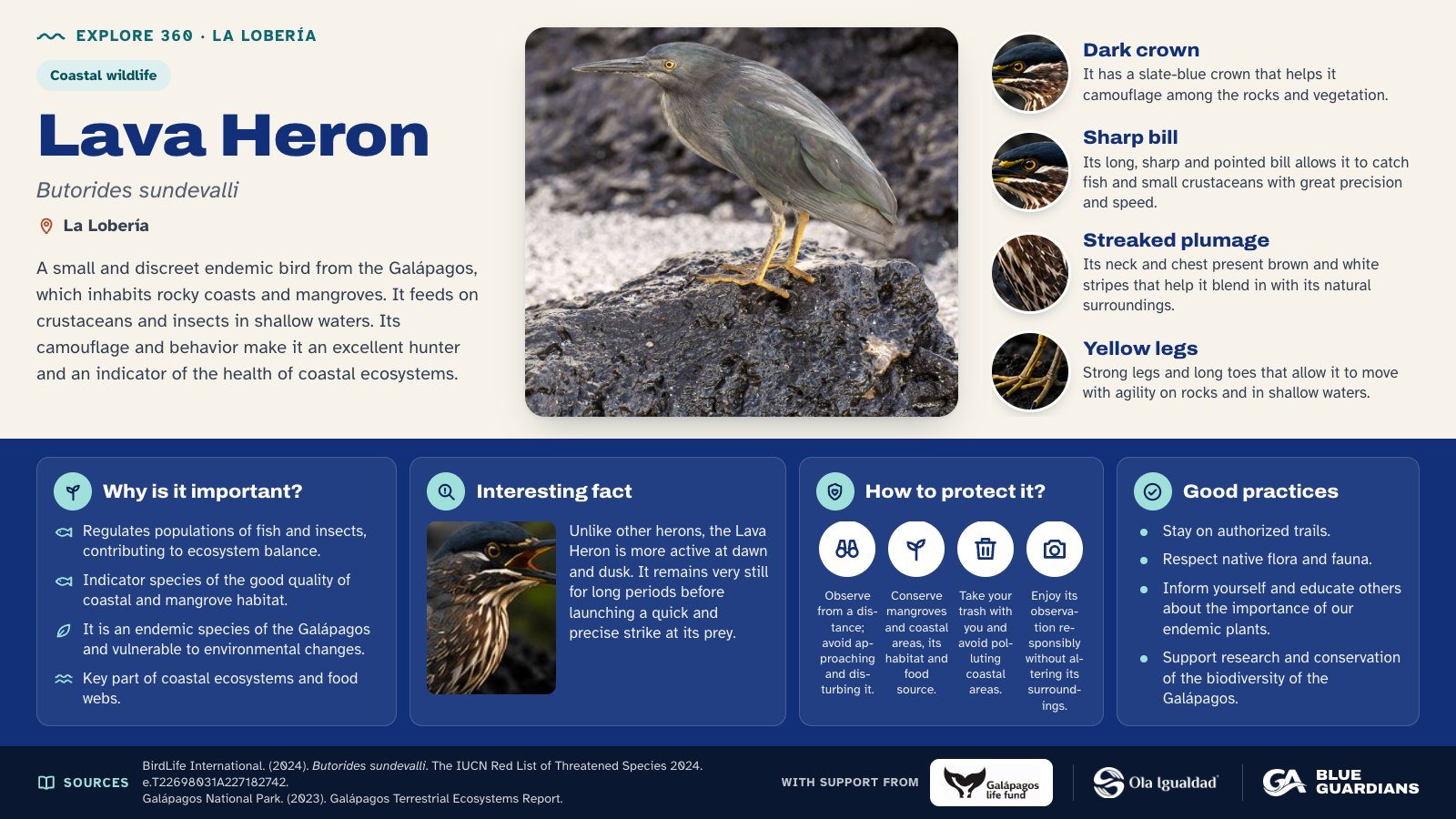
InfographicLava heron

Infographic about Lava Heron (Butorides sundevalli): dark crown, sharp bill, streaked plumage and yellow legs. Also covers: why is it important, interesting fact, how to protect it and good practices.

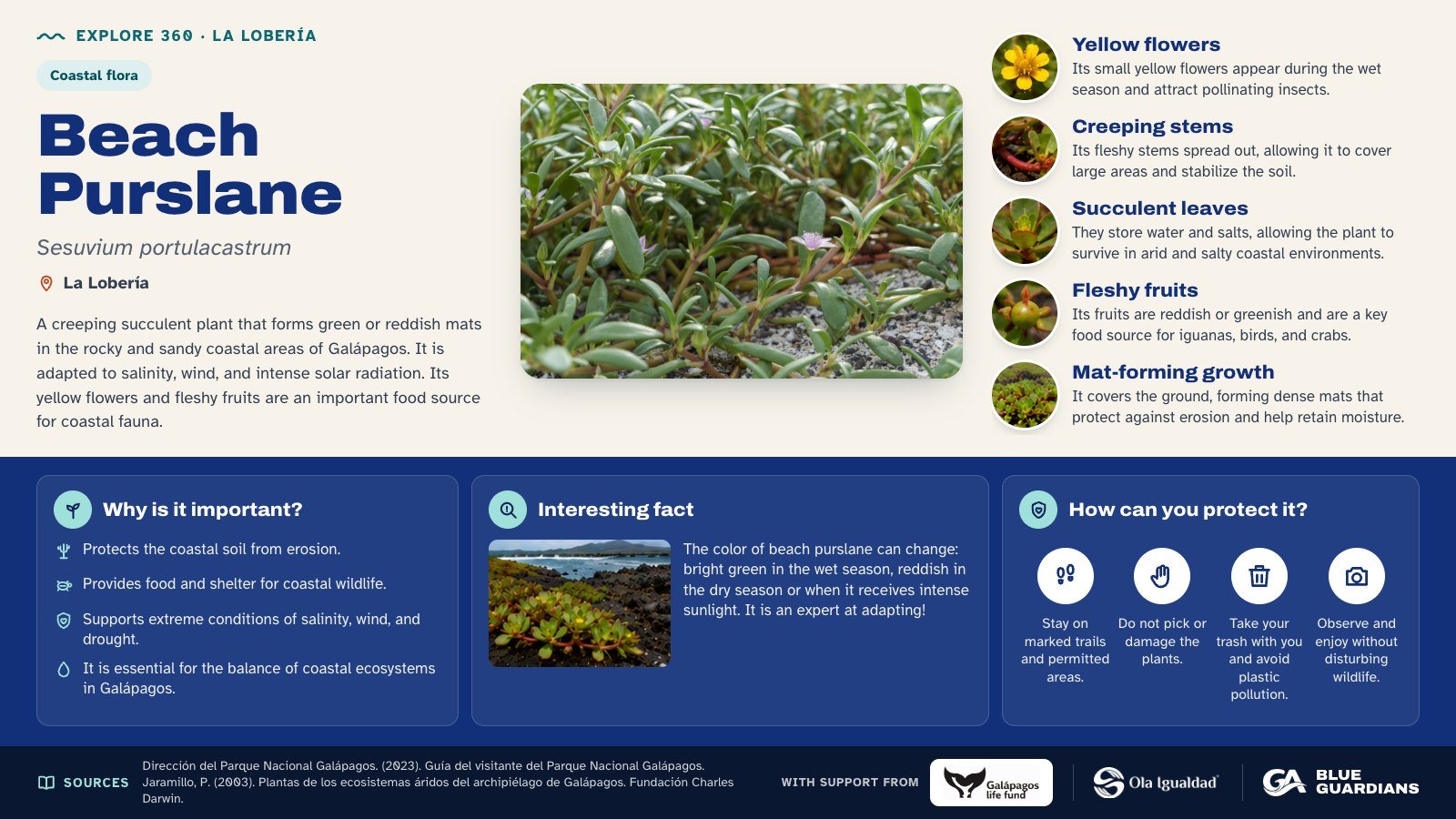
InfographicBeach purslane

Infographic about Beach Purslane (Sesuvium portulacastrum): yellow flowers, creeping stems, succulent leaves, fleshy fruits and mat-forming growth. Also covers: why is it important, interesting fact and how can you protect it.

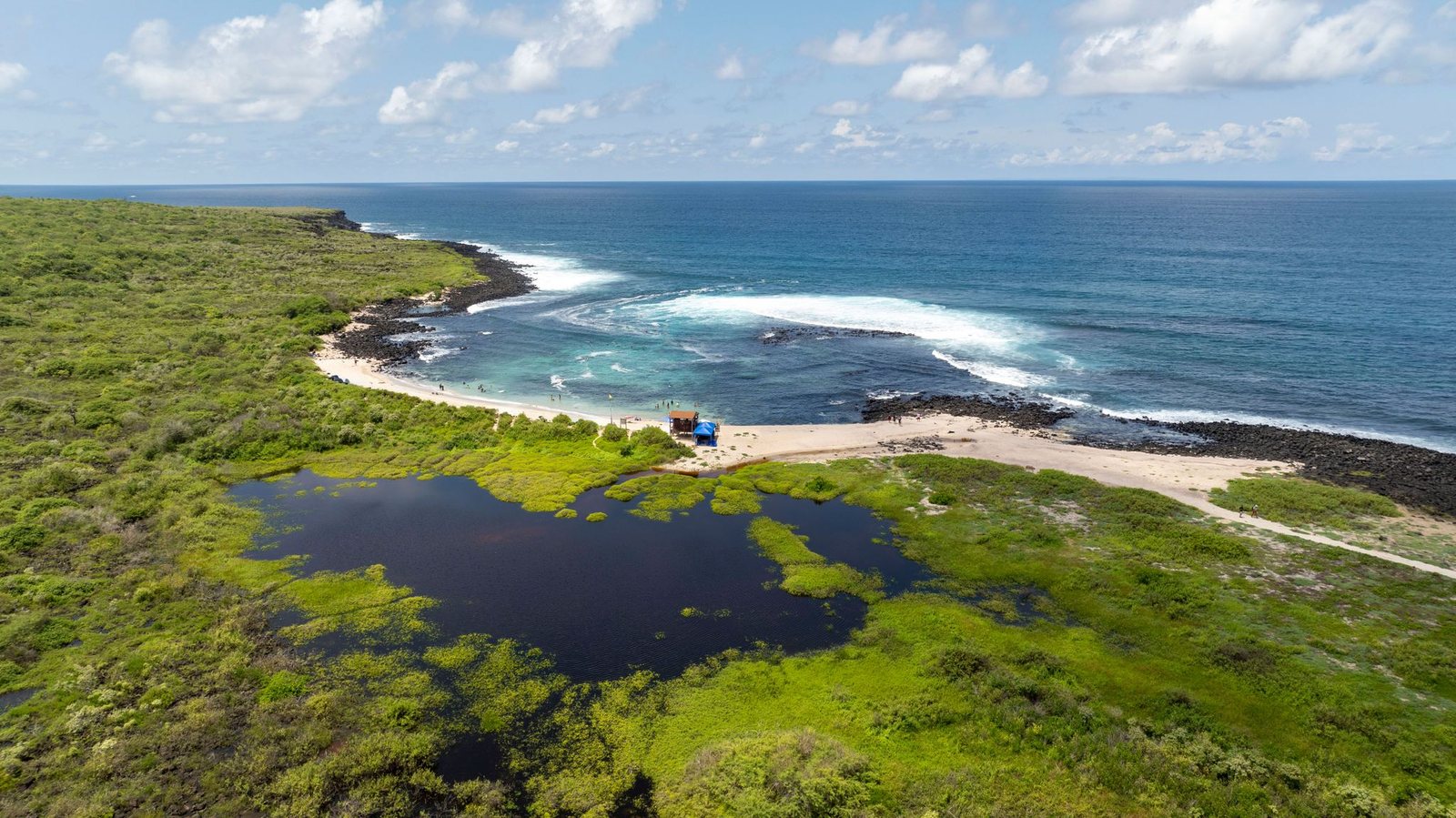
PhotoLa Lobería pool

The small lagoon that forms near the beach after rainfall results from water accumulating in low-lying areas where sand acts as a natural barrier, slowing drainage toward the sea. Soil saturation and a high water table also prevent absorption, forming temporary bodies of water that can last hours or days depending on evaporation and filtration rates.

PhotoSally Lightfoot Crab

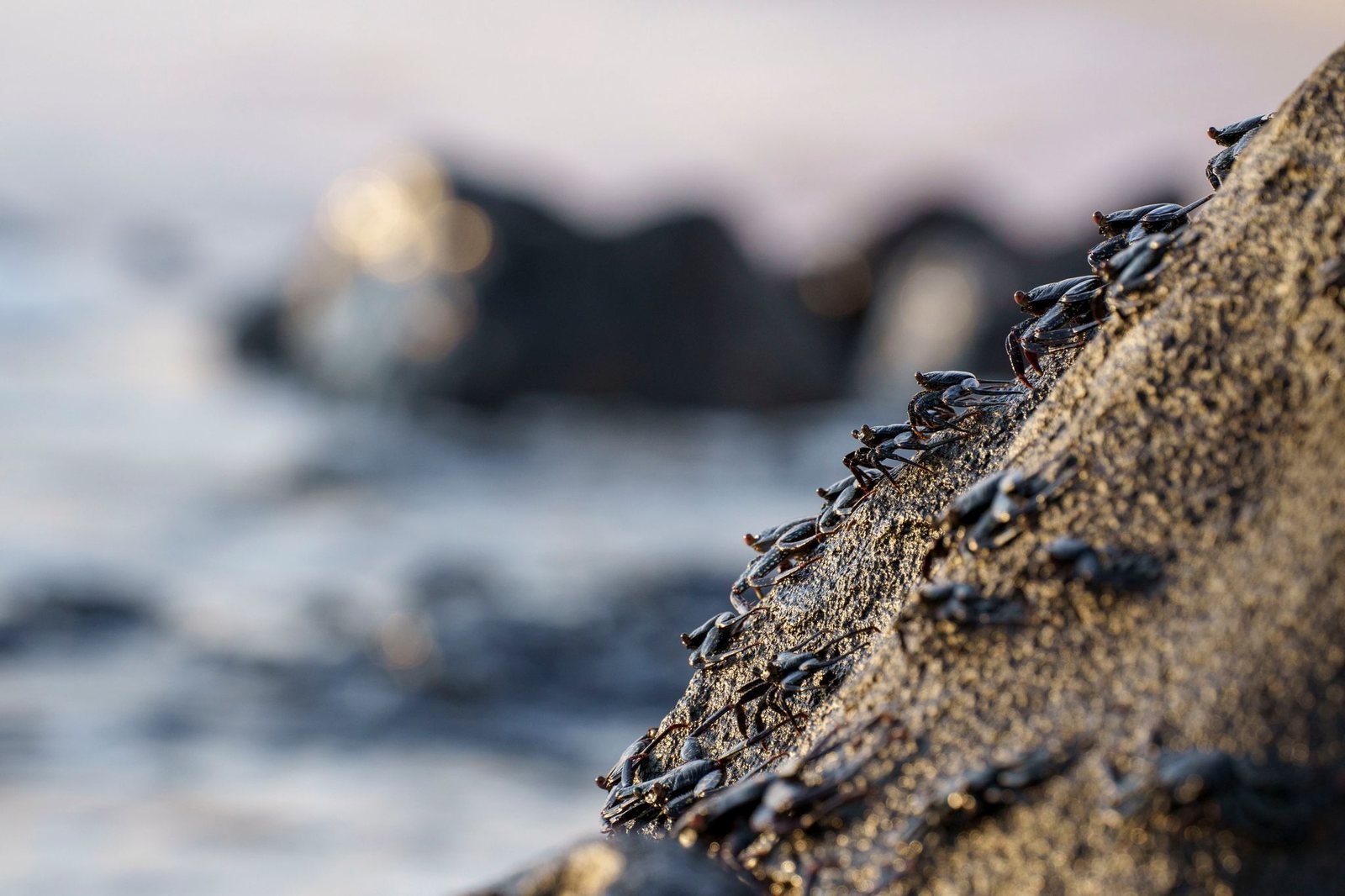
Sally Lightfoot Crab ("Grapsus grapsus") - A colorful and agile crab found on rocky Pacific coasts, feeding on algae and invertebrates and recycling nutrients. Not evaluated by the IUCN; affected by human impacts on coastal areas.

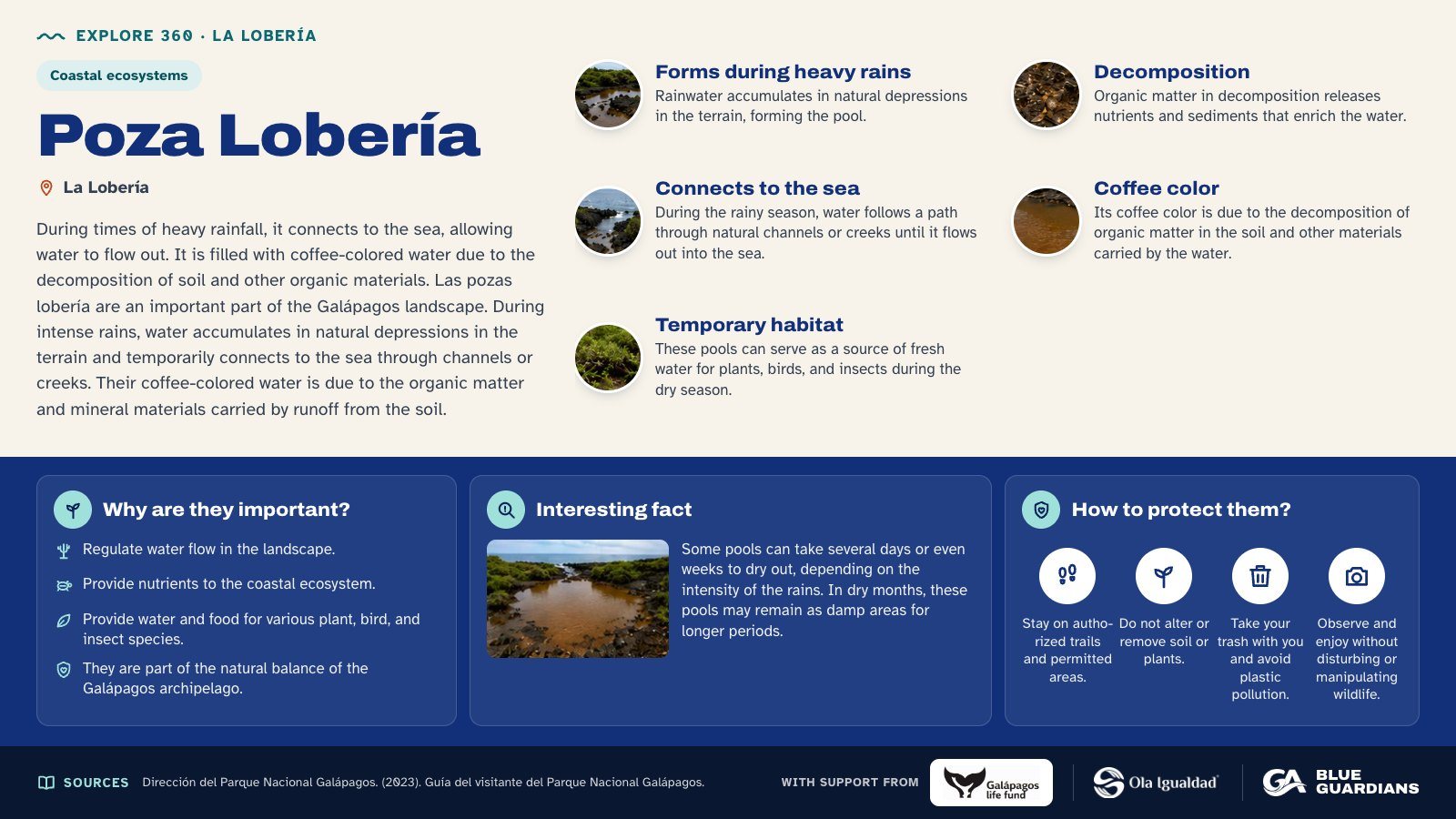
InfographicLa Lobería pool

Infographic about Poza Lobería: forms during heavy rains, decomposition, connects to the sea, coffee color and temporary habitat. Also covers: why are they important, interesting fact and how to protect them.

From here you can go to

Back to the list of scenes

Scene 6Continuing along Lobería Beach

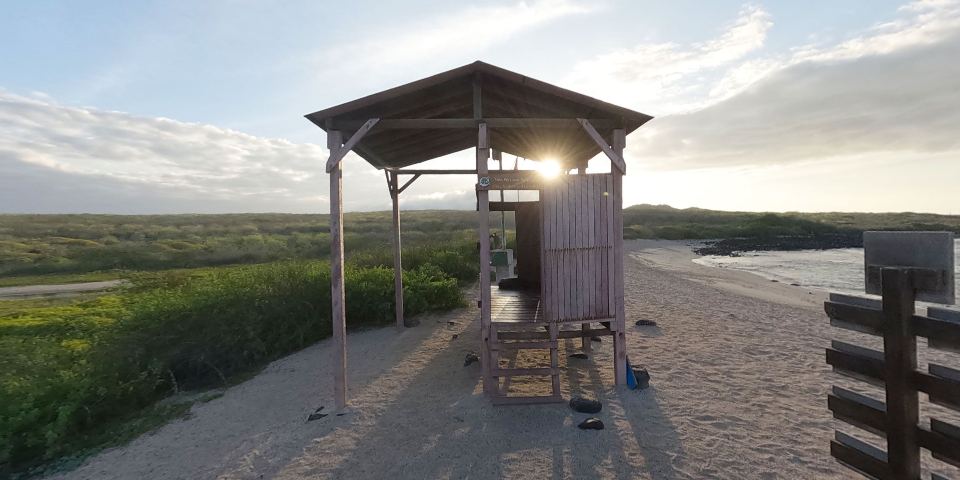
Immersive 360-degree image continuing along Lobería Beach. Several points of interest about bird species can also be seen, as well as the ranger station.

Points of interest

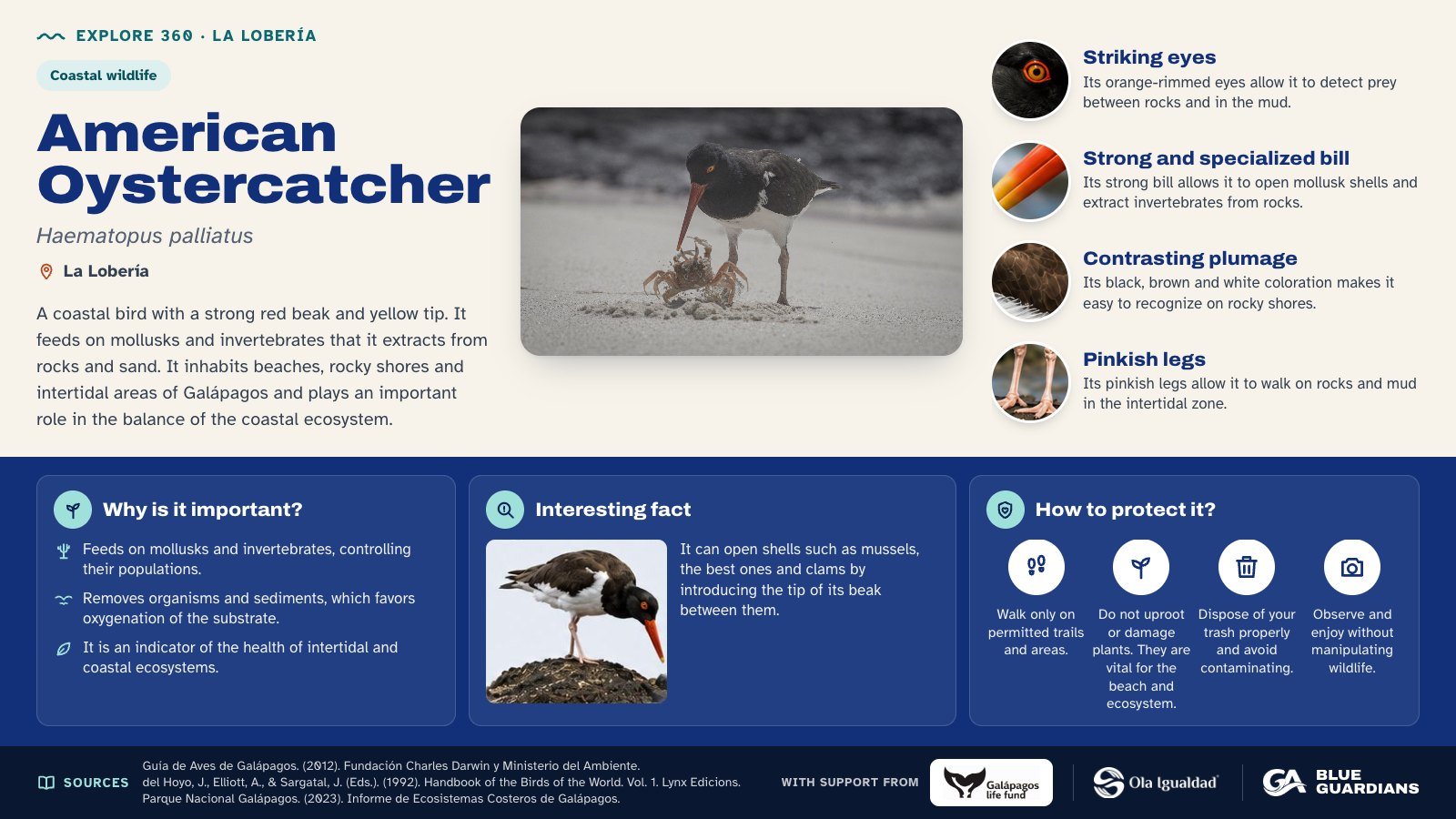
InfographicAmerican oystercatcher

Infographic about American Oystercatcher (Haematopus palliatus): striking eyes, strong and specialized bill, contrasting plumage and pinkish legs. Also covers: why is it important, interesting fact and how to protect it.

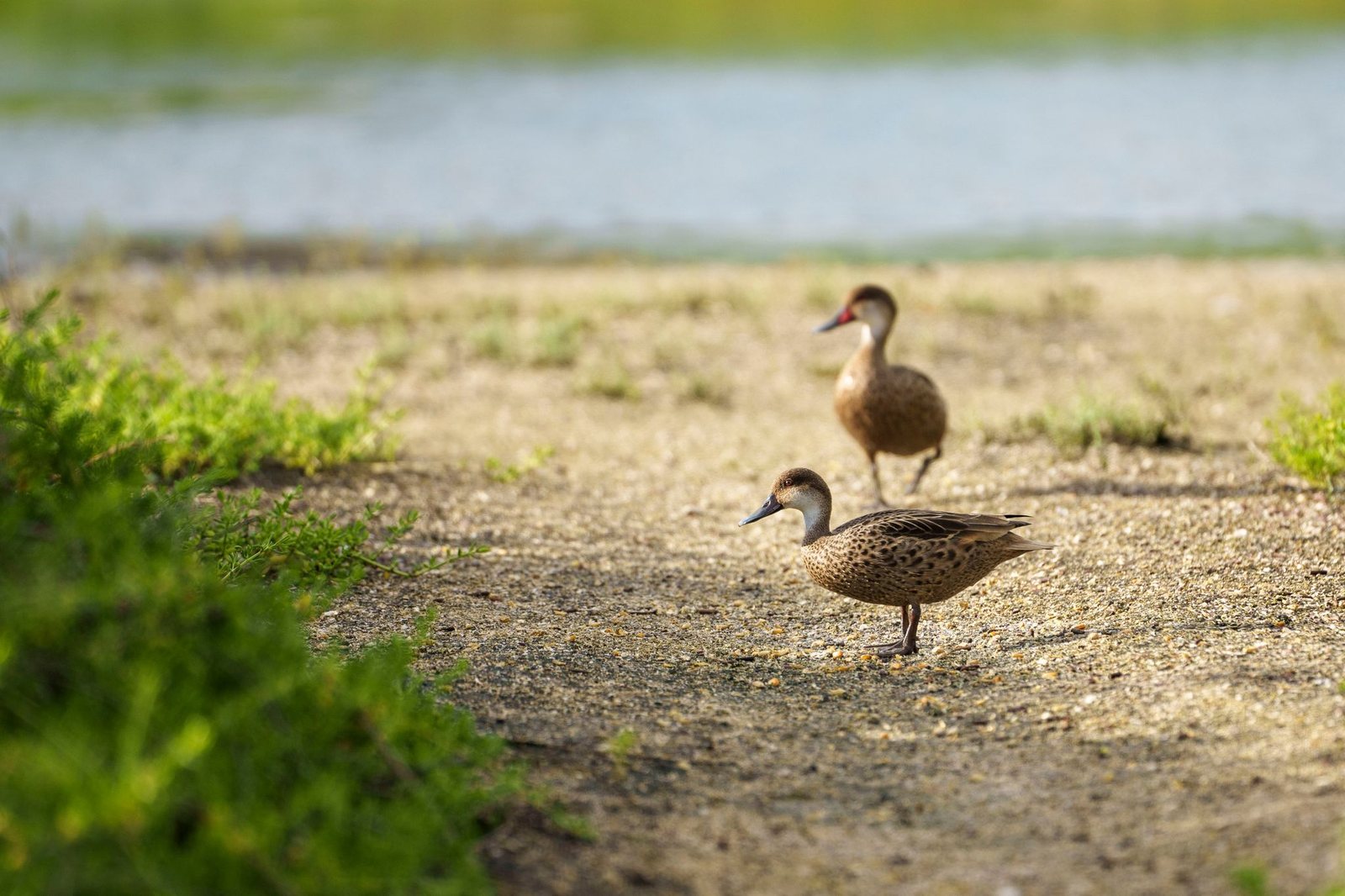
PhotoWhite-cheeked Pintail

White-cheeked Pintail ("Anas bahamensis galapagensis") -Usually found in pairs or small groups. A relatively quiet bird, though males produce soft whistles during courtship.

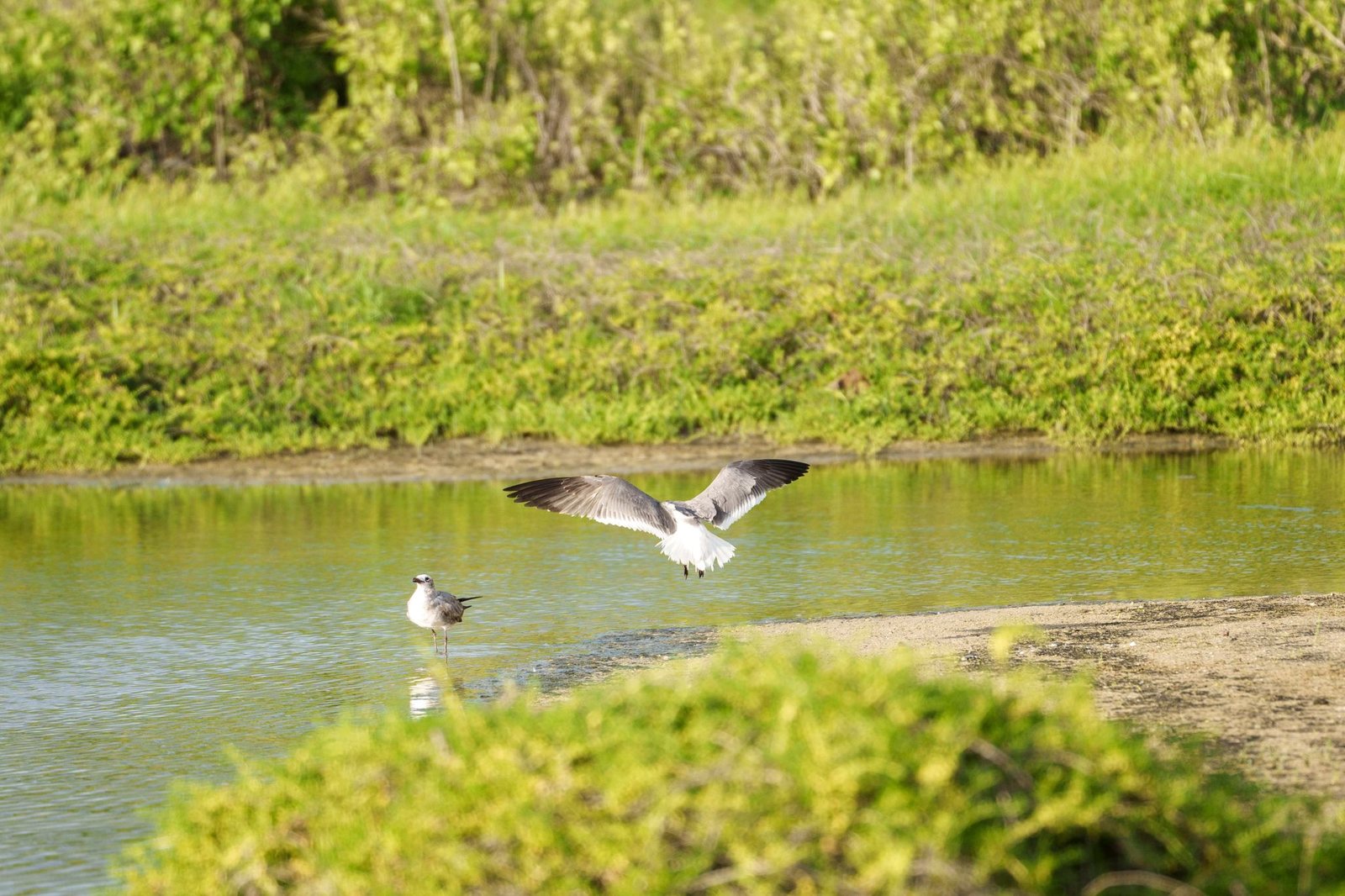
PhotoLava gull

Lava Gull ("Leucophaeus fuliginosus") - A seabird endemic to Galápagos, opportunistic and scavenging, inhabiting rocky coasts. Important in nutrient recycling and ecosystem balance.

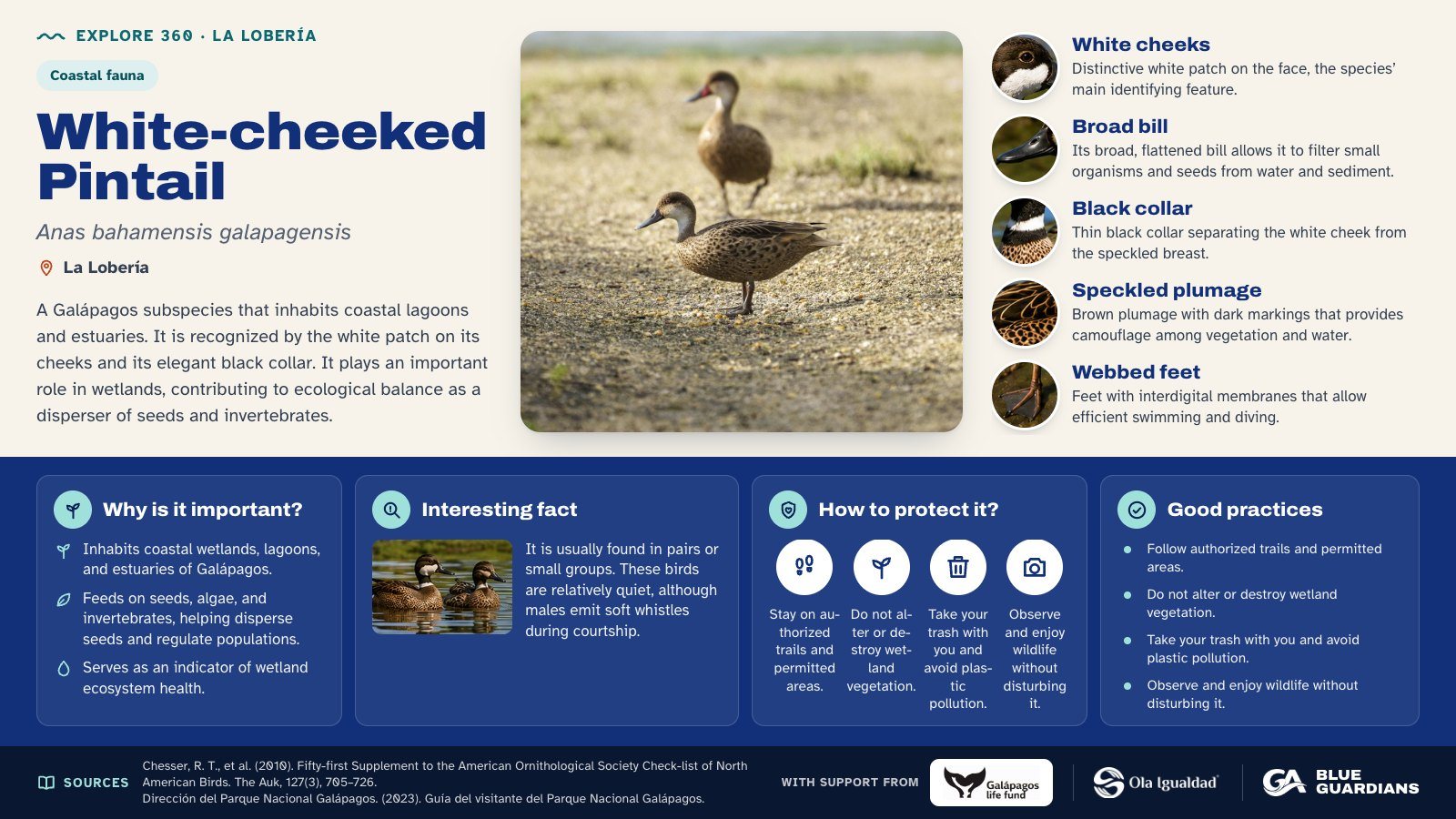
InfographicWhite-cheeked Pintail

Infographic about White-cheeked Pintail (Anas bahamensis galapagensis): white cheeks, broad bill, black collar, speckled plumage and webbed feet. Also covers: why is it important, interesting fact, how to protect it and good practices.

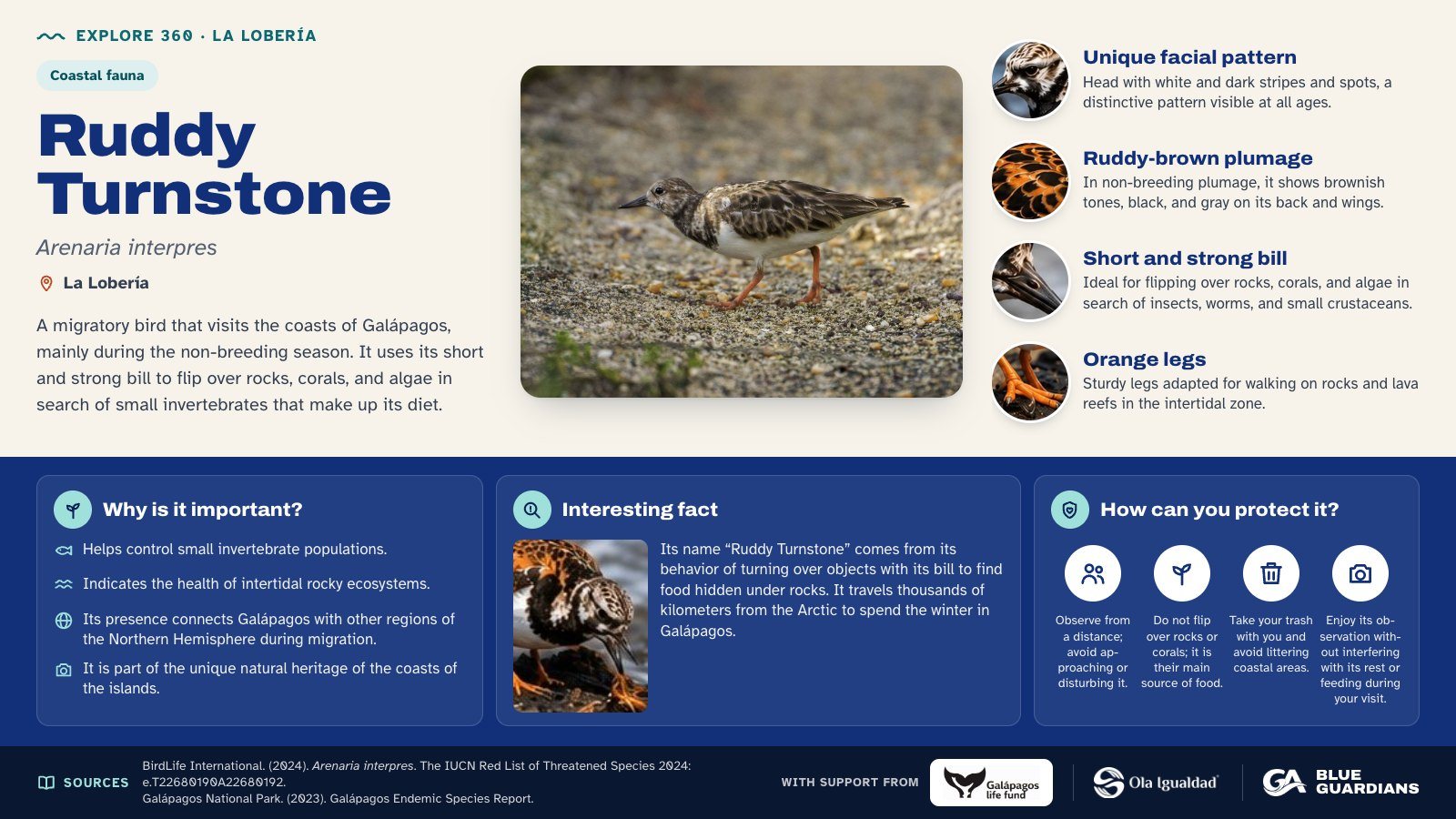
InfographicRuddy turnstone

Infographic about Ruddy Turnstone (Arenaria interpres): unique facial pattern, ruddy-brown plumage, short and strong bill and orange legs. Also covers: why is it important, interesting fact and how can you protect it.

From here you can go to

Back to the list of scenes

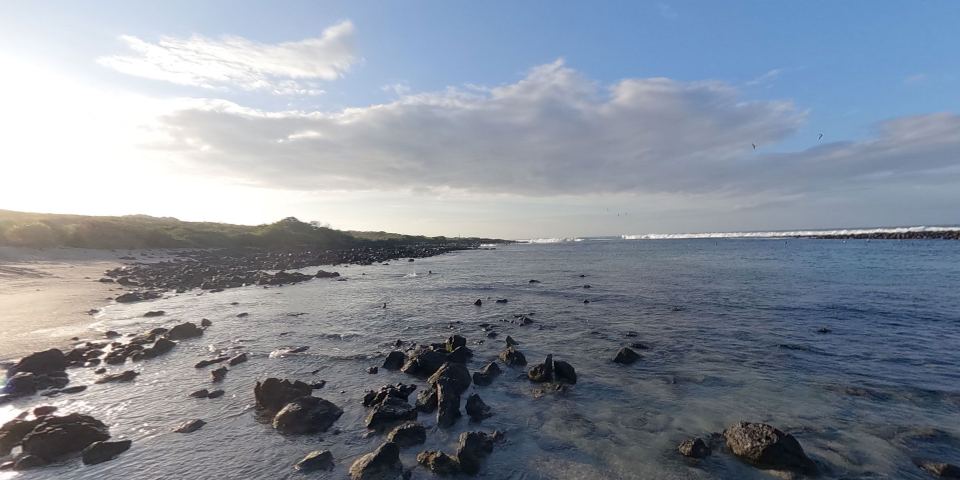
Scene 7Area near the shoreline at Lobería Beach

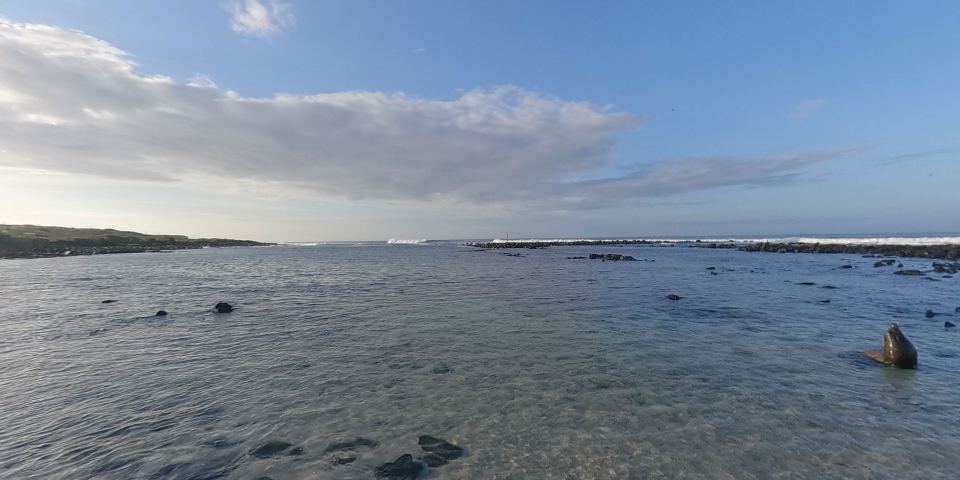
Immersive 360-degree image showing an area near the shoreline at Lobería Beach. Several points of interest featuring different sea lion specimens can be seen, including a female and a pup.

Points of interest

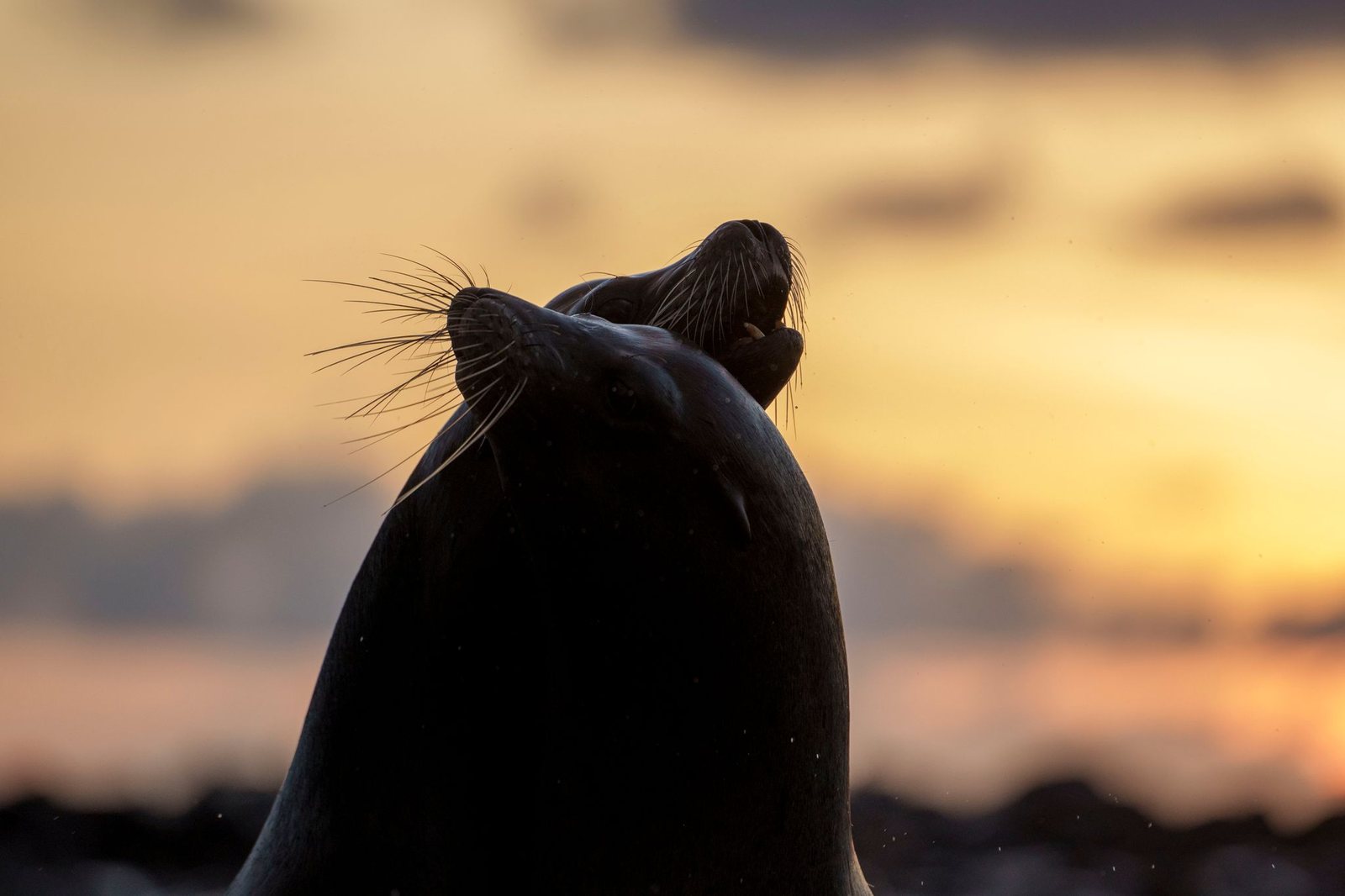
PhotoGalápagos Sea Lion

Galápagos Sea Lion ("Zalophus wollebaeki") - A marine mammal endemic to Galápagos, agile both in water and on land. It lives in coastal colonies, feeds on fish and squid, and shows sexual dimorphism.

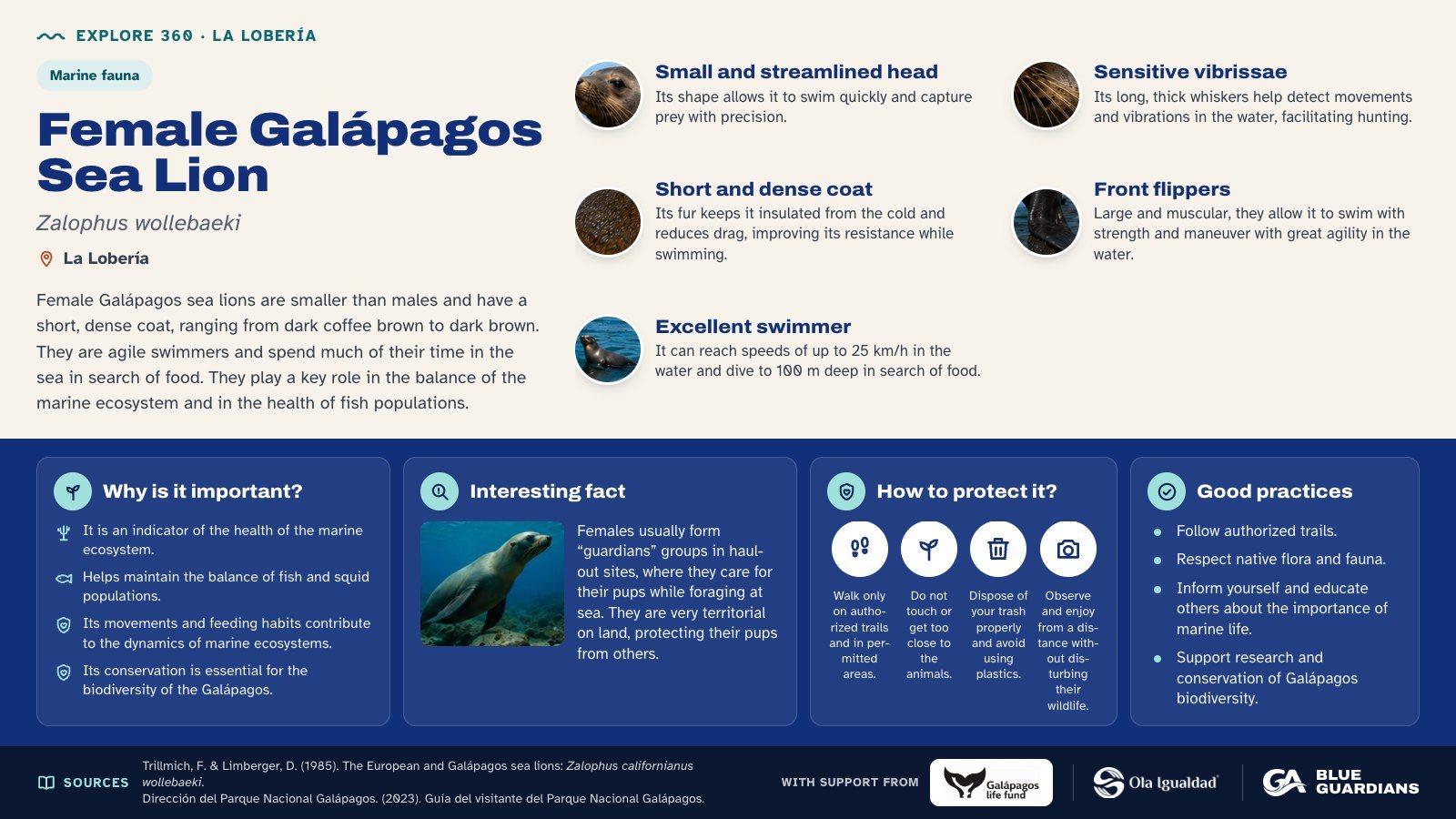
InfographicFemale sea lion

Infographic about Female Galápagos Sea Lion (Zalophus wollebaeki): small and streamlined head, sensitive vibrissae, short and dense coat, front flippers and excellent swimmer. Also covers: why is it important, interesting fact, how to protect it and good practices.

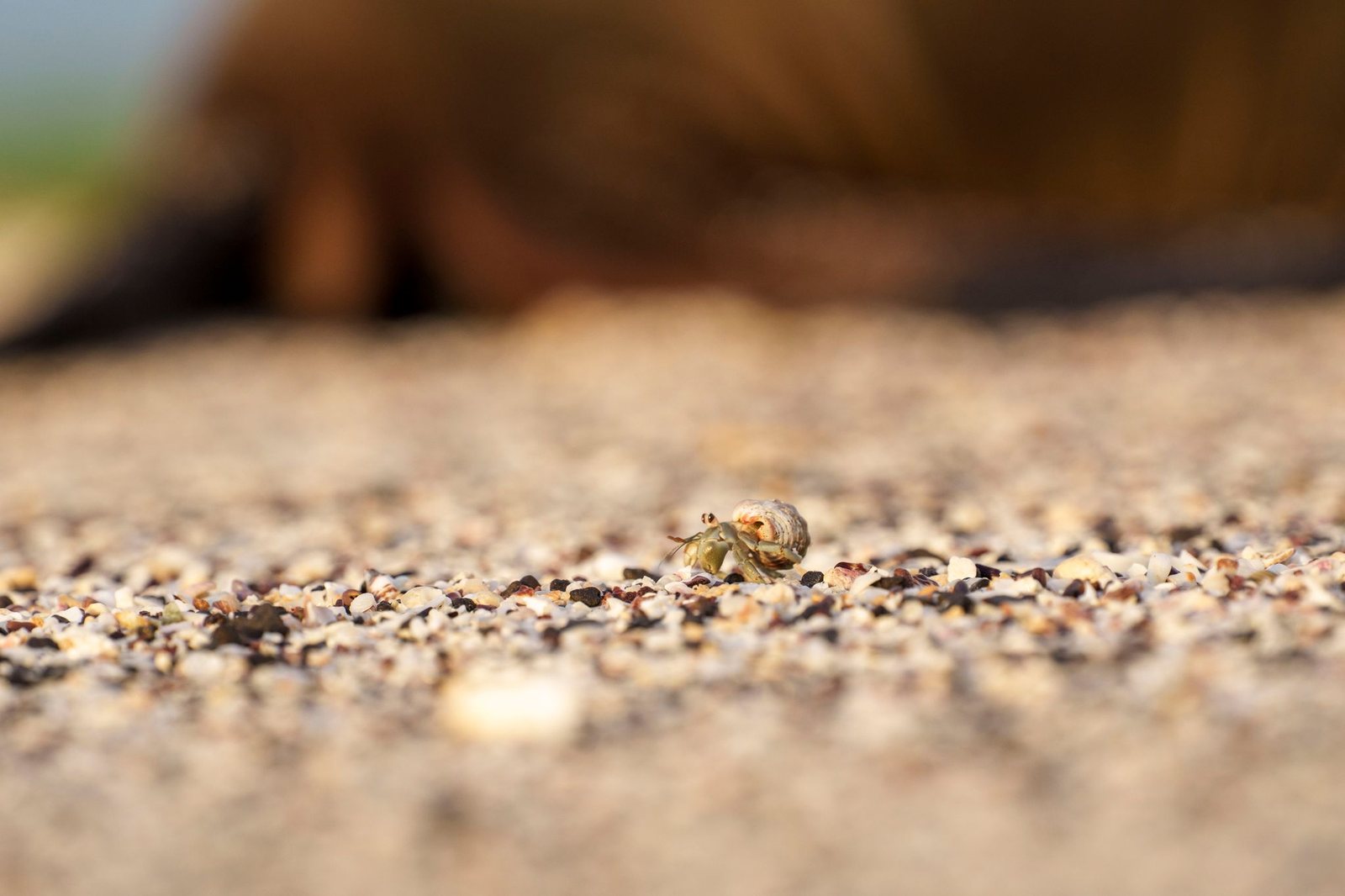
PhotoHermit crab

Hermit crab ("Coenobita compressus") - coastal terrestrial crustacean, uses shells for protection, feeds on organic matter; plays a key role in nutrient recycling.

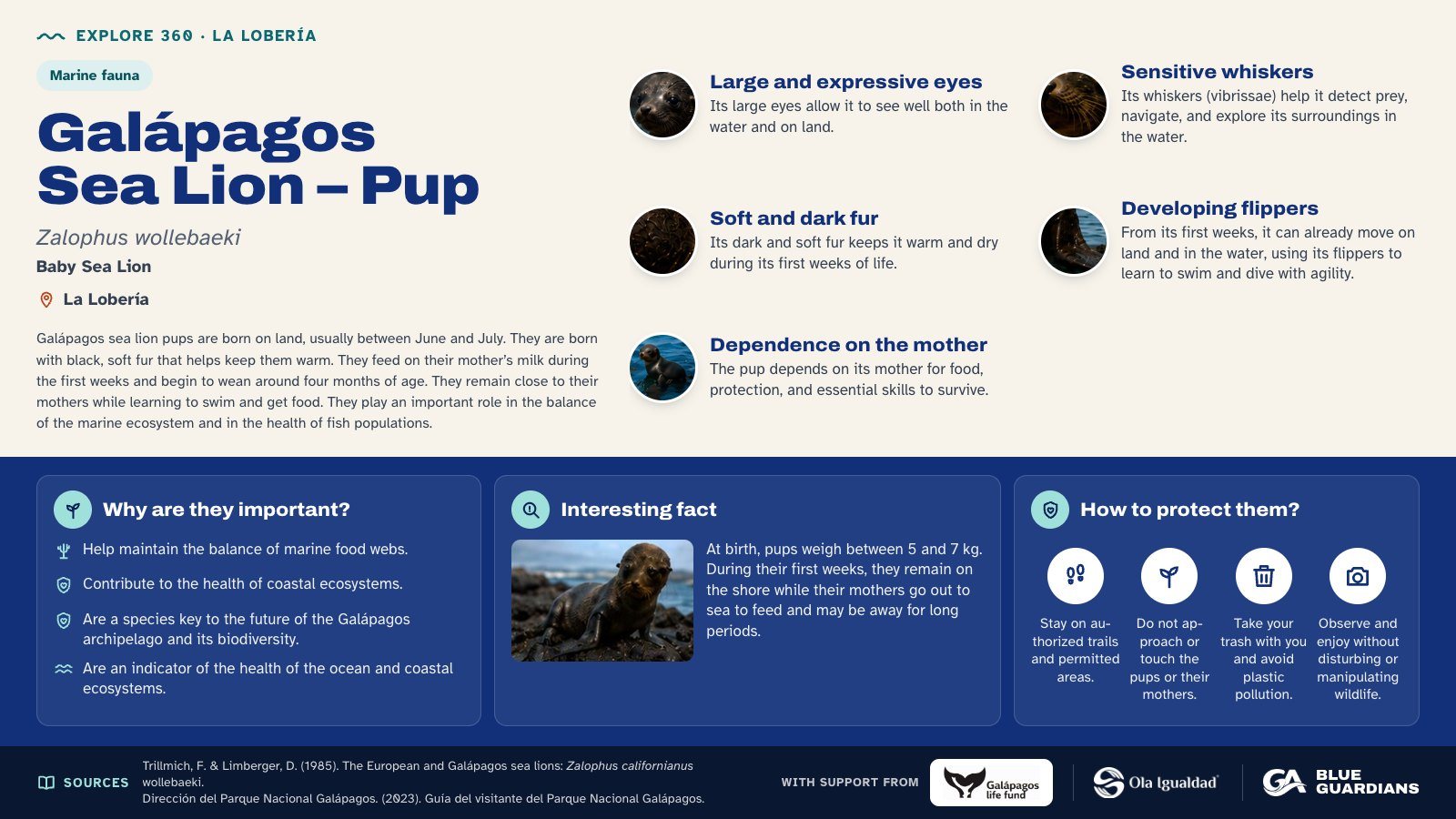
InfographicSea lion pup

Infographic about Galápagos Sea Lion – Pup (Zalophus wollebaeki): large and expressive eyes, sensitive whiskers, soft and dark fur, developing flippers and dependence on the mother. Also covers: why are they important, interesting fact and how to protect them.

From here you can go to

Back to the list of scenes

Scene 8Area near the shoreline at Lobería Beach

Immersive 360-degree image showing an area near the shoreline at Lobería Beach. Several points of interest featuring a wide diversity of fish species and sea turtles can be seen.

Points of interest

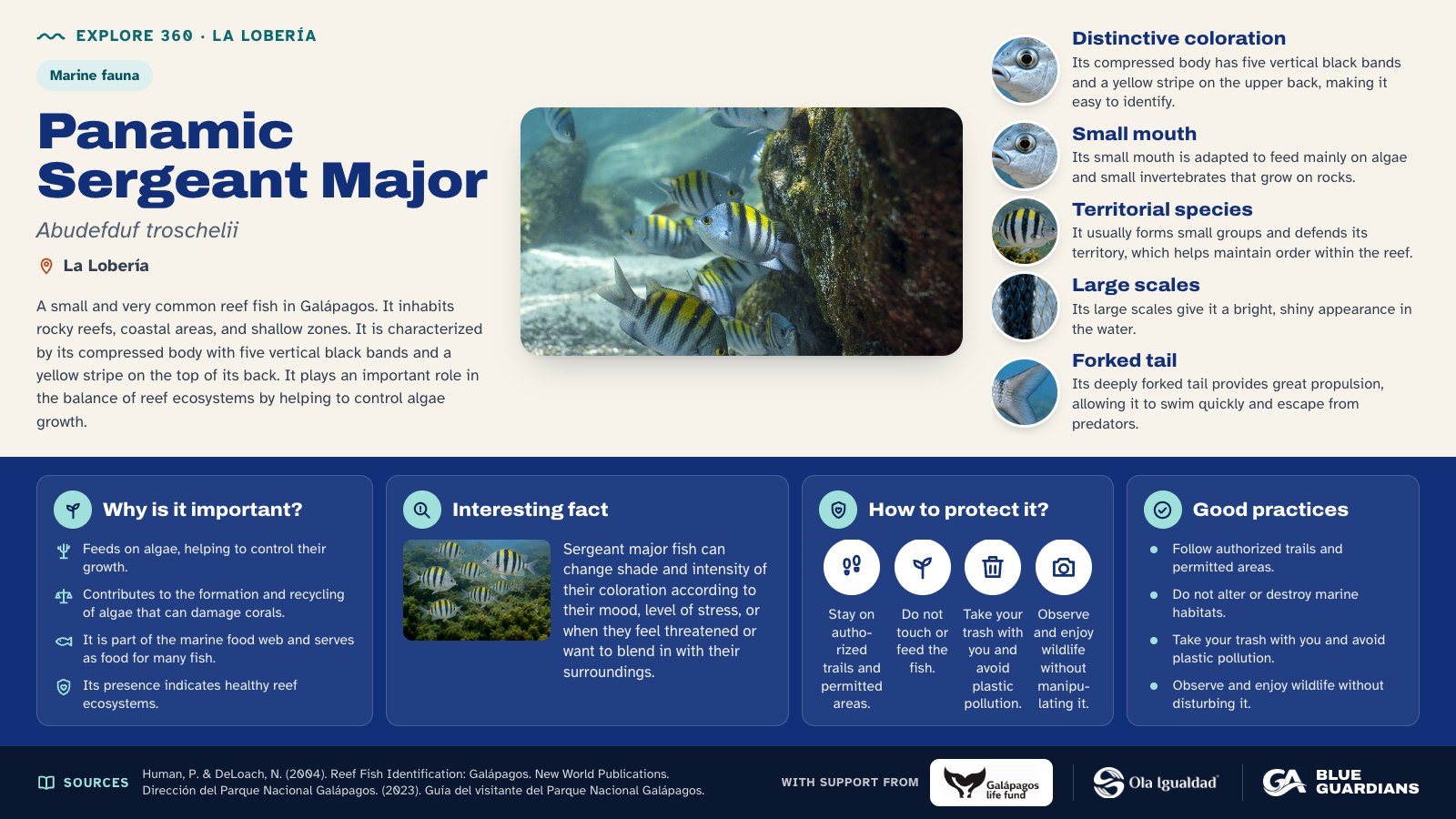
InfographicSergeant Major

Infographic about Panamic Sergeant Major (Abudefduf troschelii): distinctive coloration, small mouth, territorial species, large scales and forked tail. Also covers: why is it important, interesting fact, how to protect it and good practices.

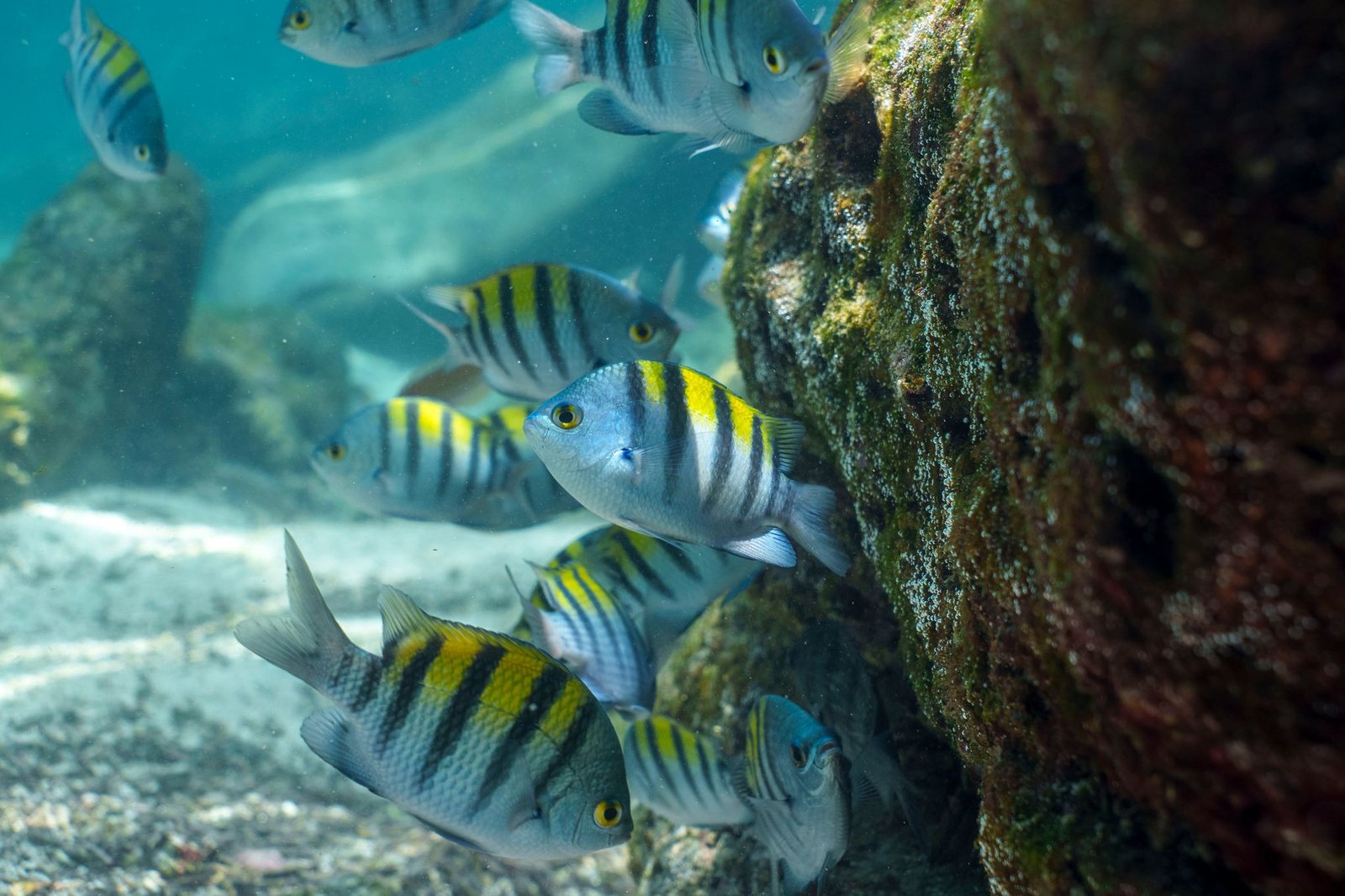
PhotoSergeant Major

Sergeant Major ("Abudefduf troschelii") - A colorful, territorial tropical reef fish that forms schools and protects nests. Important in marine ecological dynamics.

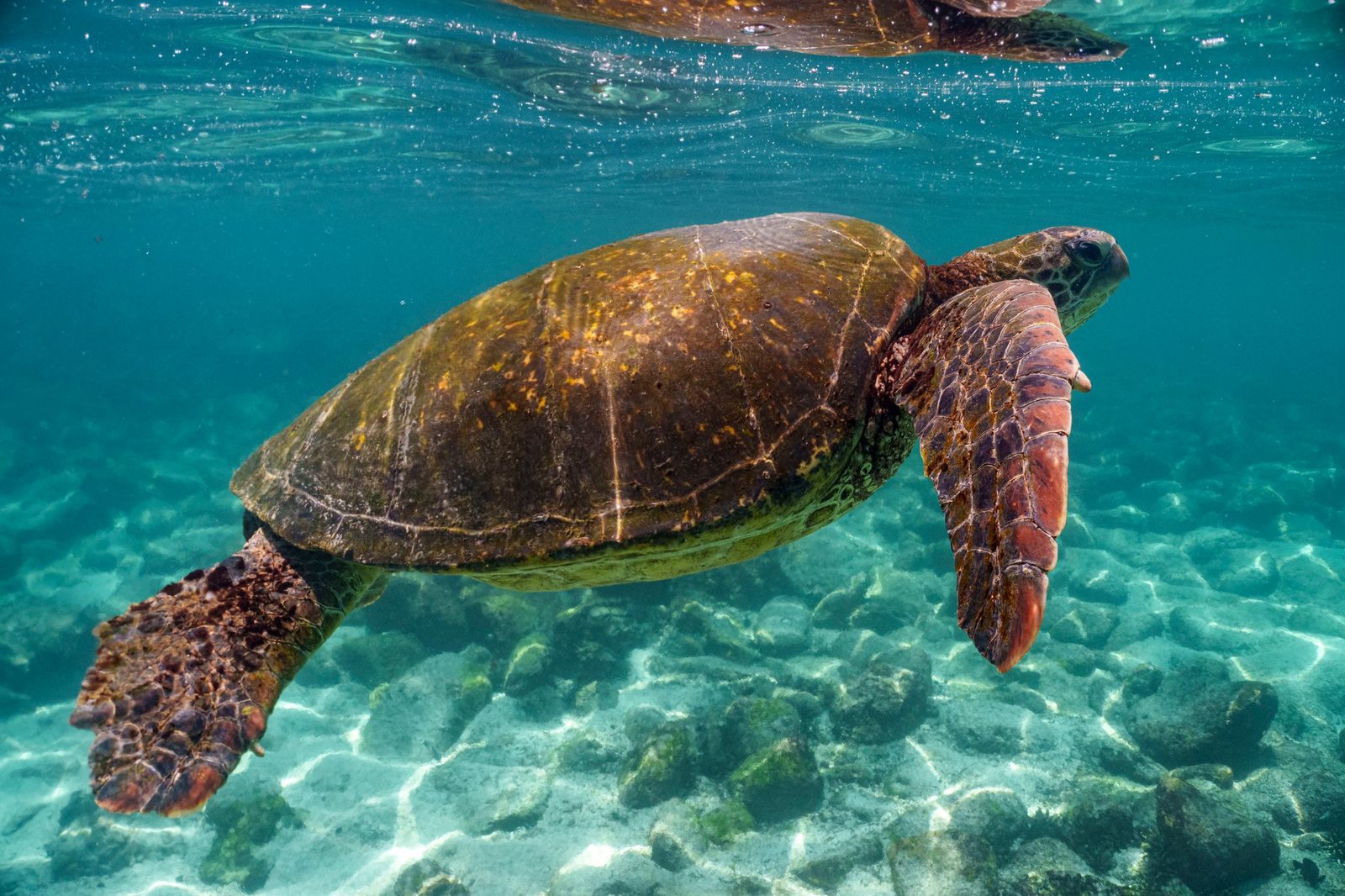
PhotoGreen Sea Turtle

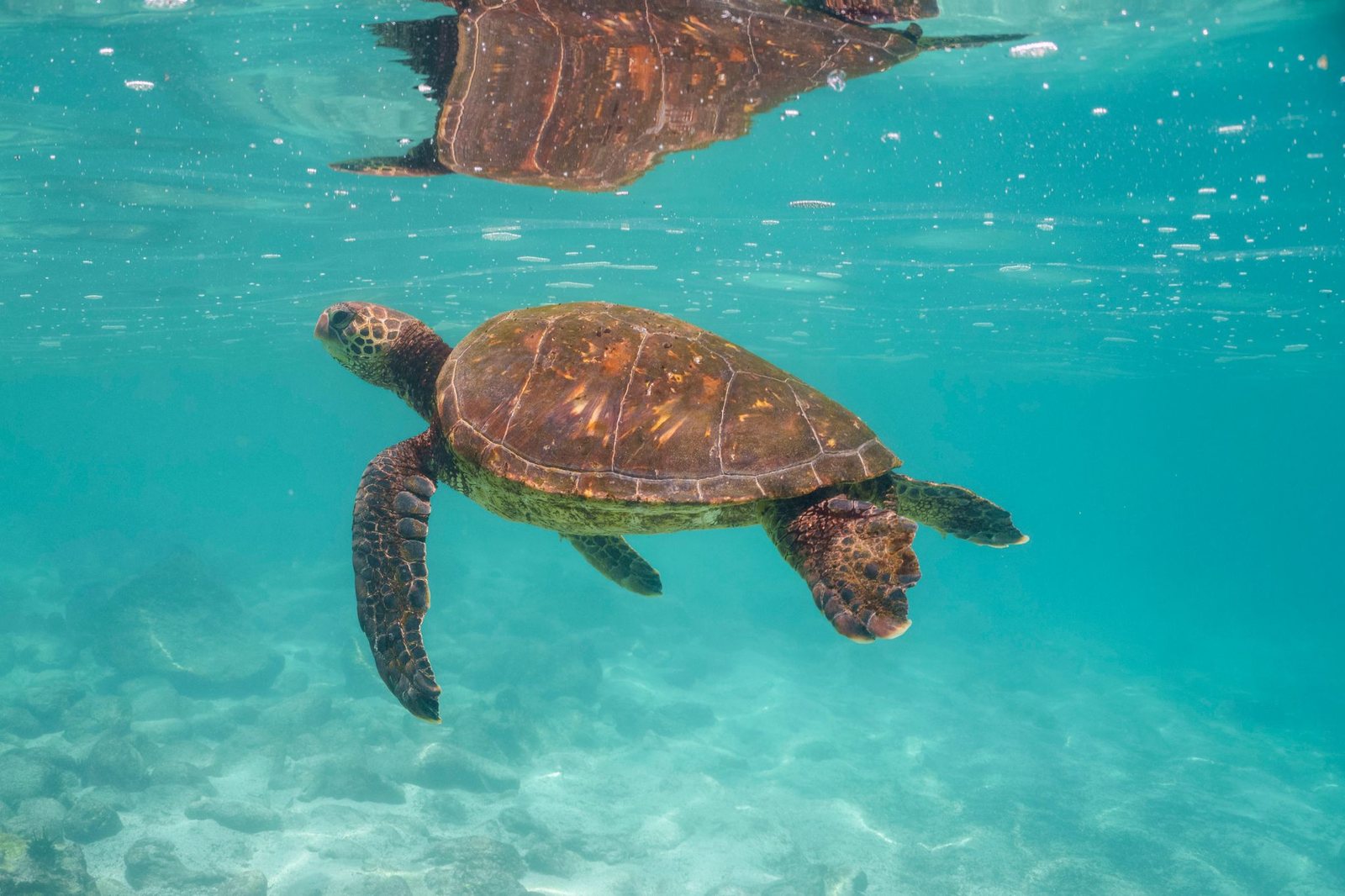
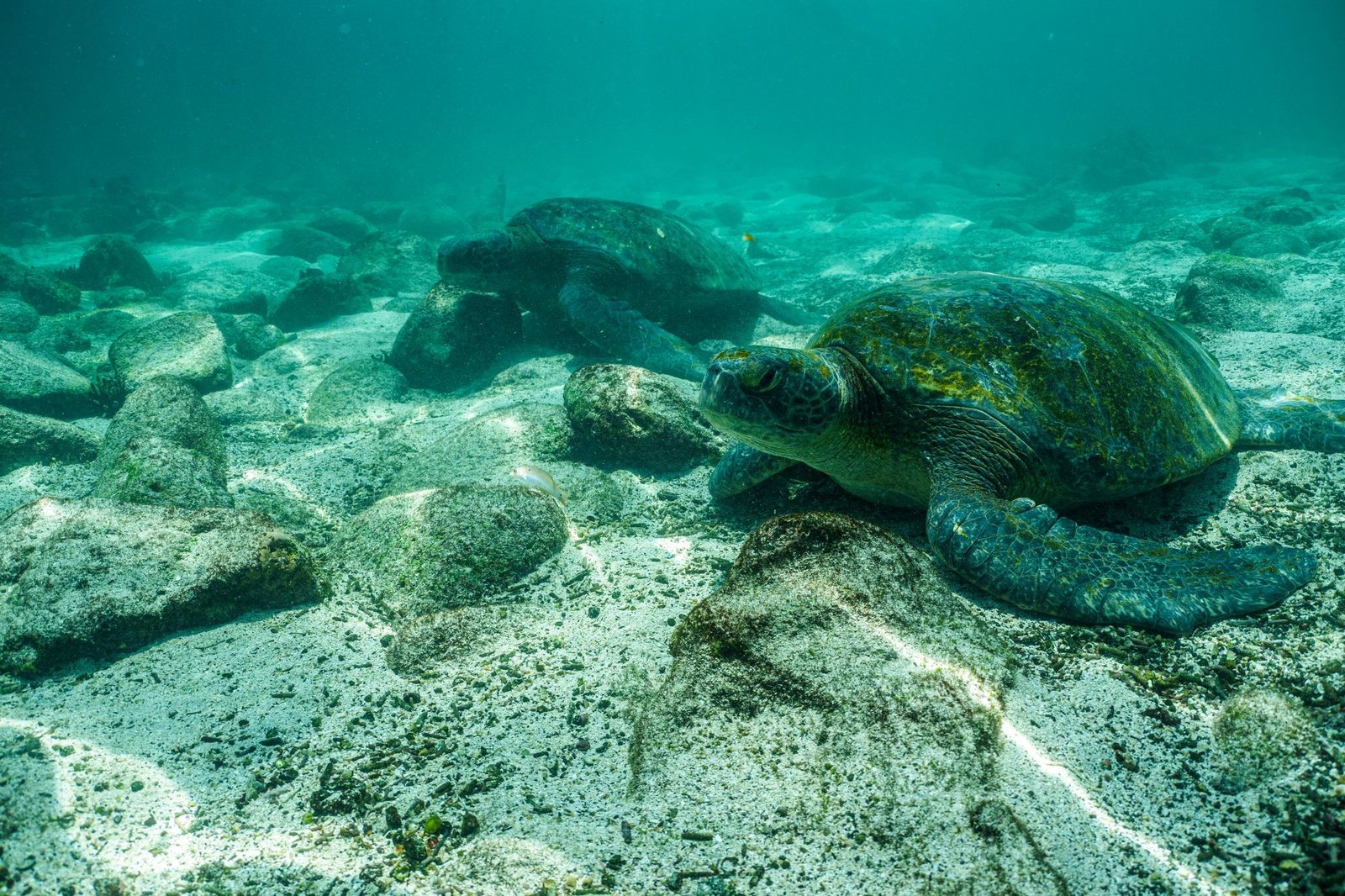
Green Sea Turtle (Chelonia mydas) — A migratory marine reptile, herbivorous in adulthood, inhabiting tropical coasts and oceans. It plays a key ecological role and is endangered due to human threats.

InfographicGreen turtle

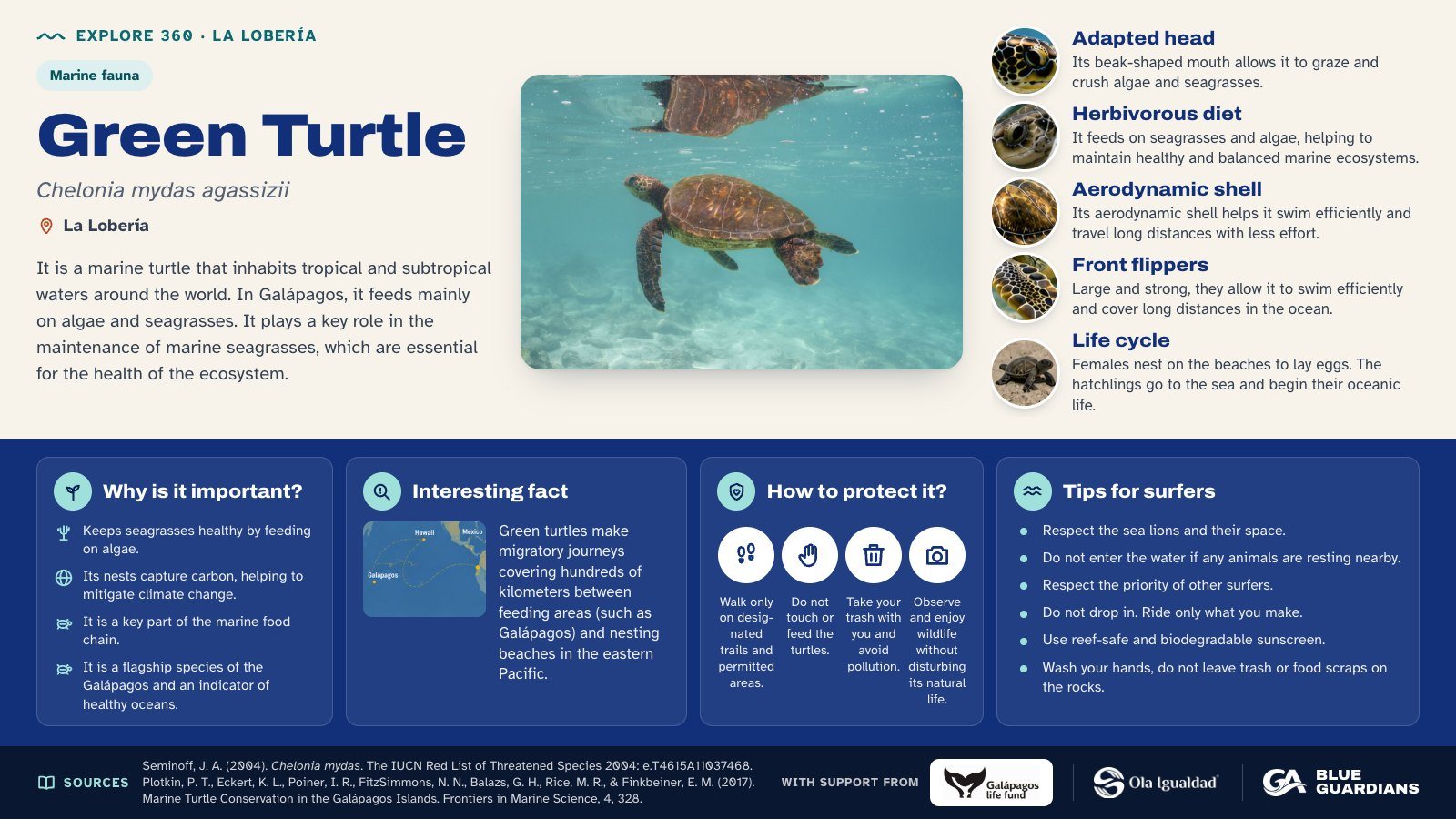
Infographic about Green Turtle (Chelonia mydas agassizii): adapted head, herbivorous diet, aerodynamic shell, front flippers and life cycle. Also covers: why is it important, interesting fact, how to protect it and tips for surfers.

PhotoGreen turtle: limbs

Its front limbs have evolved into long flippers that function as oars for propulsion, while the rear limbs act as rudders for steering.

PhotoGreen turtle: shell

It has an oval, flattened shell that reduces water resistance. Unlike land turtles, it cannot retract its head or limbs into its shell.

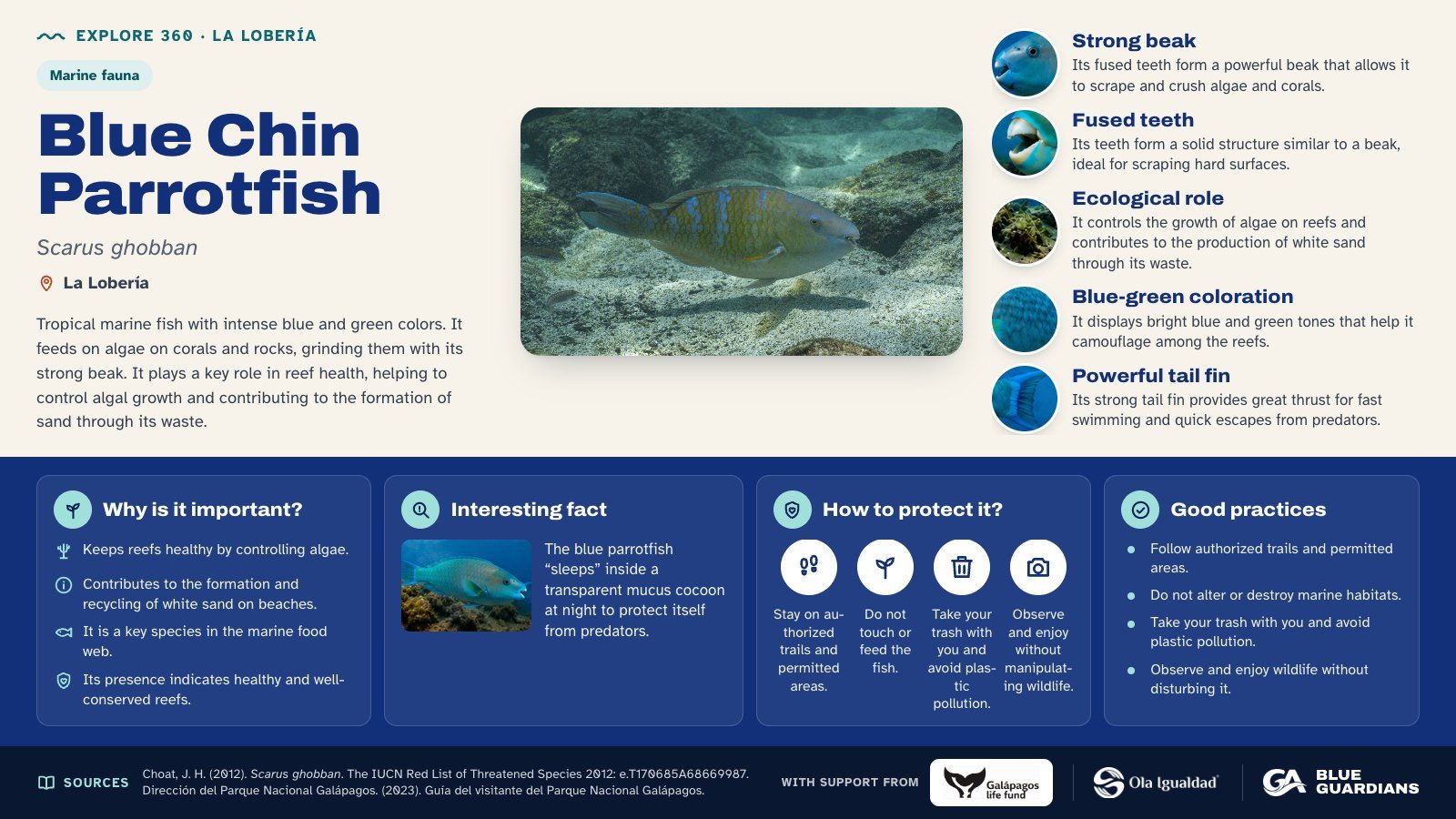
InfographicBlue Parrotfish

Infographic about Blue Chin Parrotfish (Scarus ghobban): strong beak, fused teeth, ecological role, blue-green coloration and powerful tail fin. Also covers: why is it important, interesting fact, how to protect it and good practices.

PhotoBlue Parrotfish

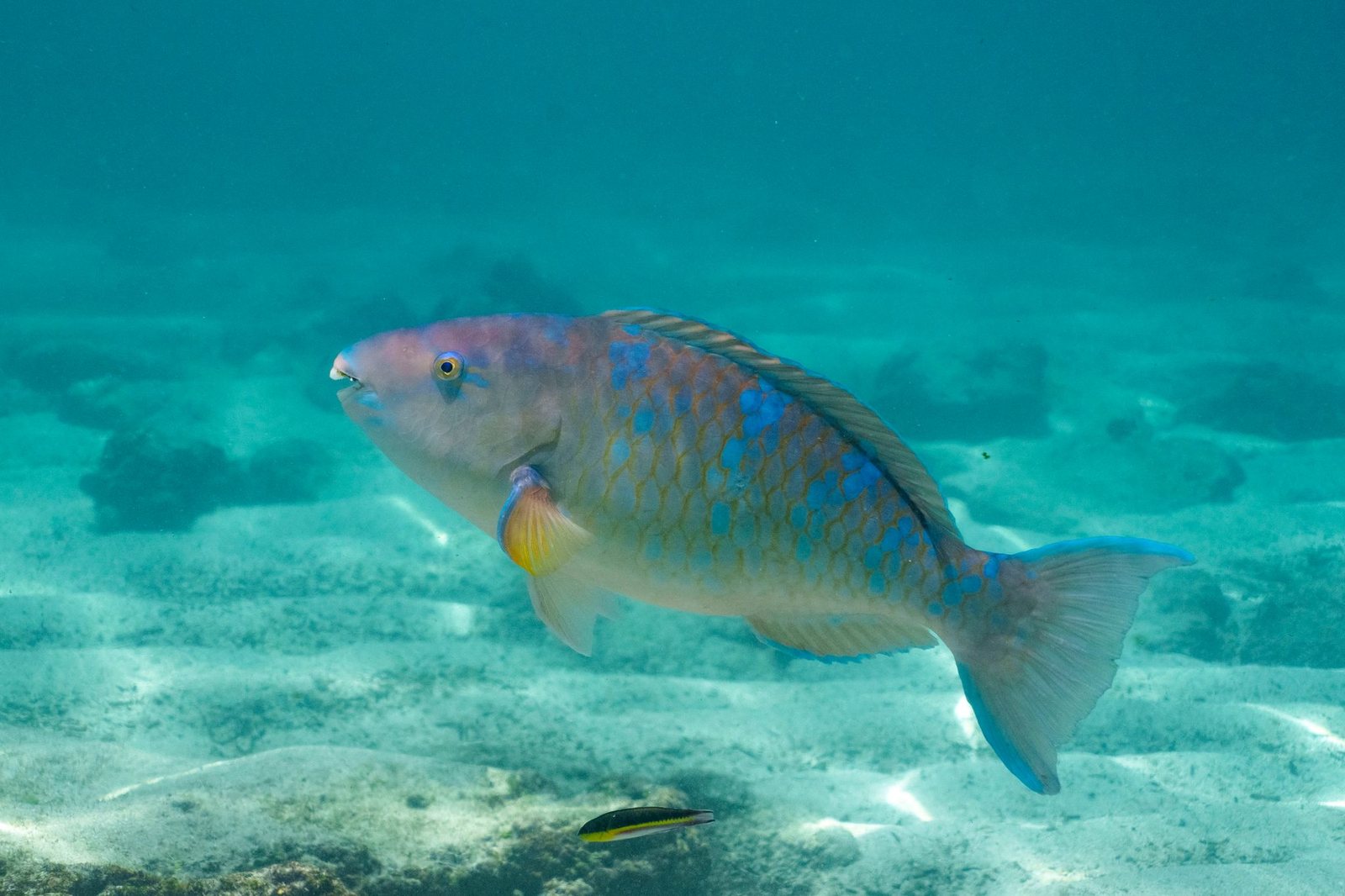
Blue Parrotfish ("Scarus ghobban") - A tropical marine fish with blue coloring, feeding on algae over corals, contributing to sand formation and reef balance.

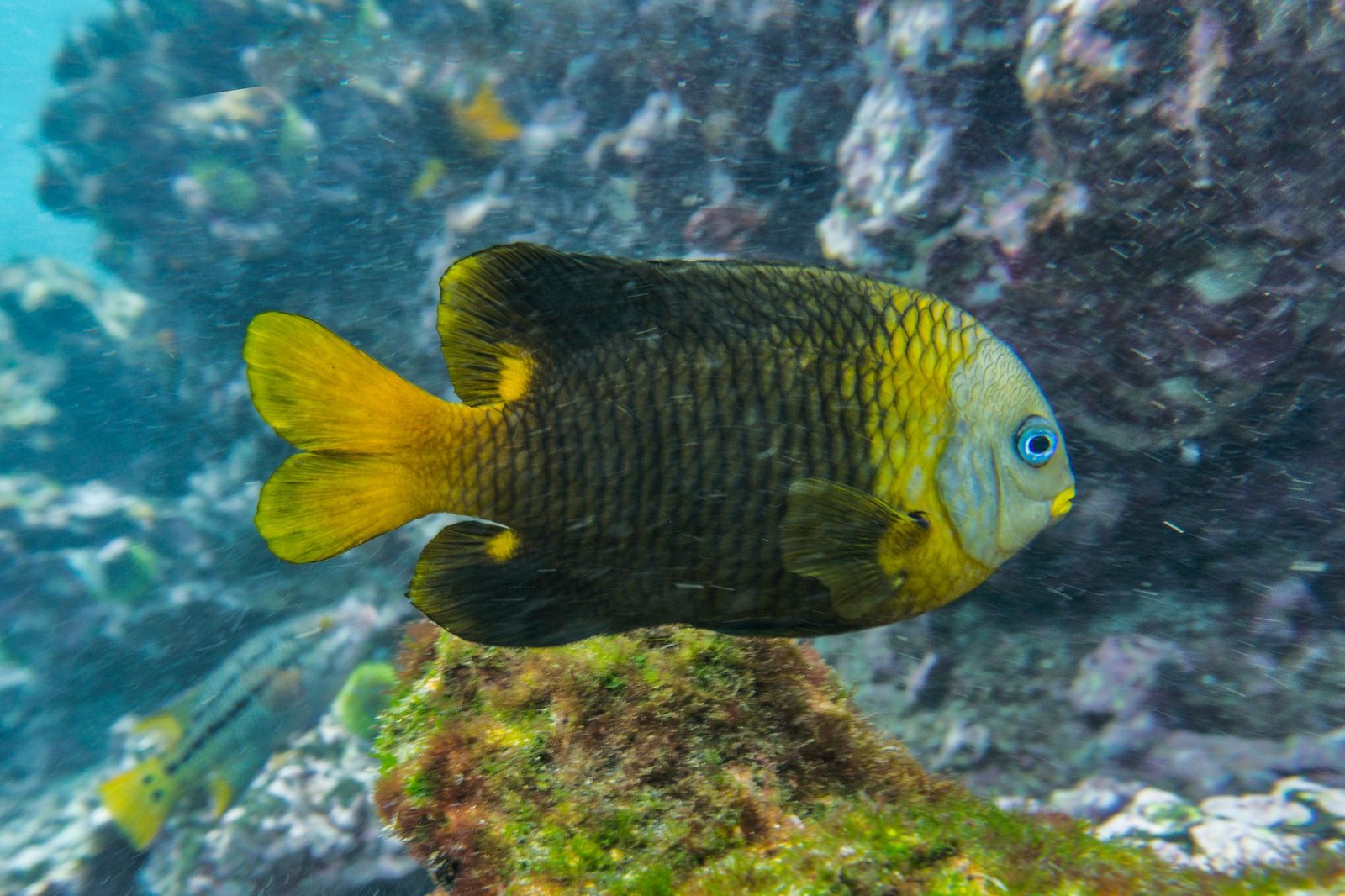
PhotoDamselfish

Damselfish (family "Pomacentridae") - Colorful marine fish of reefs, territorial and herbivorous or omnivorous. They protect algae patches and nests. Important in coral and rocky coastal ecosystems.

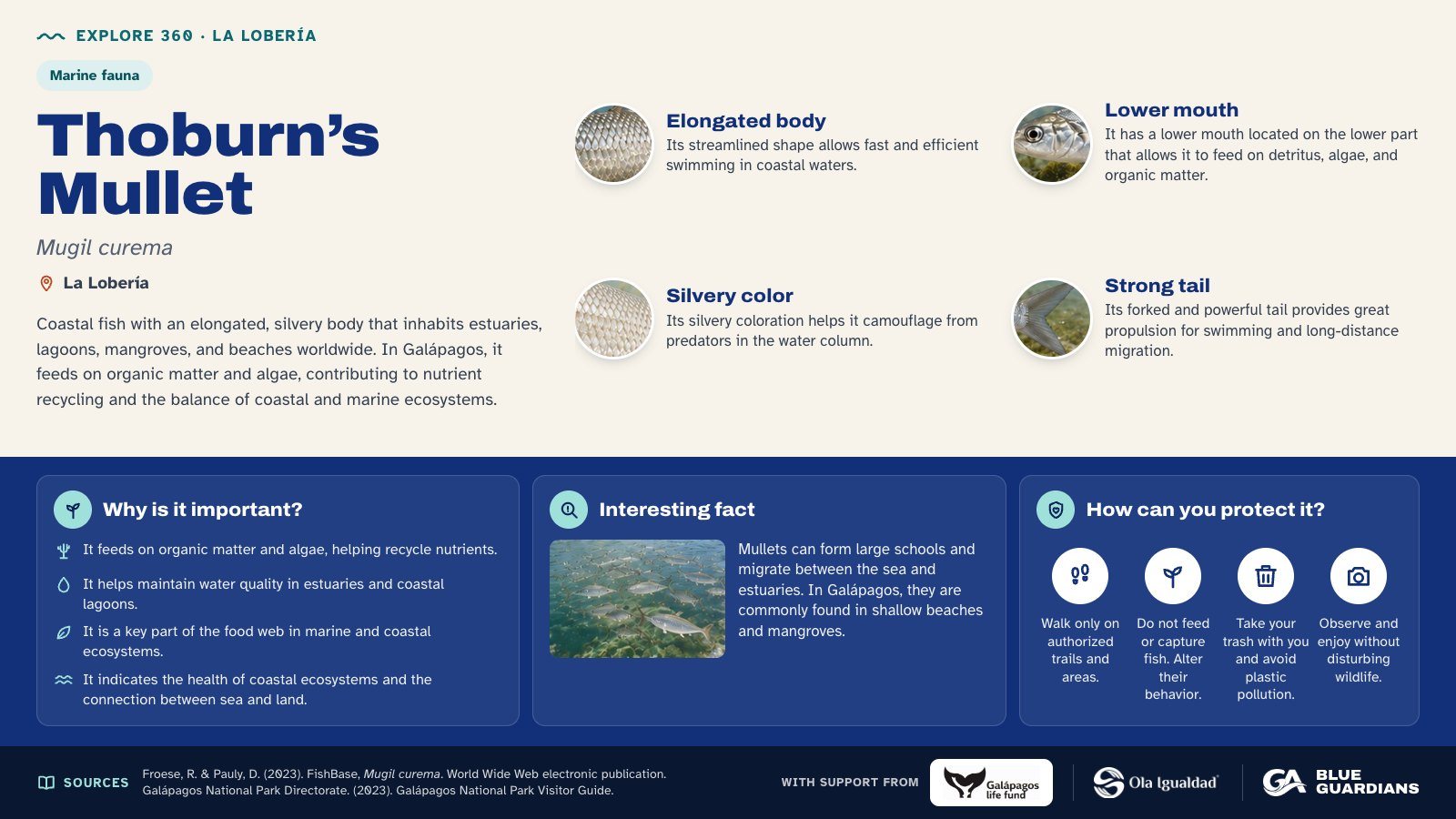
InfographicMullet

Infographic about Thoburn’s Mullet (Mugil curema): elongated body, lower mouth, silvery color and strong tail. Also covers: why is it important, interesting fact and how can you protect it.

From here you can go to

Back to the list of scenes

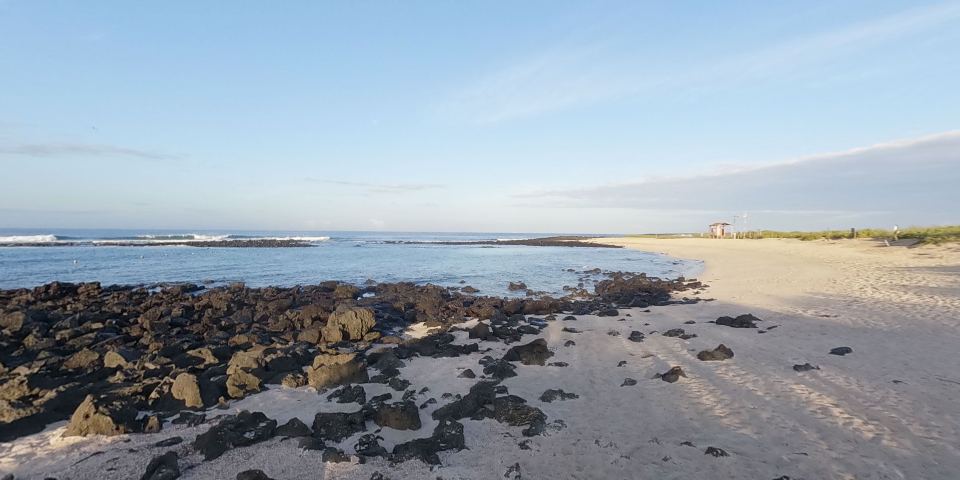
Scene 9One end of Lobería Beach

Immersive 360-degree image showing one end of Lobería Beach. A rocky area with points of interest about wildlife and surfing activities can be seen.

Points of interest

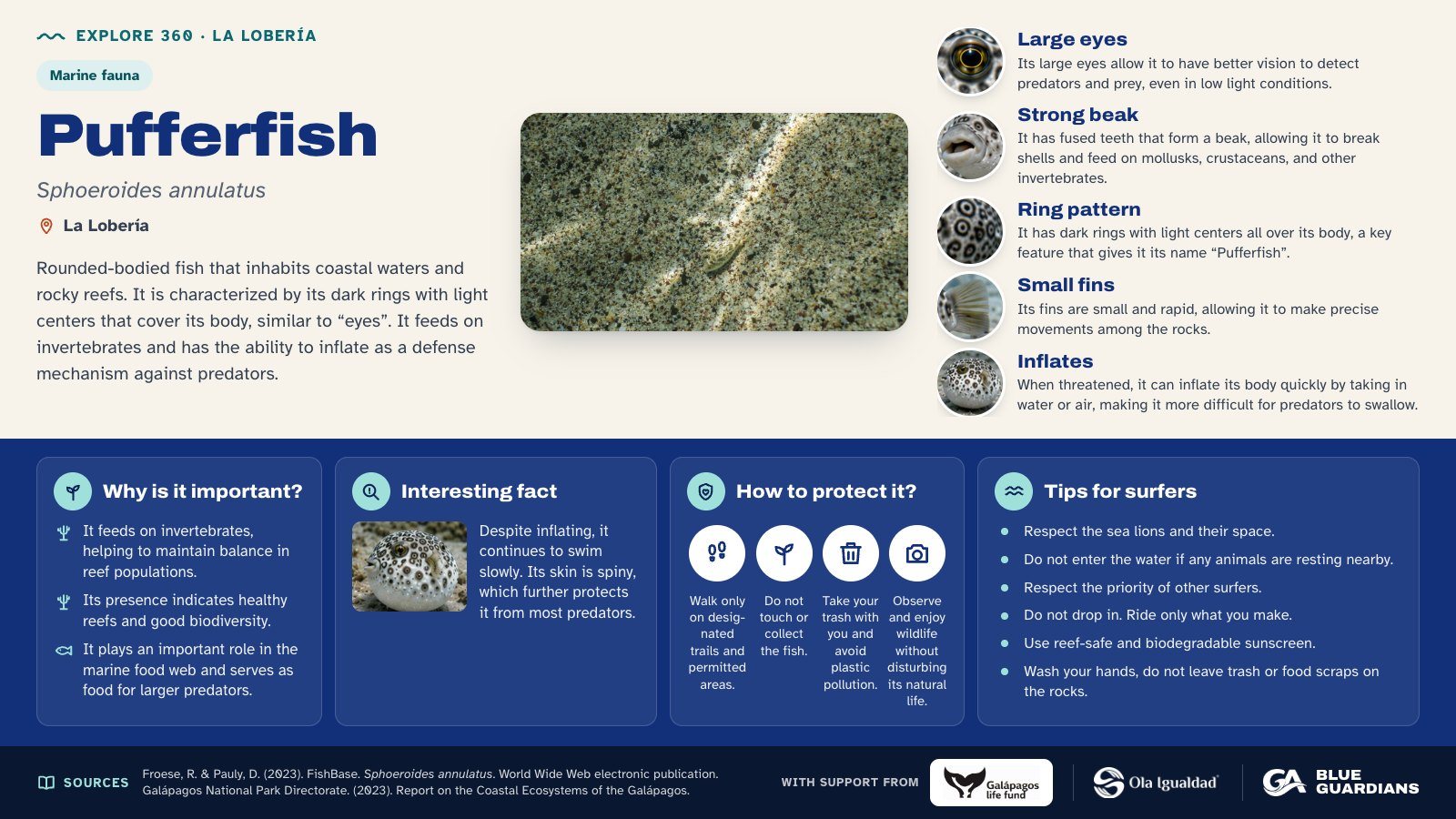
InfographicPufferfish

Infographic about Pufferfish (Sphoeroides annulatus): large eyes, strong beak, ring pattern, small fins and inflates. Also covers: why is it important, interesting fact, how to protect it and tips for surfers.

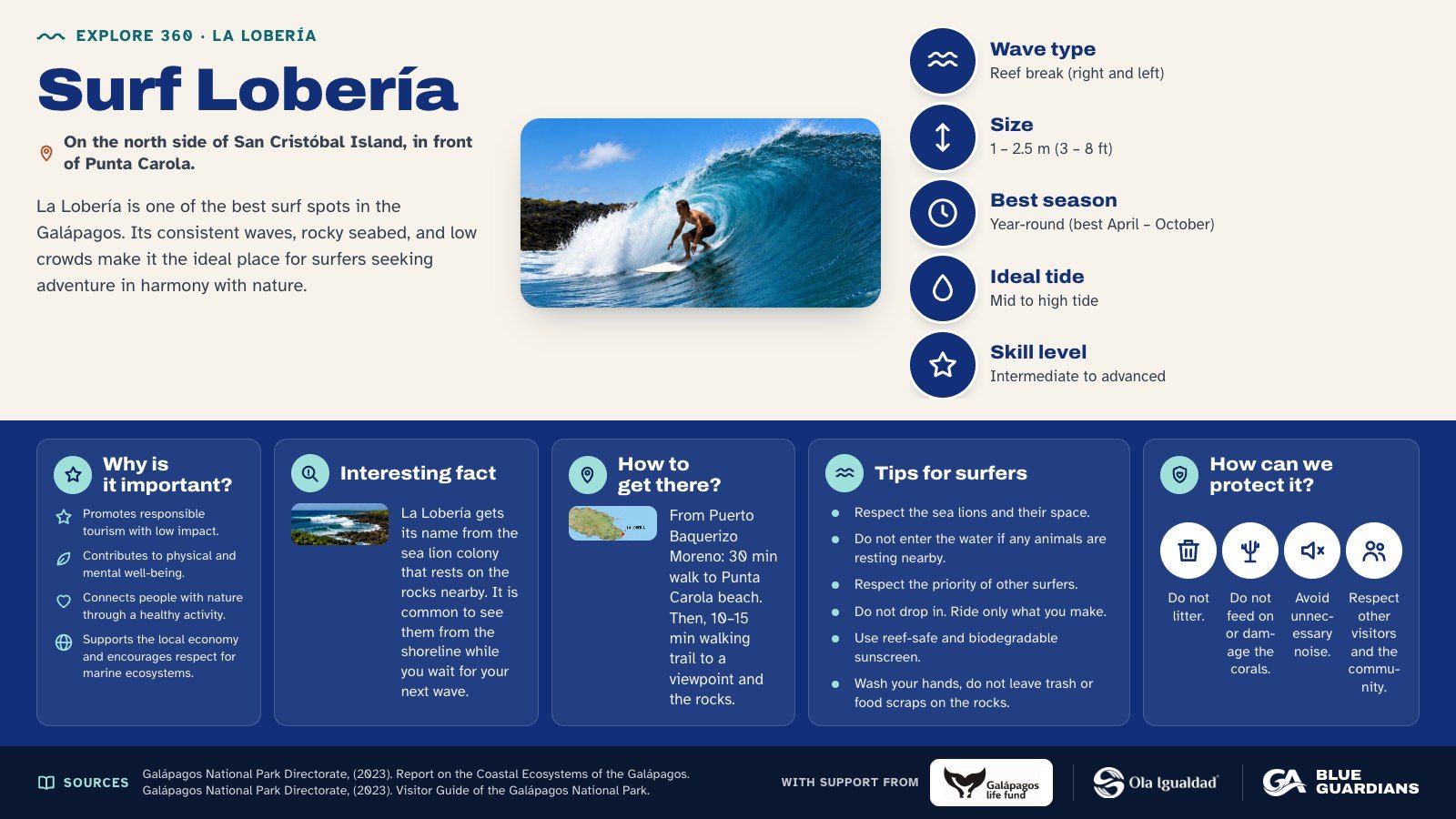
InfographicSurf Zone

Infographic about Surf Lobería: wave type, size, best season, ideal tide and skill level. Also covers: why is it important, interesting fact, how to get there, tips for surfers and how can we protect it.

From here you can go to

Back to the list of scenes

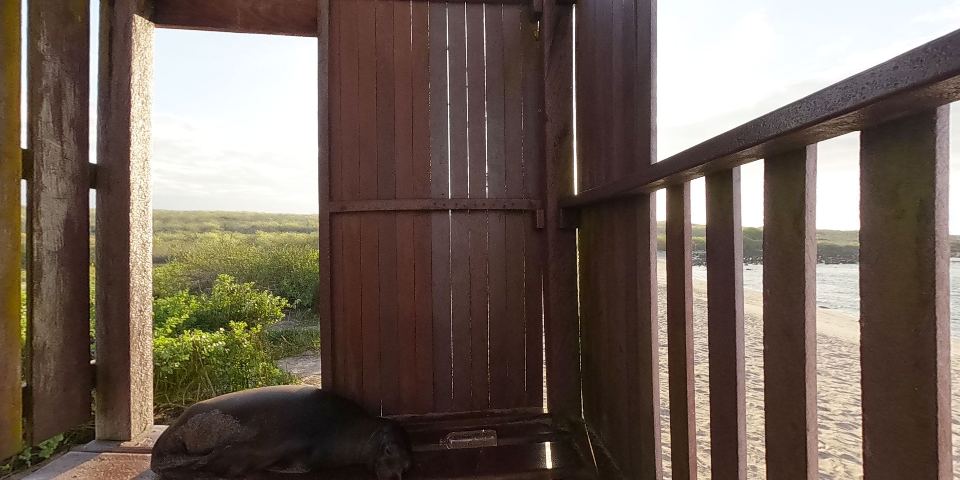
Scene 10Interior view of the ranger station at Lobería

Immersive 360-degree image showing the interior view of the ranger station at Lobería. Inside, a sea lion can be seen resting in the shade of the station.

Points of interest

TextSea lion

A marine mammal endemic to Galápagos, agile in water and on land. Lives in coastal colonies, feeds on fish and squid, and shows sexual dimorphism. Classification: Animalia — Chordata — Mammalia — Carnivora — Zalophus. IUCN Status: Endangered. Threats: climate change, food scarcity, disease, and human activities.

From here you can go to

Back to the list of scenes