360° tour · accessible version

Isla Lobos: accessible 360° tour (text version)

Explore Isla Lobos in 360°: frigatebirds, blue-footed boobies, sea lions and mangroves off San Cristóbal, Galápagos. 12 scenes with wildlife guides.

This page presents all the content of the 360° tour as text, images and links, for use with a screen reader or keyboard.

12 scenes · 33 points of interest

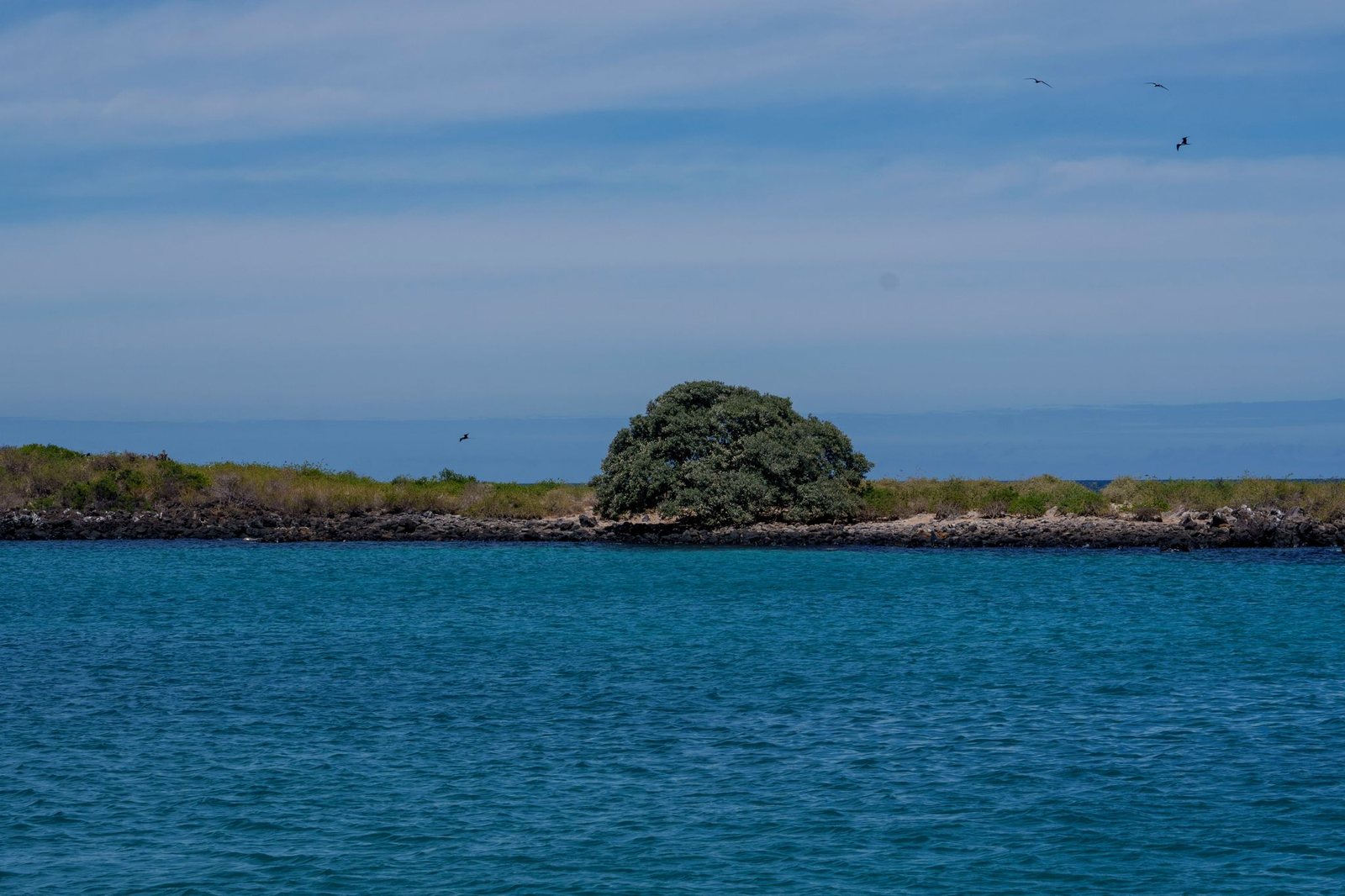
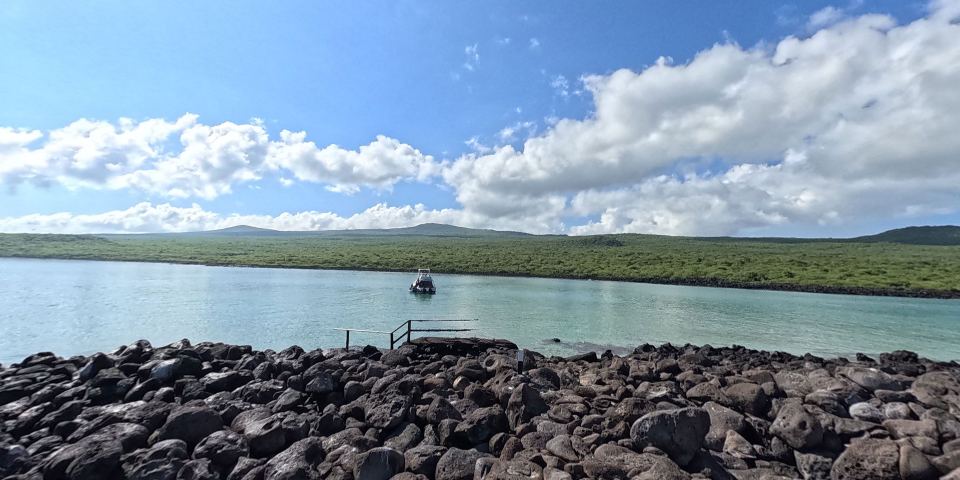
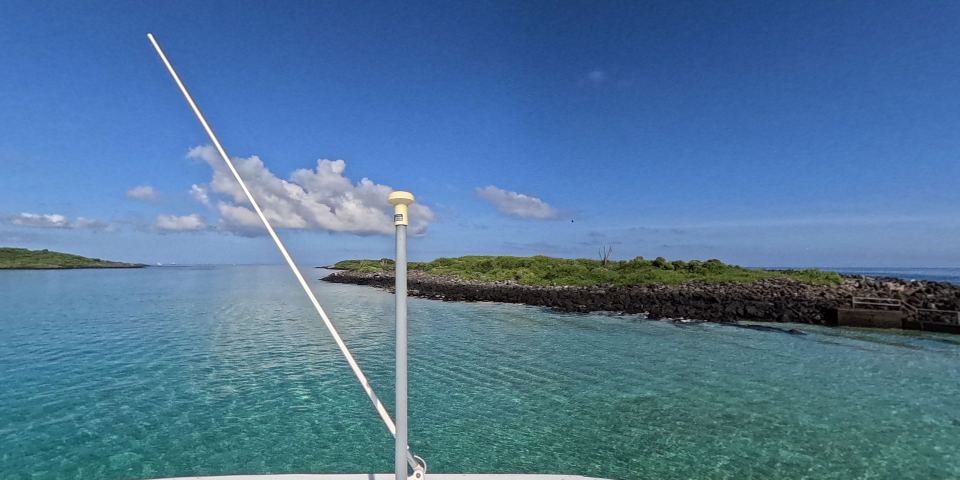
Scene 1Boat heading toward Isla Lobos

Immersive 360-degree image showing a boat heading toward Isla Lobos. Access points to Ochoa Beach can also be seen, along with a description of San Cristóbal.

Points of interest

InfographicLobos Island
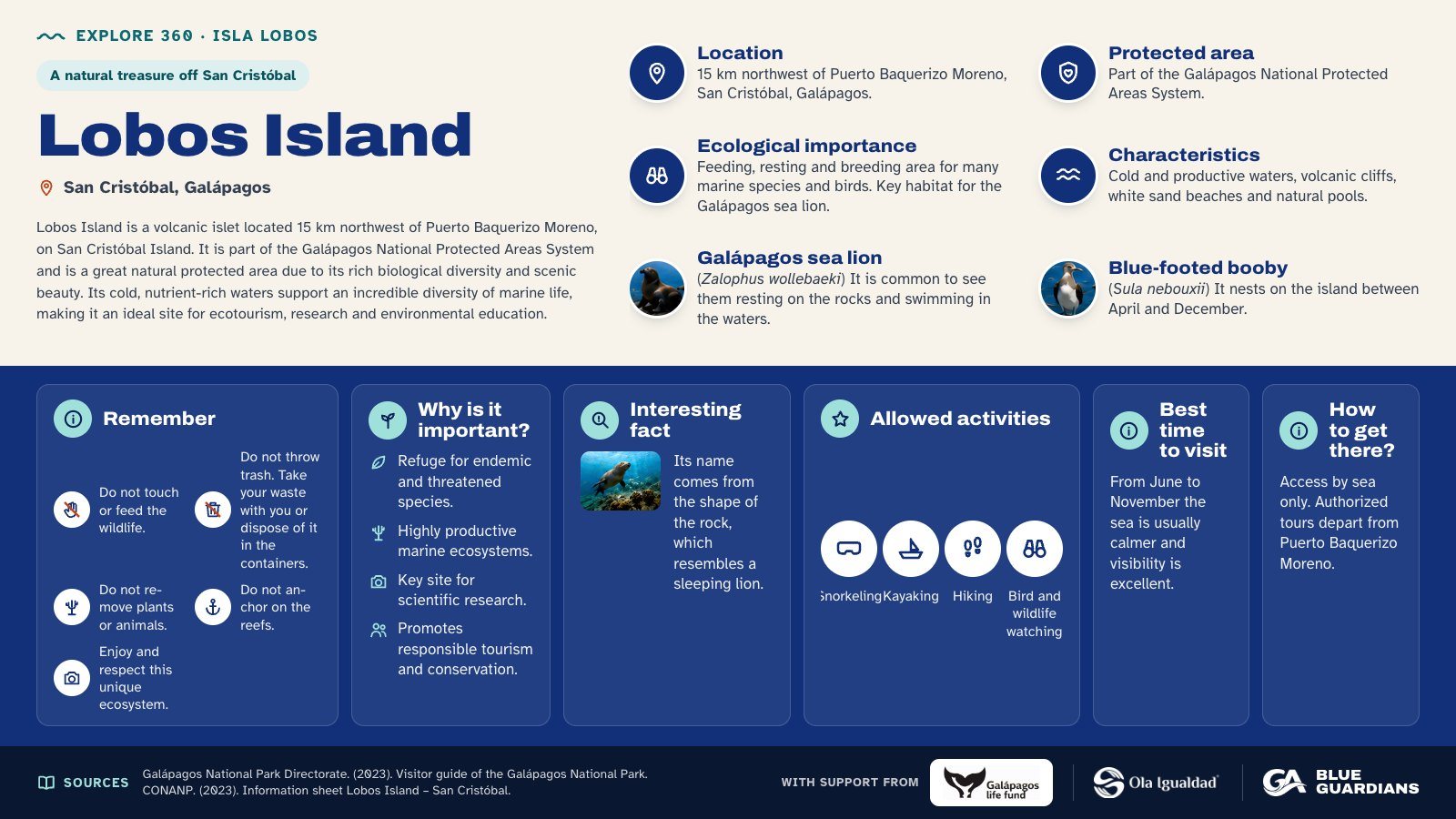
Infographic about Lobos Island: location, protected area, ecological importance, characteristics, Galápagos sea lion, blue-footed booby, great frigatebird and marine life. Also covers: remember, why is it important, interesting fact, allowed activities, best time to visit and how to get there.
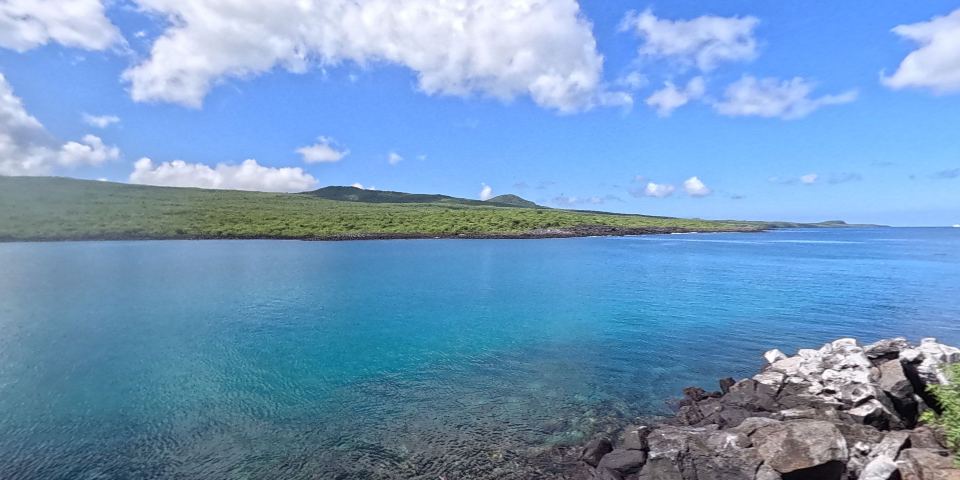
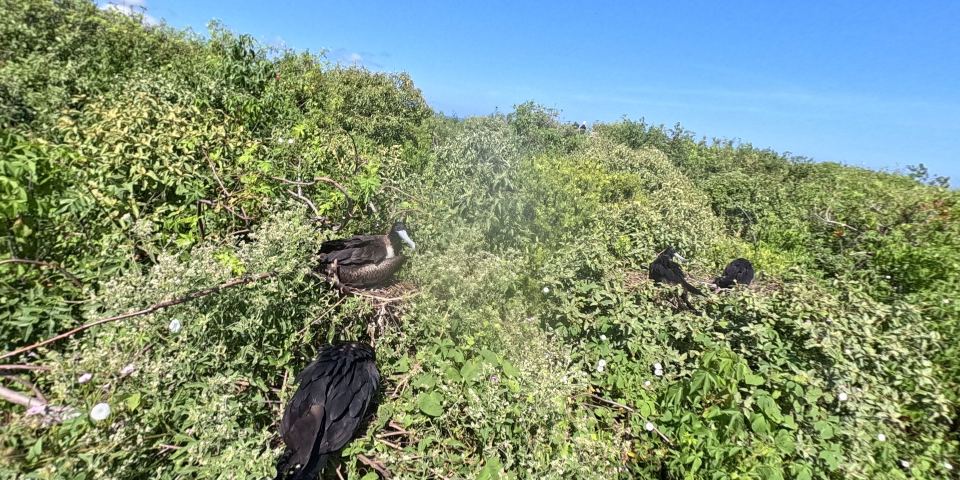
TextSan Cristóbal

San Cristóbal is the capital of Galapagos, known for its sea lion colonies, volcanic landscapes such as the Sleeping Lion and the freshwater lake El Junco, making it a natural paradise.

From here you can go to

Back to the list of scenes

Scene 2Entrance trail to Isla Lobos

Immersive 360-degree image showing the entrance trail to Isla Lobos. Access points to Ochoa Beach and to continue the tour can be seen.

From here you can go to

Back to the list of scenes

Scene 3Trail on Isla Lobos

Immersive 360-degree image showing the trail on Isla Lobos. A bird species known as the magnificent frigatebird can be seen, along with access points to continue the tour.

Points of interest

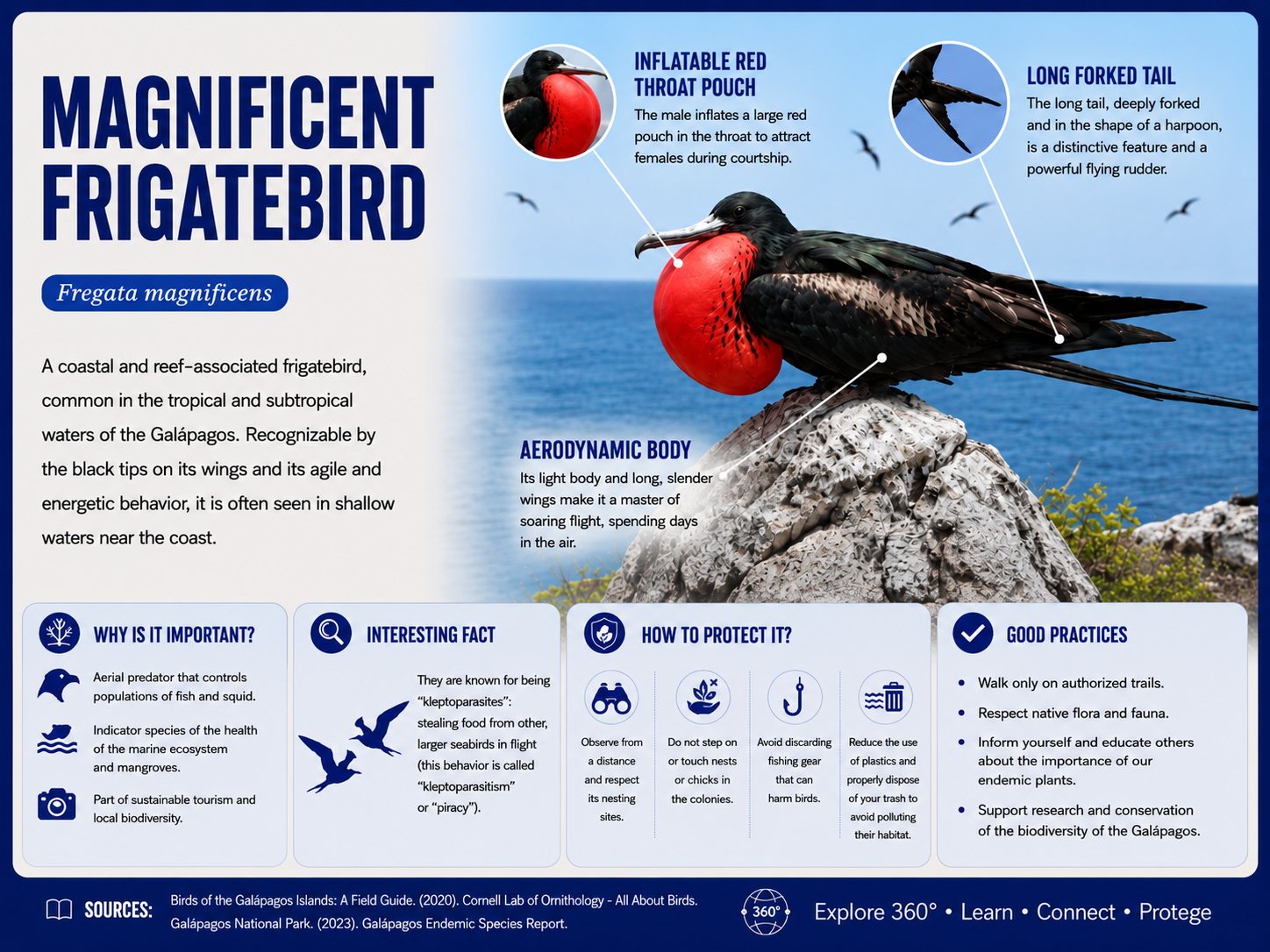
PhotoMagnificent Frigatebird

Educational infographic about the magnificent frigatebird (Fregata magnificens): the male's inflatable red throat pouch, its long forked tail and aerodynamic body, its role as an aerial predator and how to protect it.

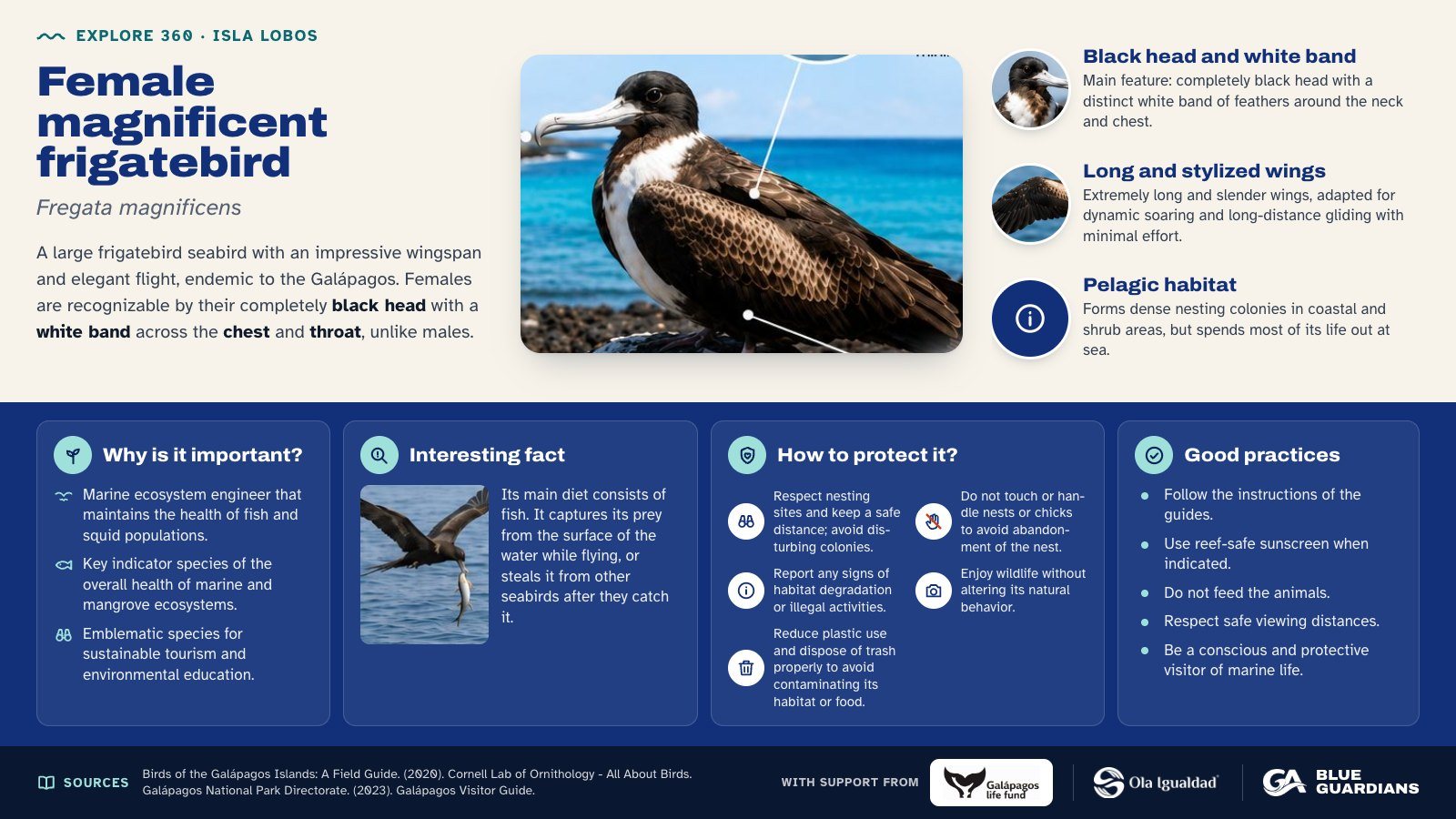
InfographicFemale frigatebird

Infographic about Female magnificent frigatebird (Fregata magnificens): black head and white band, long and stylized wings and pelagic habitat. Also covers: why is it important, interesting fact, how to protect it and good practices.

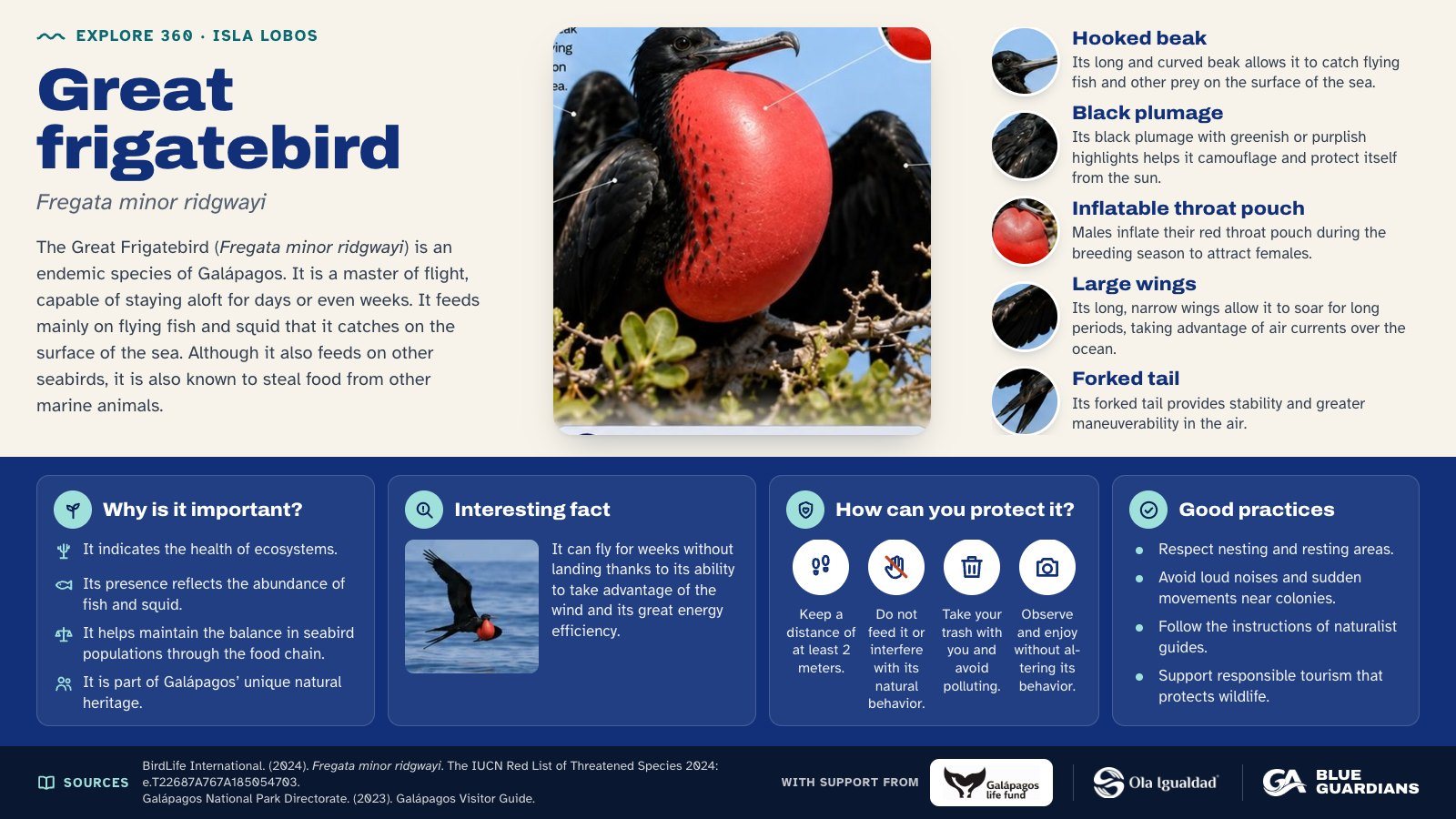
InfographicMale frigatebird

Infographic about Great frigatebird (Fregata minor ridgwayi): hooked beak, black plumage, inflatable throat pouch, large wings and forked tail. Also covers: why is it important, interesting fact, how can you protect it and good practices.

From here you can go to

Back to the list of scenes

Scene 4Trail on Isla Lobos

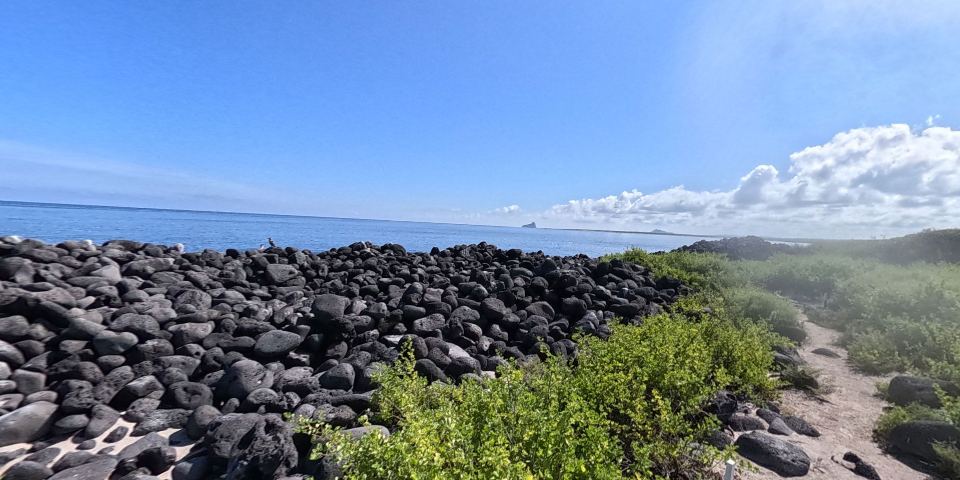
Immersive 360-degree image showing the trail on Isla Lobos. A path surrounded by vegetation, rocks, and several points of interest about the local fauna can be seen.

Points of interest

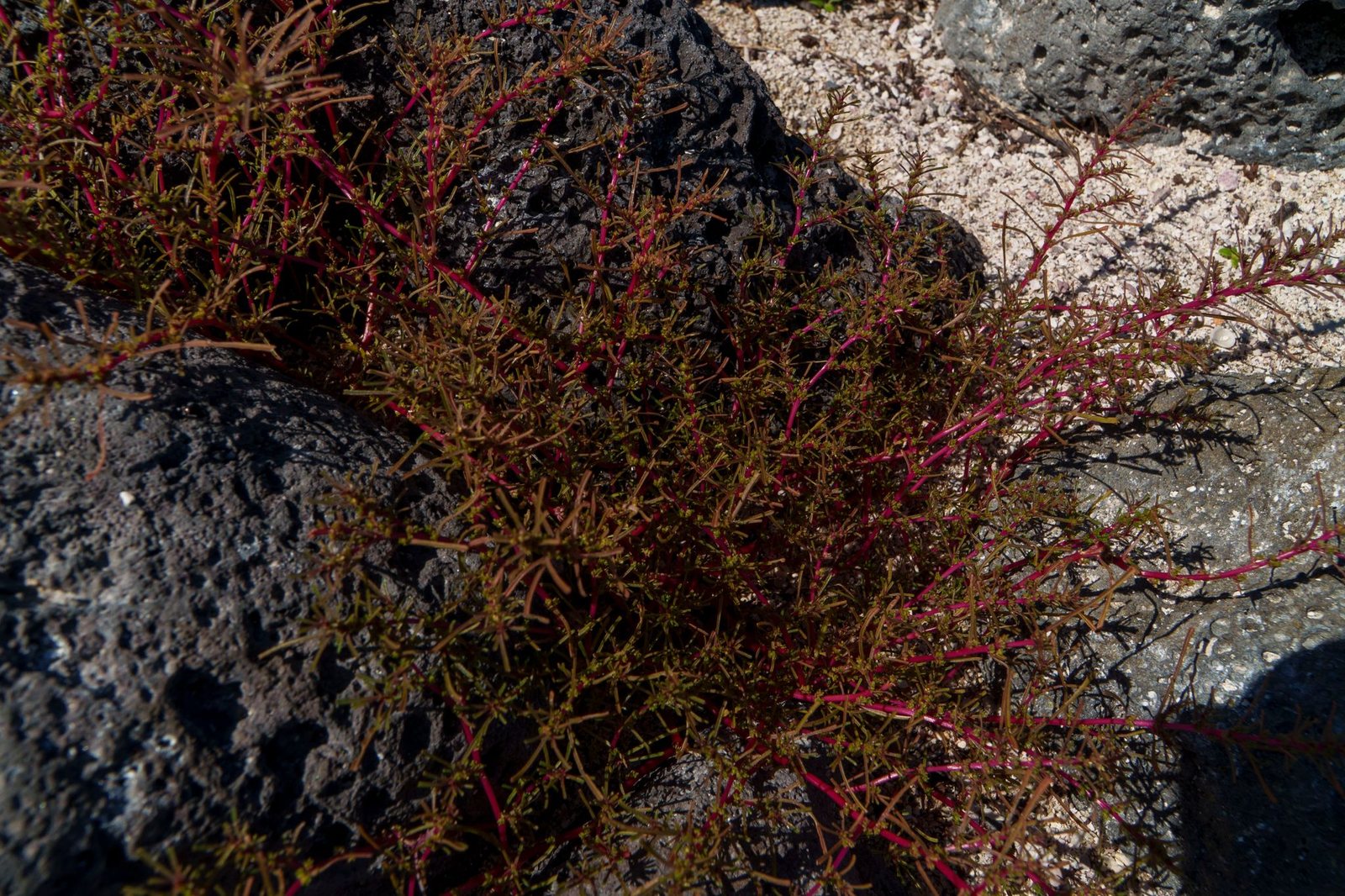
PhotoPalo café

Palo Café ("Euphorbia viminea") - The production of latex in its tissues provides natural defense mechanisms against herbivores and pathogens, as its sap is commonly toxic.

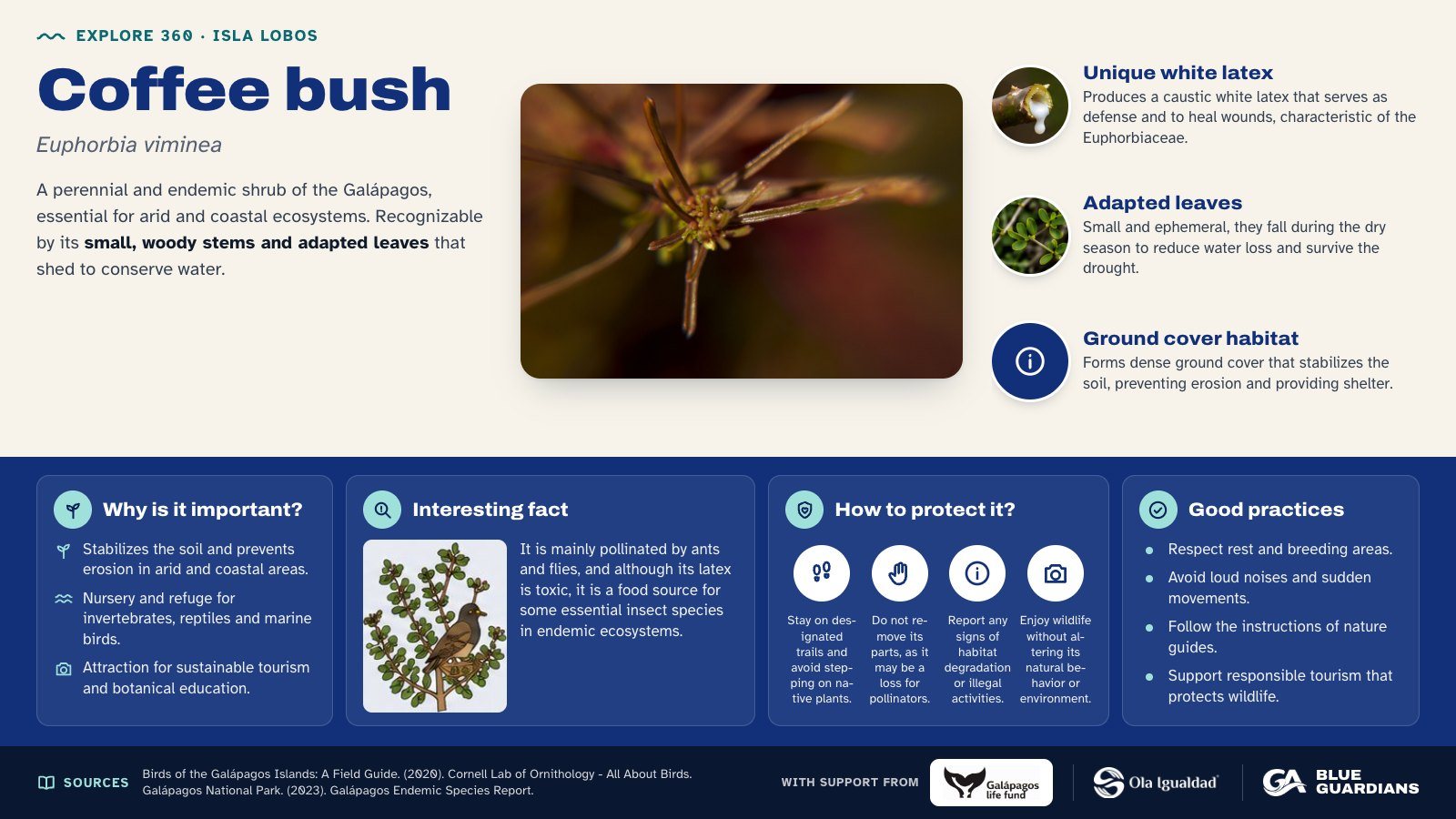
InfographicPalo café

Infographic about Coffee bush (Euphorbia viminea): unique white latex, adapted leaves and ground cover habitat. Also covers: why is it important, interesting fact, how to protect it and good practices.

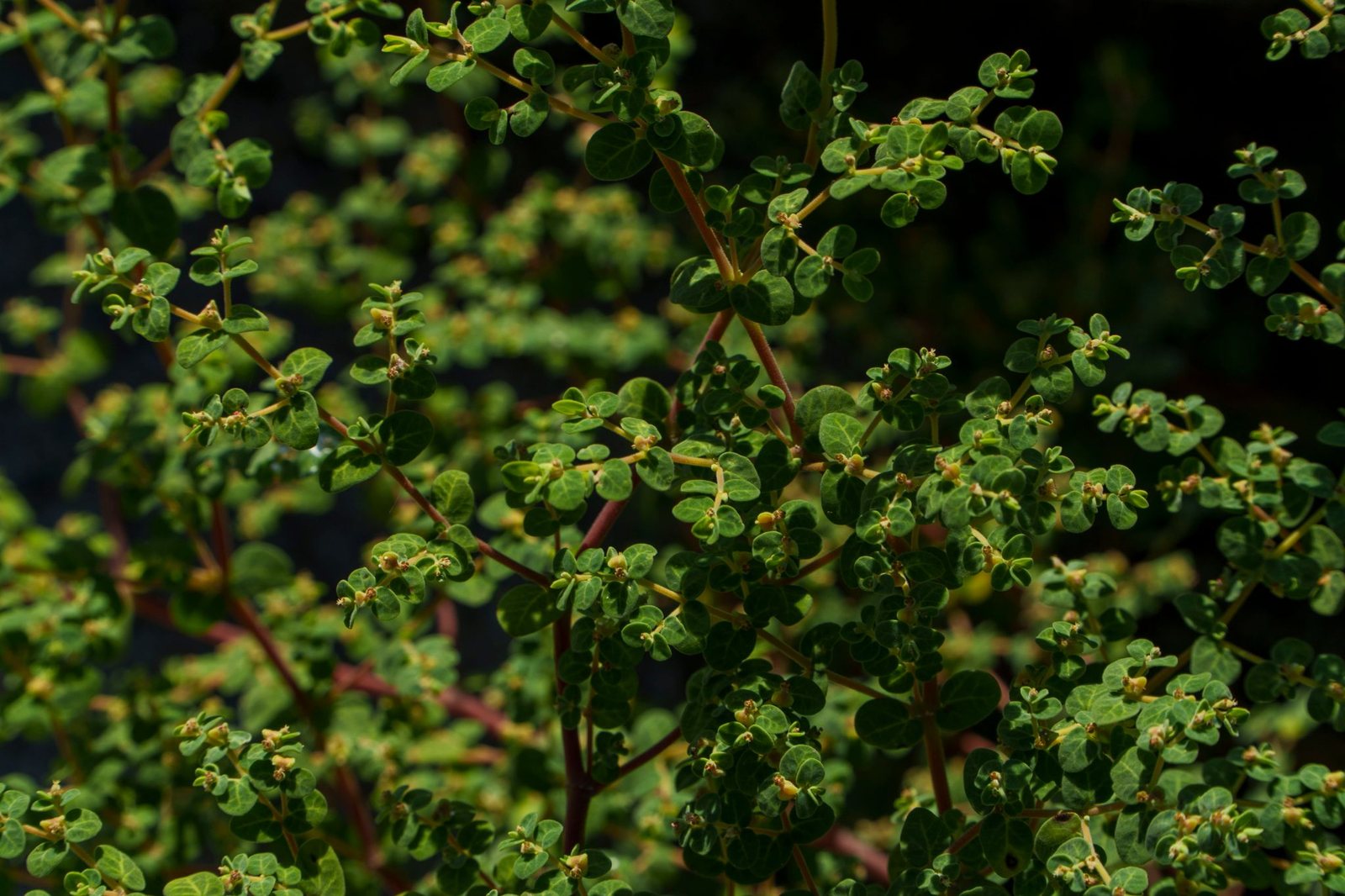
PhotoBeach Sandmat

Beach Sandmat ("Euphorbia serpens") - An annual creeping herb with prostrate stems and tiny opposite leaves that forms small mats on dry, disturbed soils, producing irritating white latex.

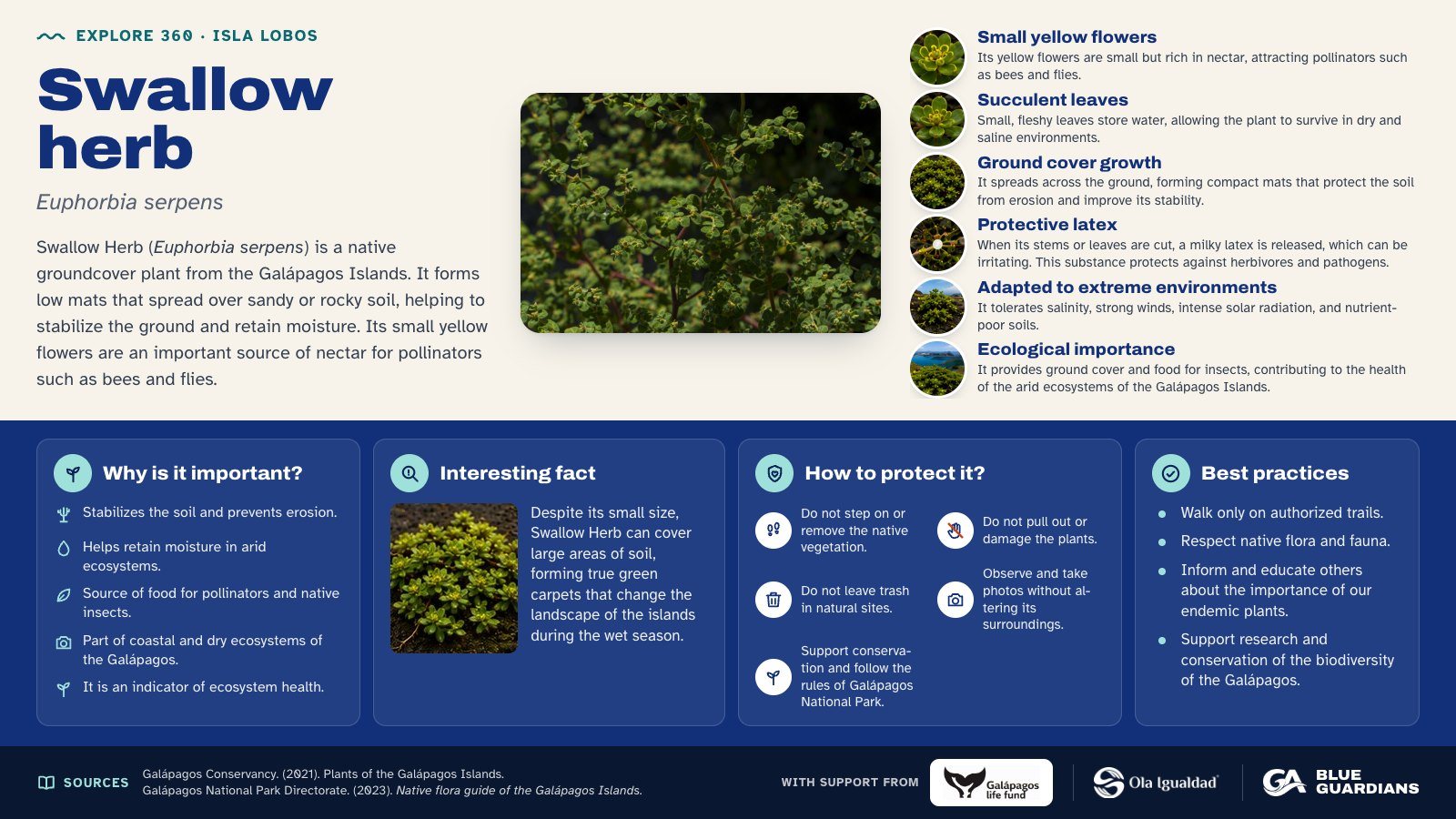
InfographicBeach Sandmat

Infographic about Swallow herb (Euphorbia serpens): small yellow flowers, succulent leaves, ground cover growth, protective latex, adapted to extreme environments and ecological importance. Also covers: why is it important, interesting fact, how to protect it and best practices.

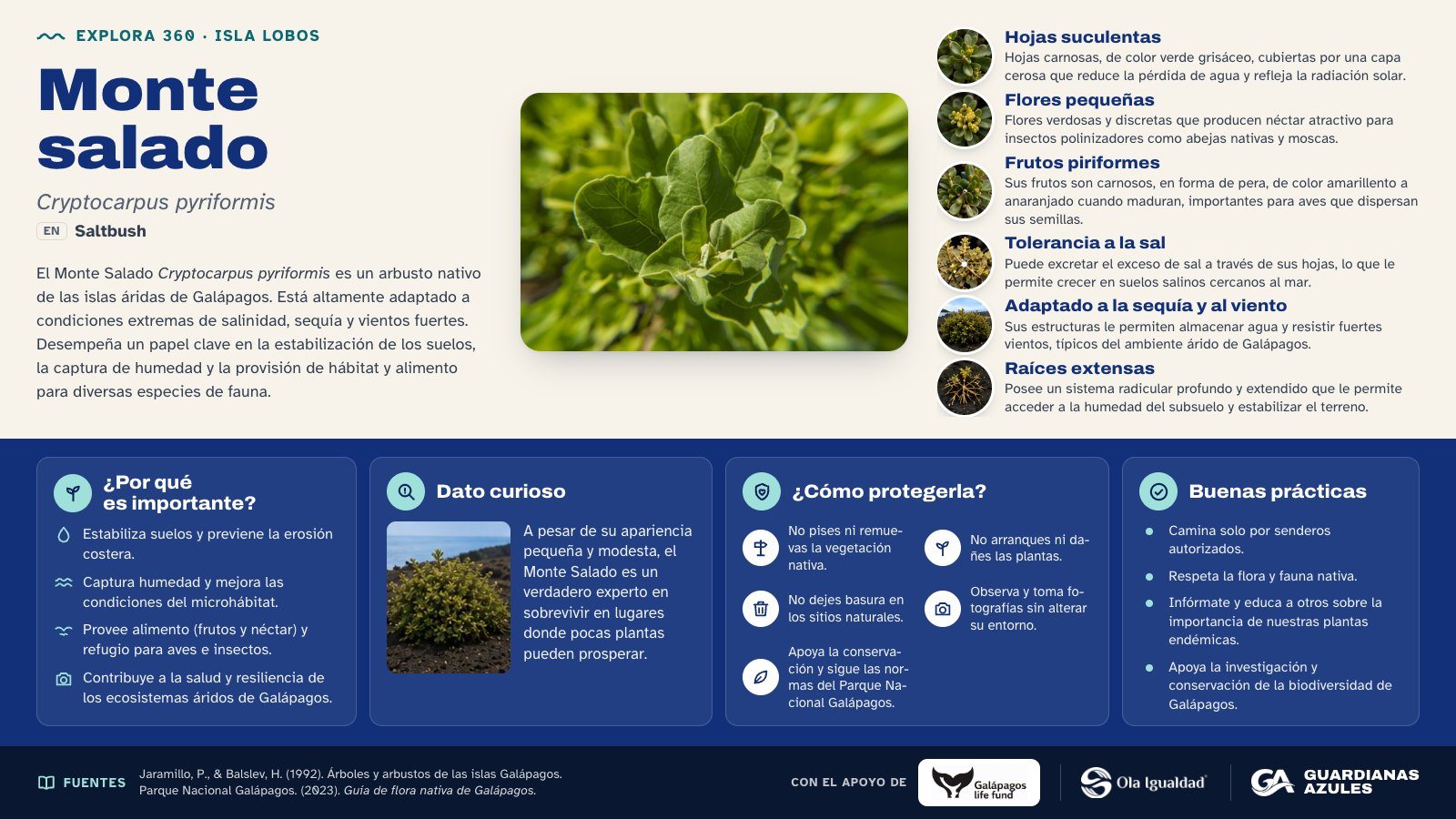
InfographicMonte Salado

Infografía sobre Monte salado (Cryptocarpus pyriformis): hojas suculentas, flores pequeñas, frutos piriformes, tolerancia a la sal, adaptado a la sequía y al viento y raíces extensas. Incluye por qué es importante, dato curioso, cómo protegerla y buenas prácticas.

From here you can go to

Back to the list of scenes

Scene 5Area with rocks

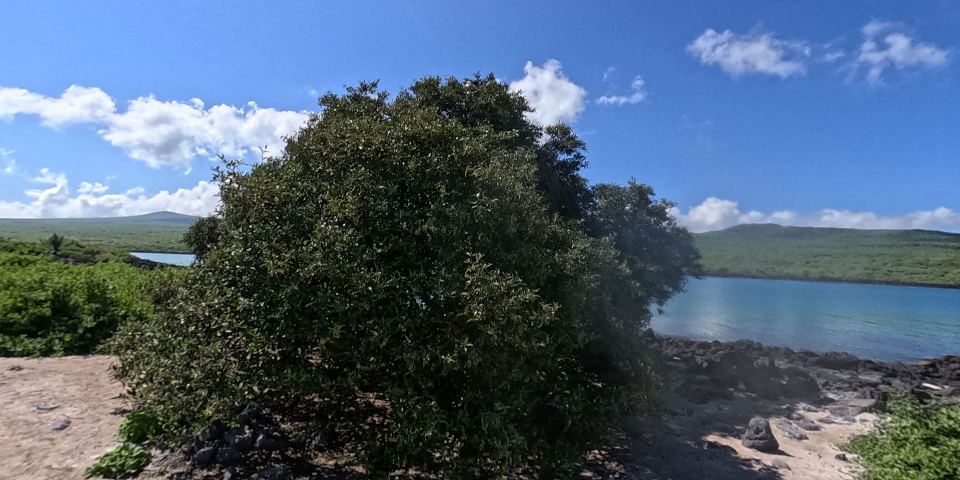
Immersive 360-degree image showing an area with rocks, vegetation, and sand where a black mangrove can be seen. Wildlife species such as a female frigatebird or a fur seal can also be observed.

Points of interest

InfographicFemale frigatebird

Infographic about Female magnificent frigatebird (Fregata magnificens): black head and white band, long and stylized wings and pelagic habitat. Also covers: why is it important, interesting fact, how to protect it and good practices.

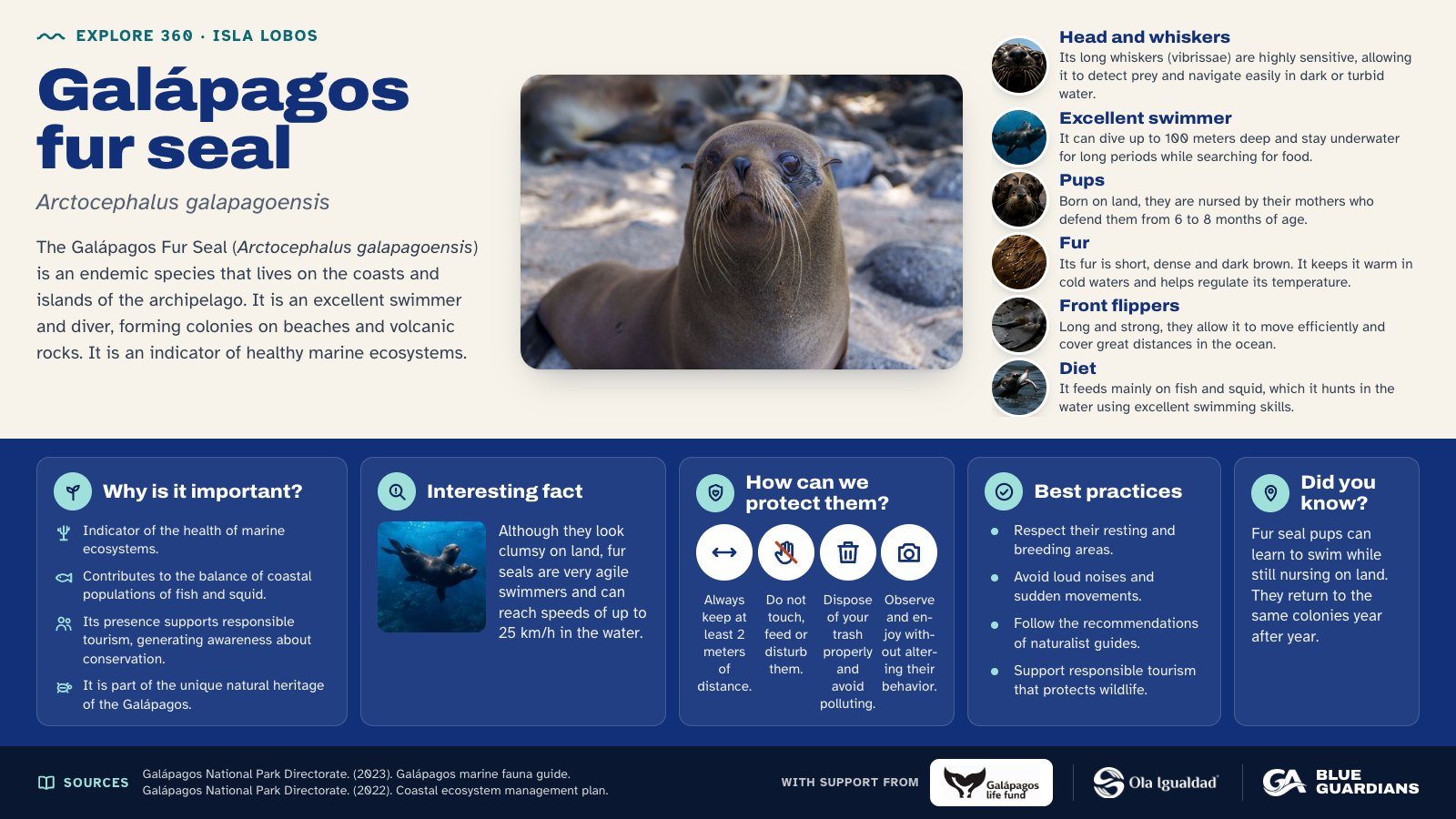
InfographicGalápagos fur seal

Infographic about Galápagos fur seal (Arctocephalus galapagoensis): head and whiskers, excellent swimmer, pups, fur, front flippers and diet. Also covers: why is it important, interesting fact, how can we protect them, best practices and did you know.

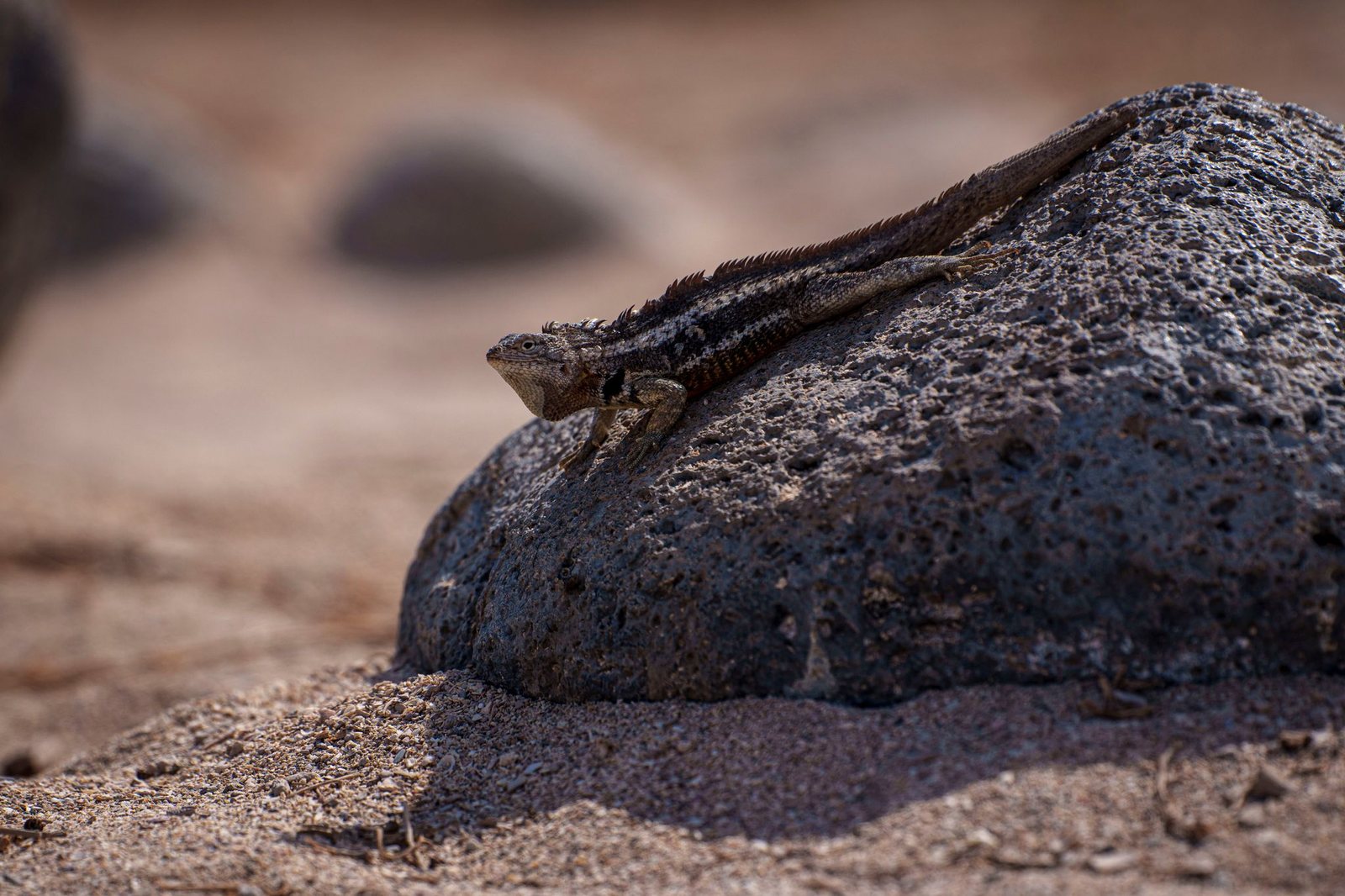
PhotoLava Lizard

Lava lizard ("Microlophus bivittatus") - Males are larger and show bright colours (mottled yellow, copper or black) with a spiny crest.

PhotoBlack Mangrove

Black Mangrove ("Avicennia germinans") - Its leaves excrete excess salt, allowing it to survive in brackish water.

From here you can go to

Back to the list of scenes

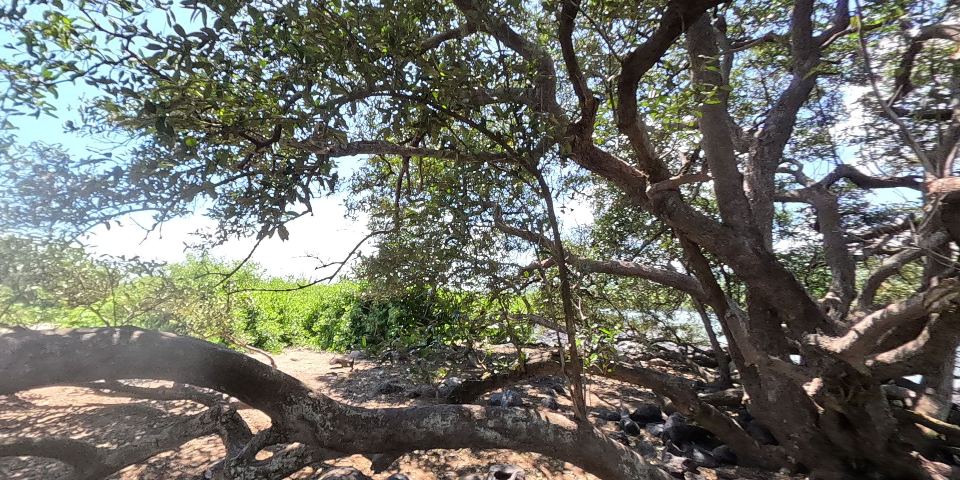
Scene 6Interior area of a black mangrove

Immersive 360-degree image showing the interior area of a black mangrove. Points of interest about this species can be seen, as well as a newborn sea lion.

Points of interest

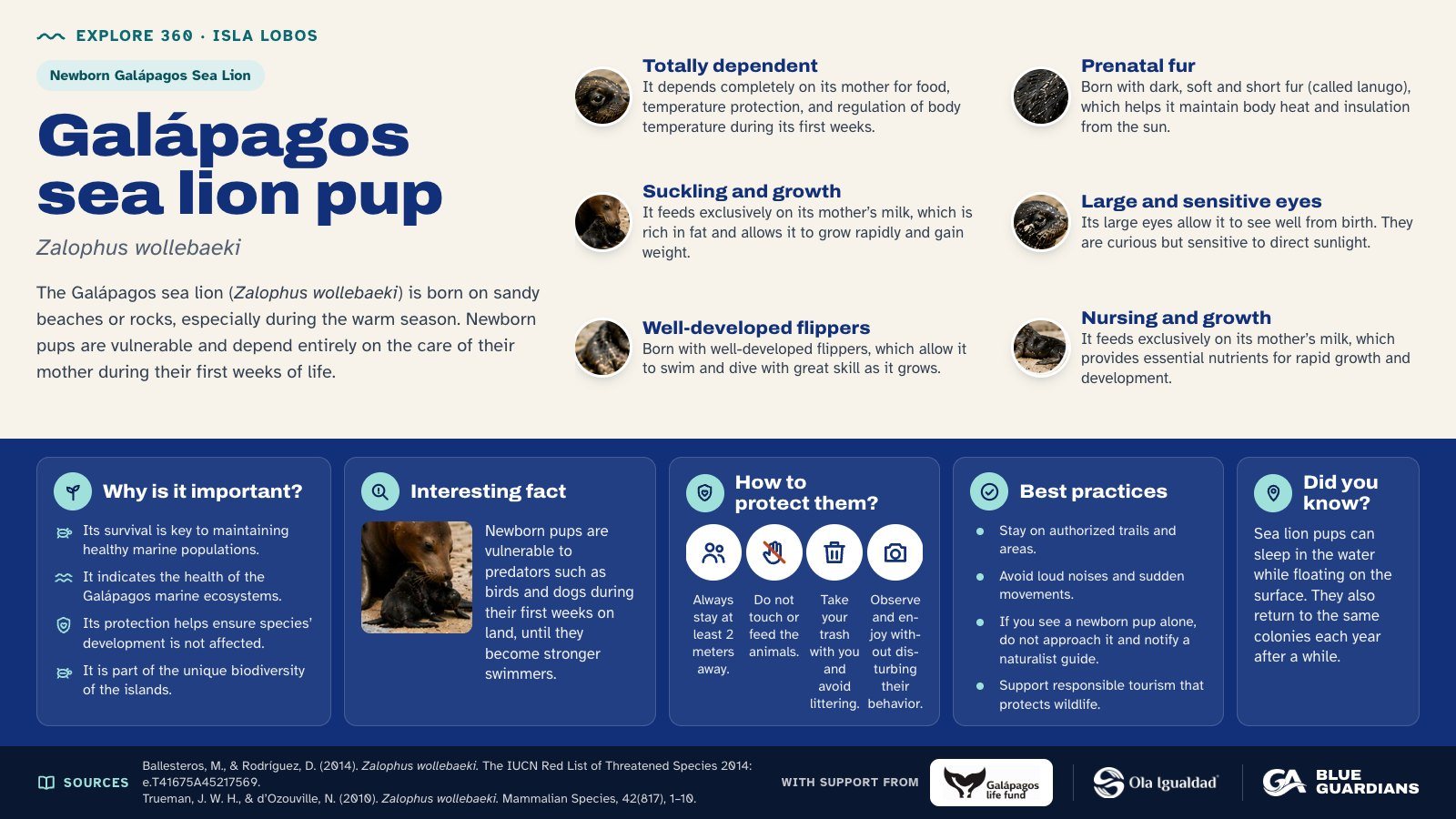
InfographicNewborn sea lion

Infographic about Galápagos sea lion pup (Zalophus wollebaeki): totally dependent, prenatal fur, suckling and growth, large and sensitive eyes, well-developed flippers and nursing and growth. Also covers: why is it important, interesting fact, how to protect them, best practices and did you know.

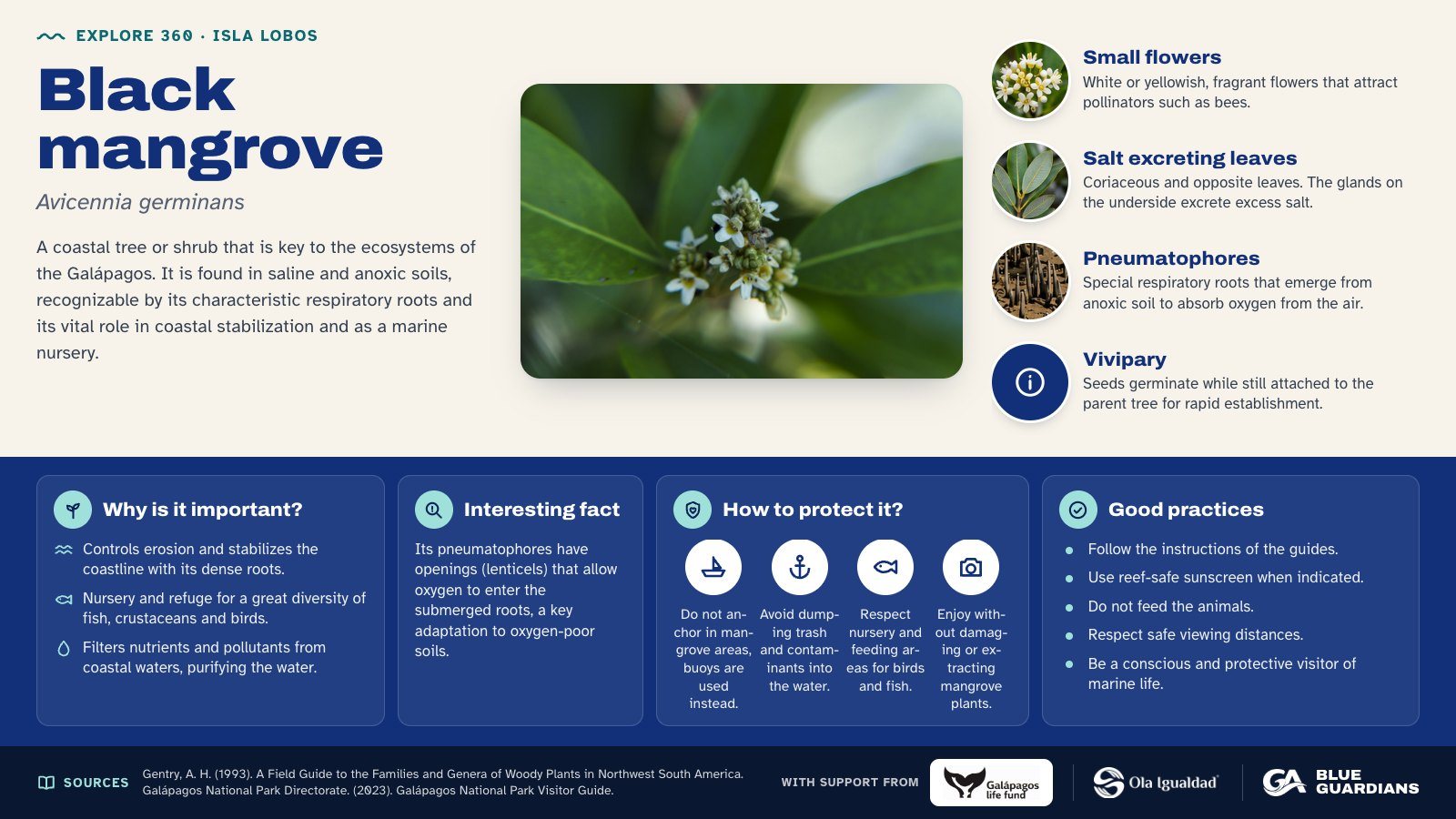
InfographicBlack mangrove

Infographic about Black mangrove (Avicennia germinans): small flowers, salt excreting leaves, pneumatophores and vivipary. Also covers: why is it important, interesting fact, how to protect it and good practices.

PhotoBlack Mangrove leaf

Black Mangrove leaf

PhotoBlack Mangrove seed

Black Mangrove seed

From here you can go to

Back to the list of scenes

Scene 7Trail on Isla Lobos

Immersive 360-degree image showing the trail on Isla Lobos, in an area with rocks and vegetation. Points of interest about blue-footed boobies can be seen.

Points of interest

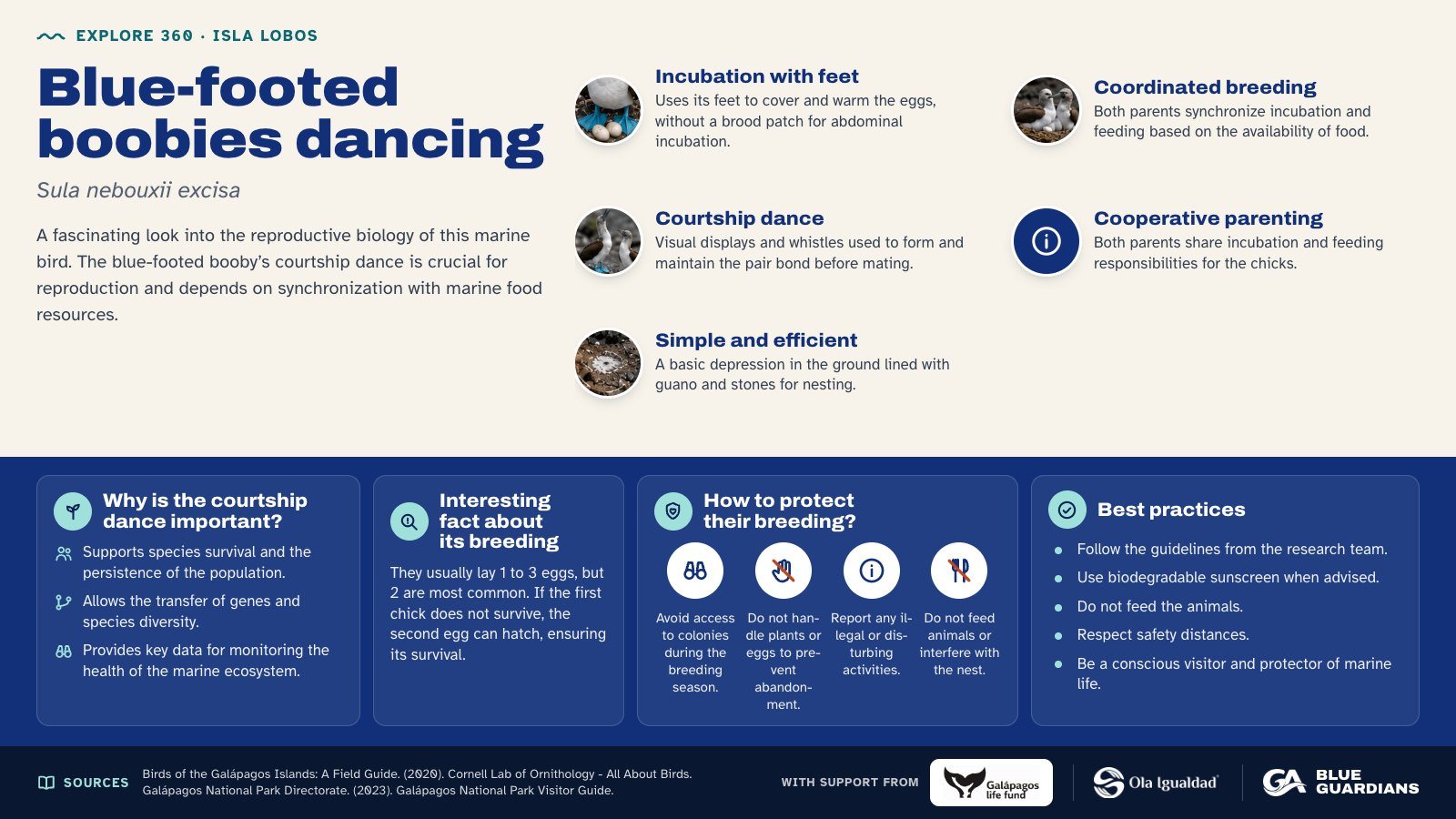
InfographicNesting blue-footed boobies

Infographic about Blue-footed boobies dancing (Sula nebouxii excisa): incubation with feet, coordinated breeding, courtship dance, cooperative parenting and simple and efficient. Also covers: why is the courtship dance important, interesting fact about its breeding, how to protect their breeding and best practices.

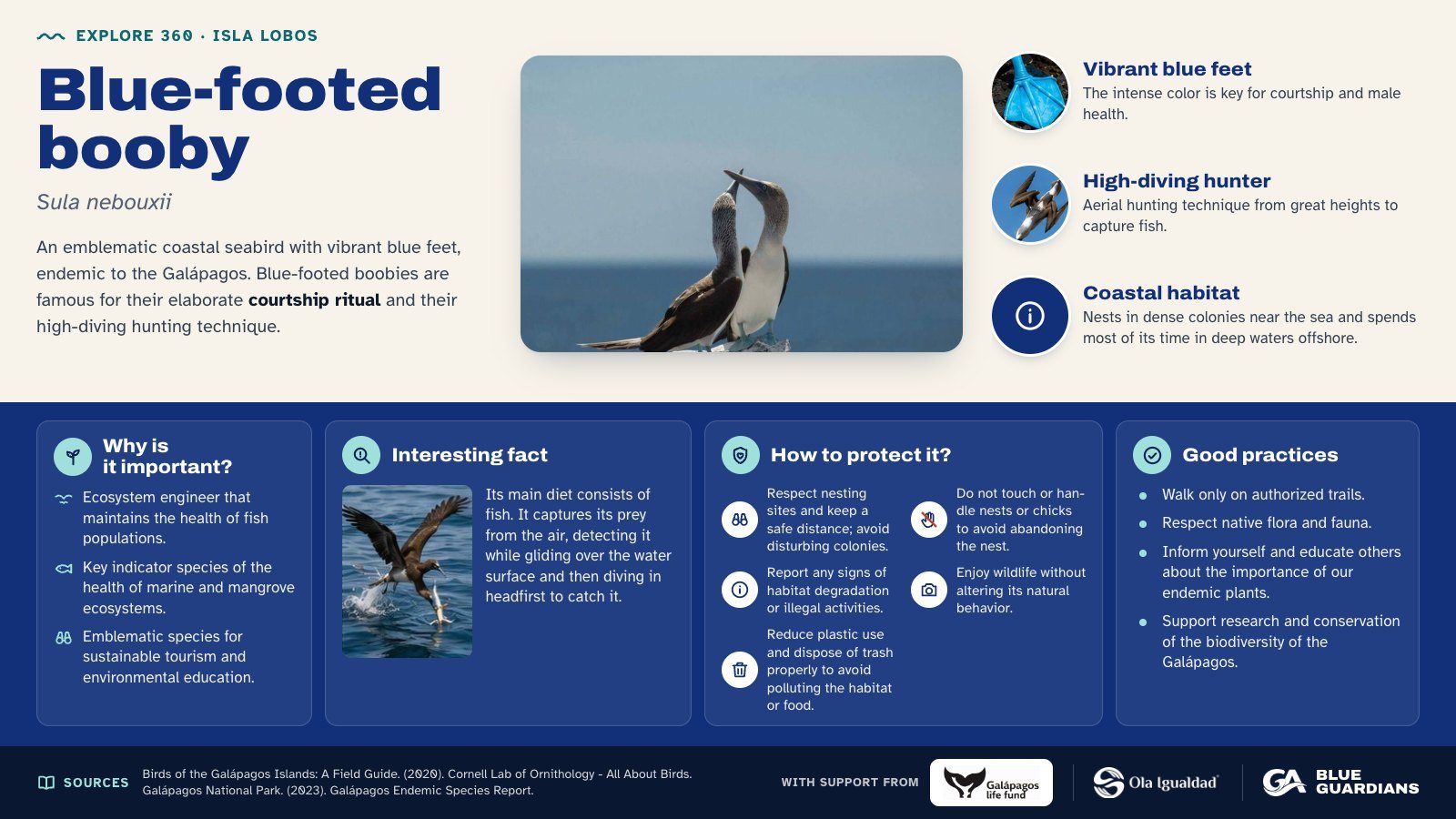
InfographicBlue-footed booby

Infographic about Blue-footed booby (Sula nebouxii): vibrant blue feet, high-diving hunter and coastal habitat. Also covers: why is it important, interesting fact, how to protect it and good practices.

From here you can go to

Back to the list of scenes

Scene 8Channel that crosses from Isla Lobos to Ochoa Beach

Immersive 360-degree image showing the channel that crosses from Isla Lobos to Ochoa Beach. Points of interest about frigatebirds and their different characteristics can be seen.

Points of interest

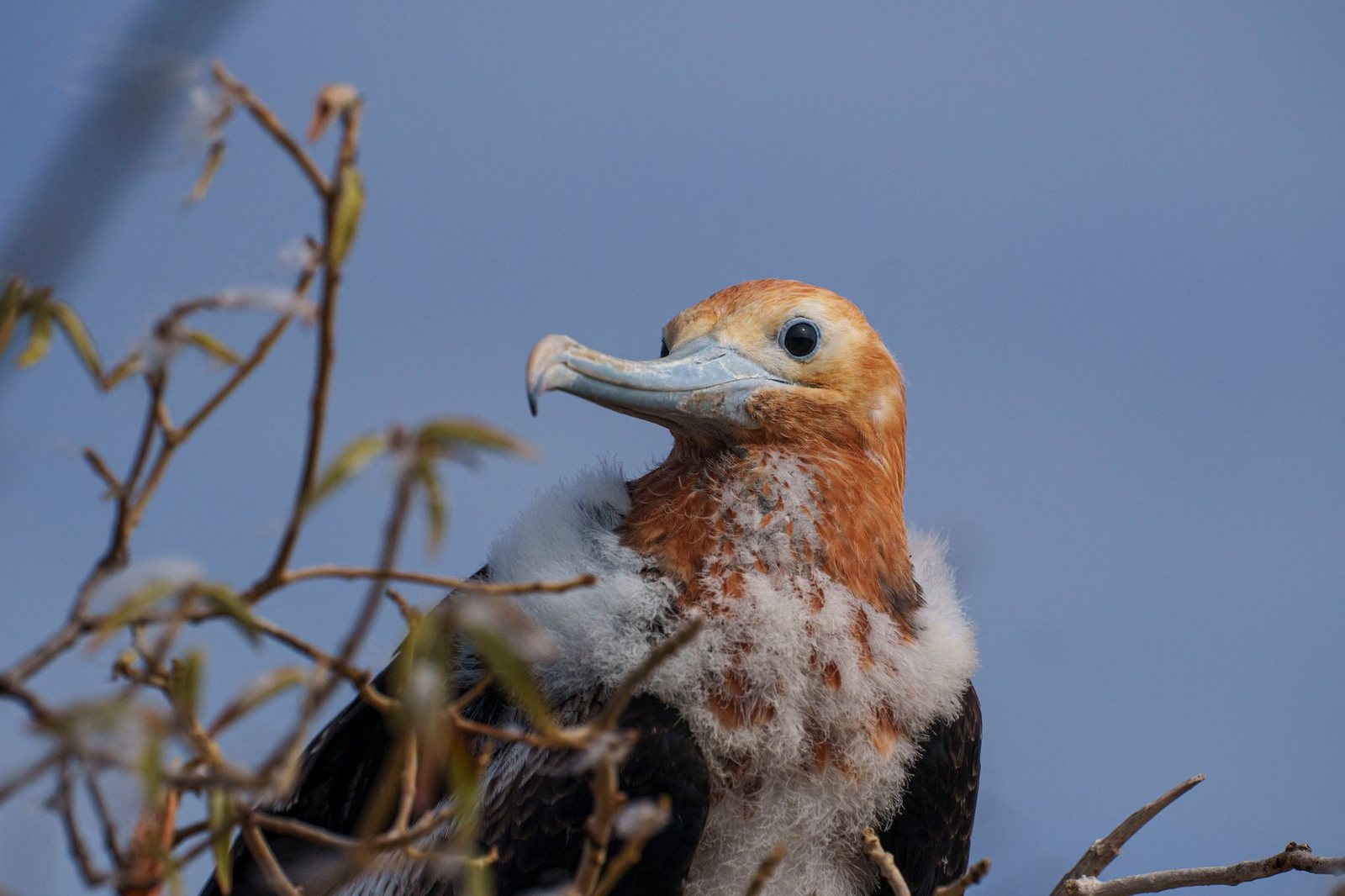
PhotoGreat Frigatebird

Great Frigatebird ("Fregata minor ridgwayi"), a young bird with its rusty head — They have one of the longest dependency periods of any bird species; juveniles depend on their parents for food for a year or more after learning to fly.

From here you can go to

Back to the list of scenes

Scene 9Boat heading toward Ochoa Beach

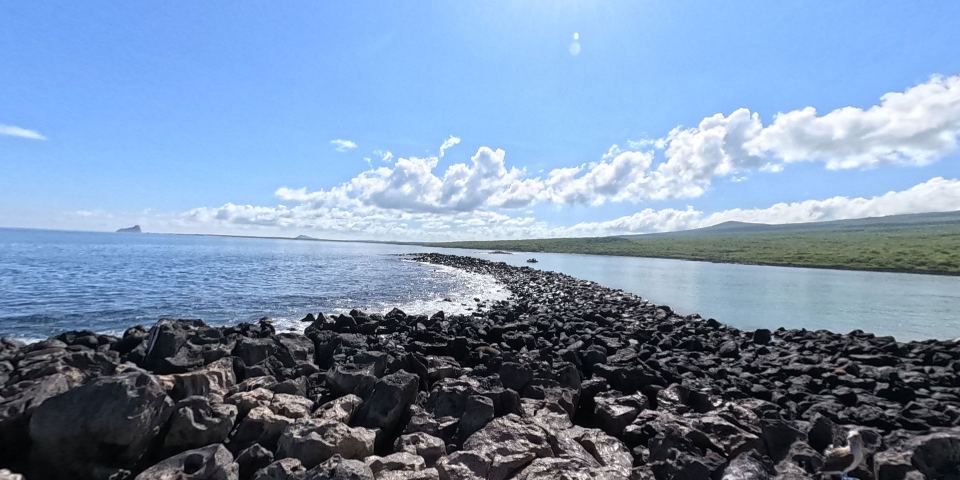
Immersive 360-degree image showing a boat heading toward Ochoa Beach. The beach, a lagoon behind it, and a general description of the area can all be seen.

Points of interest

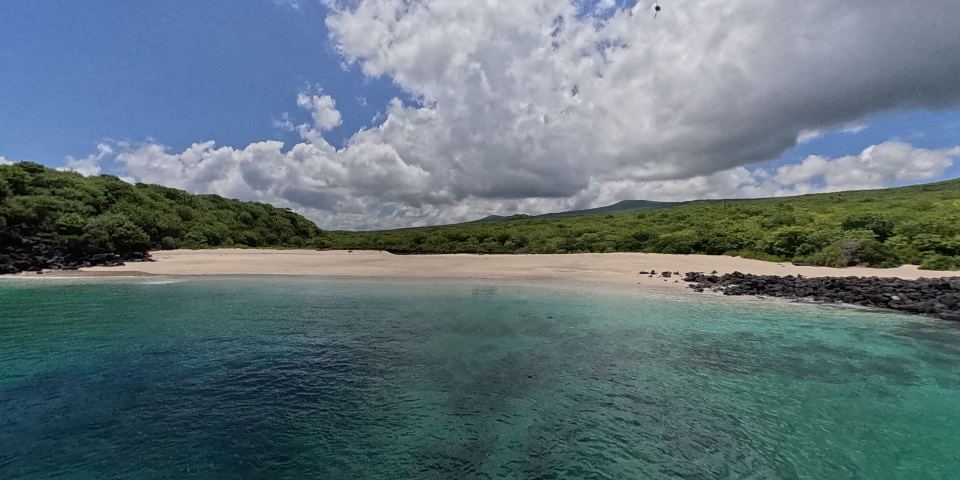
TextOchoa beach

Playa Ochoa, near Isla Lobos on San Cristóbal, is a small bay with white sand and calm waters, ideal for swimming and snorkeling among sea lions, boobies, and turtles.

From here you can go to

Back to the list of scenes

Scene 10Central area of Ochoa Beach

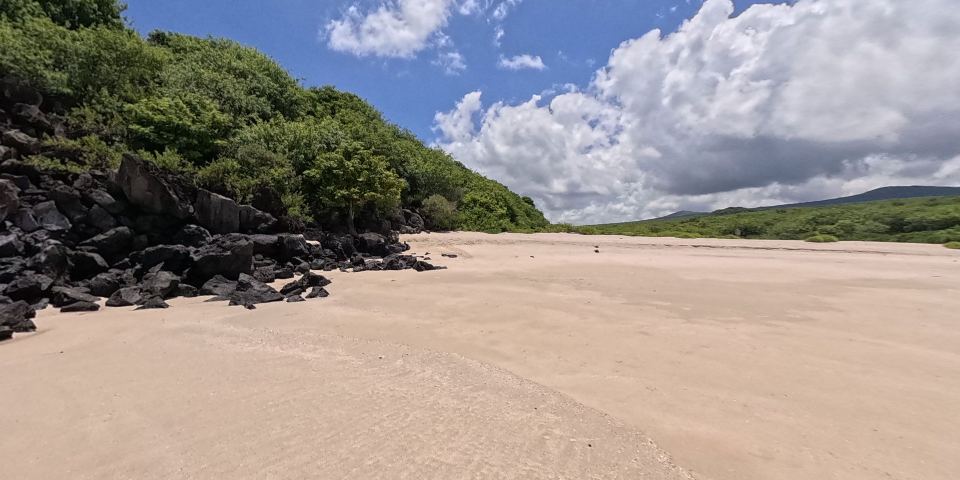
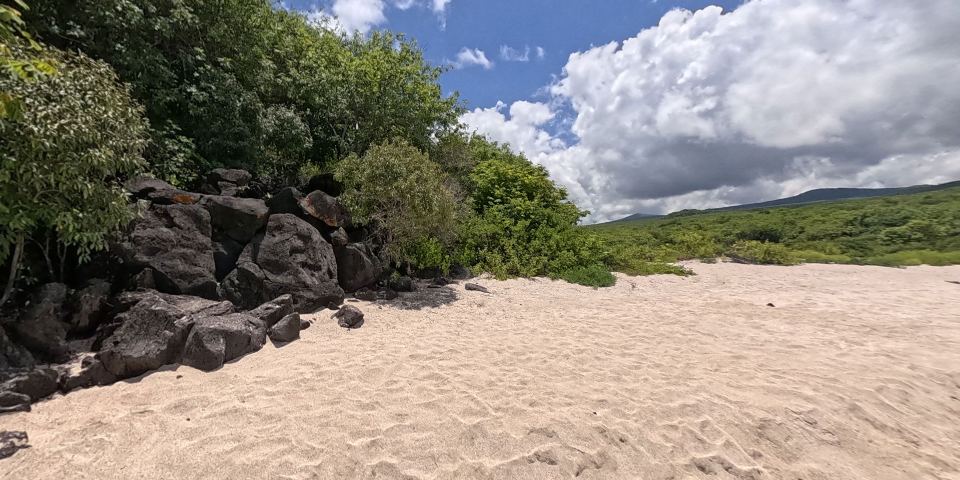
Immersive 360-degree image showing the central area of Ochoa Beach. From here, points of interest such as the lagoon, the beach sand, and a rocky area can be seen.

Points of interest

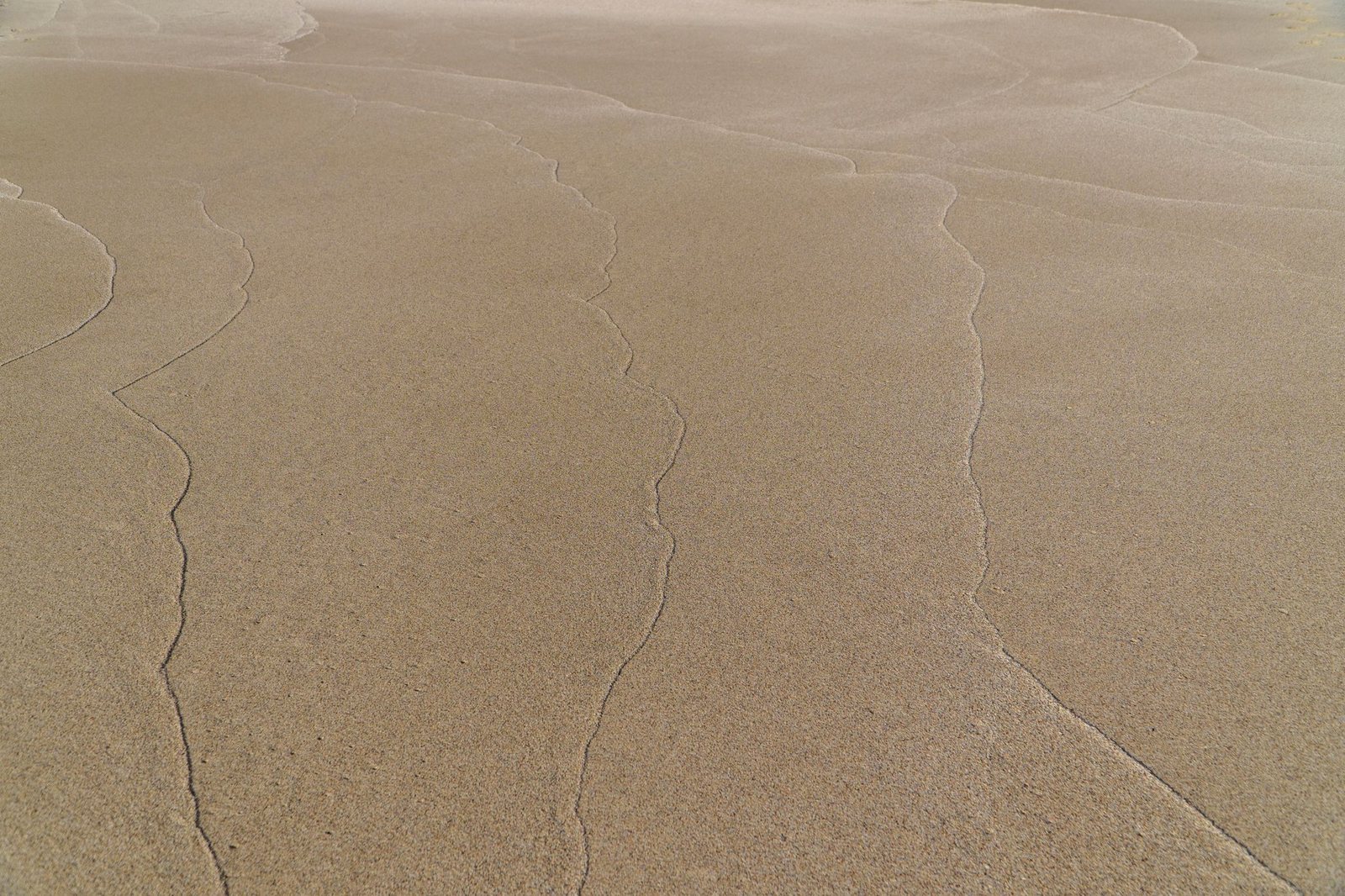
PhotoOchoa beach sand

Formed by the breakdown of volcanic rocks, coral fragments, shells, and marine organisms. The longer the material has been eroded, the finer the sand; the origin — volcanic or biological — also determines its texture.

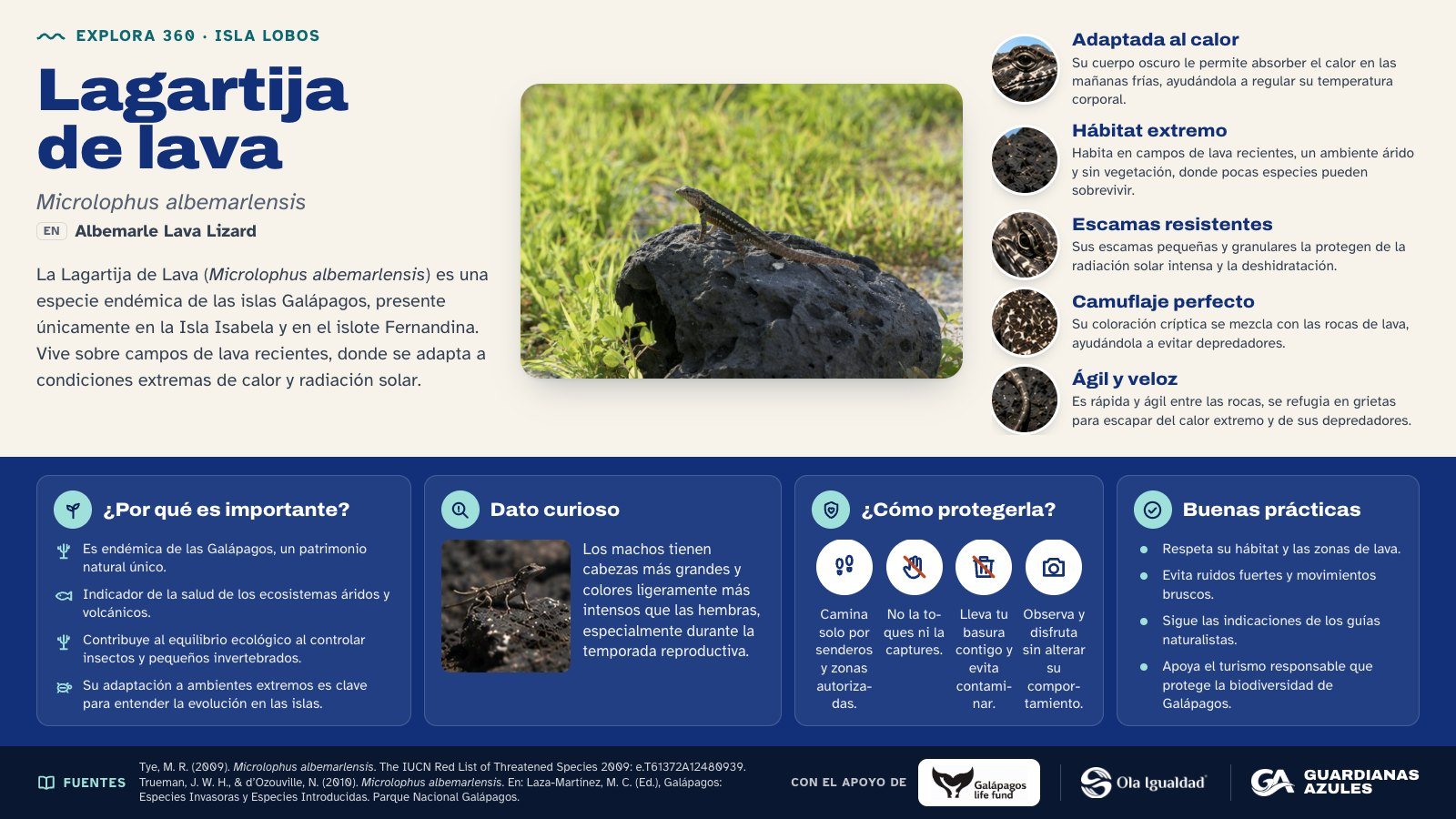
InfographicLava lizard

Infografía sobre Lagartija de lava (Microlophus bivittatus): adaptada al calor, hábitat extremo, escamas resistentes, camuflaje perfecto y ágil y veloz. Incluye por qué es importante, dato curioso, cómo protegerla y buenas prácticas.

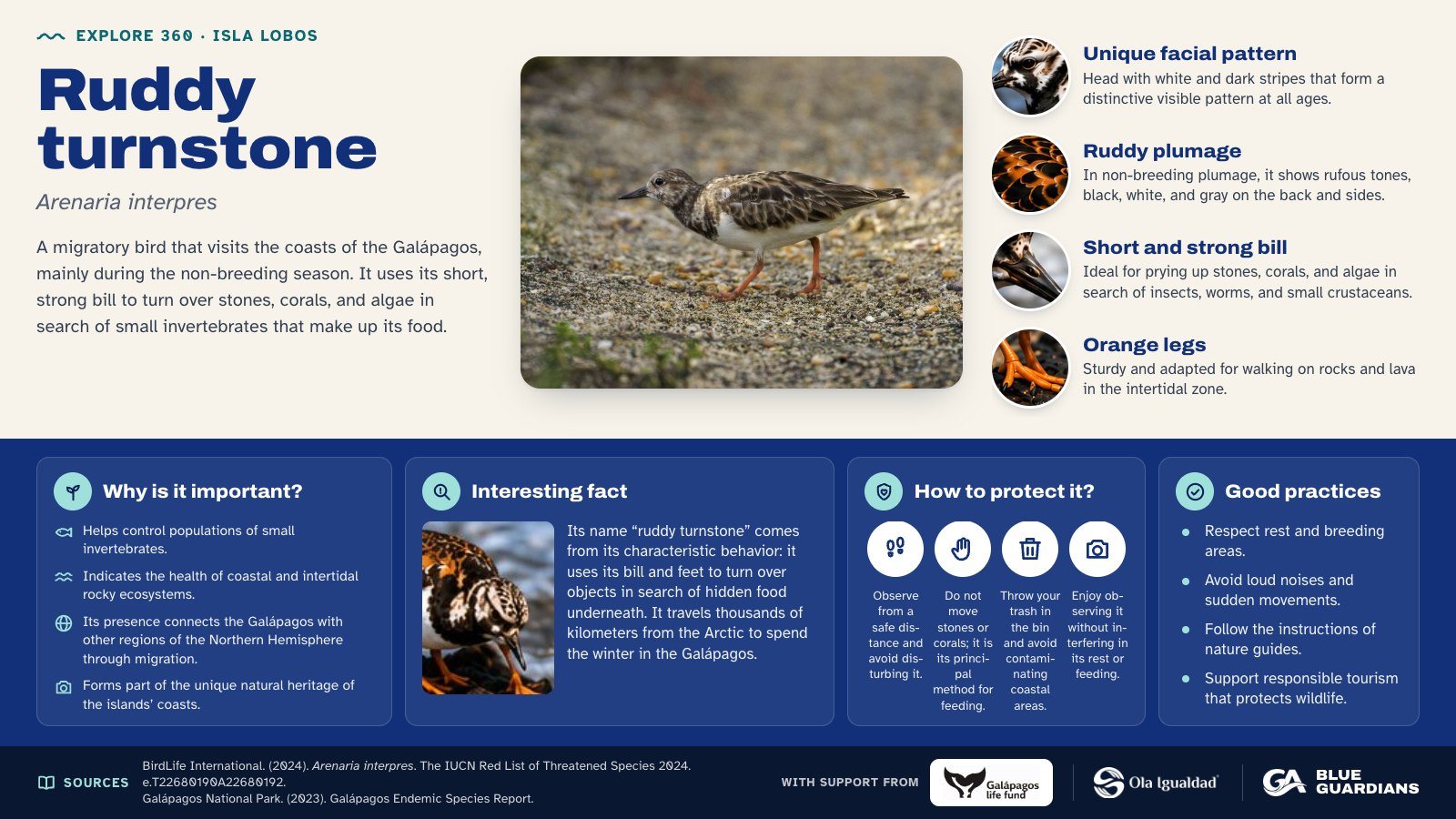
InfographicRuddy turnstone

Infographic about Ruddy turnstone (Arenaria interpres): unique facial pattern, ruddy plumage, short and strong bill and orange legs. Also covers: why is it important, interesting fact, how to protect it and good practices.

From here you can go to

Back to the list of scenes

Scene 11Rocky area of Ochoa Beach

Immersive 360-degree image showing the rocky area of Ochoa Beach. From here, points of interest such as the lava gull and access points to explore the beach can be seen.

Points of interest

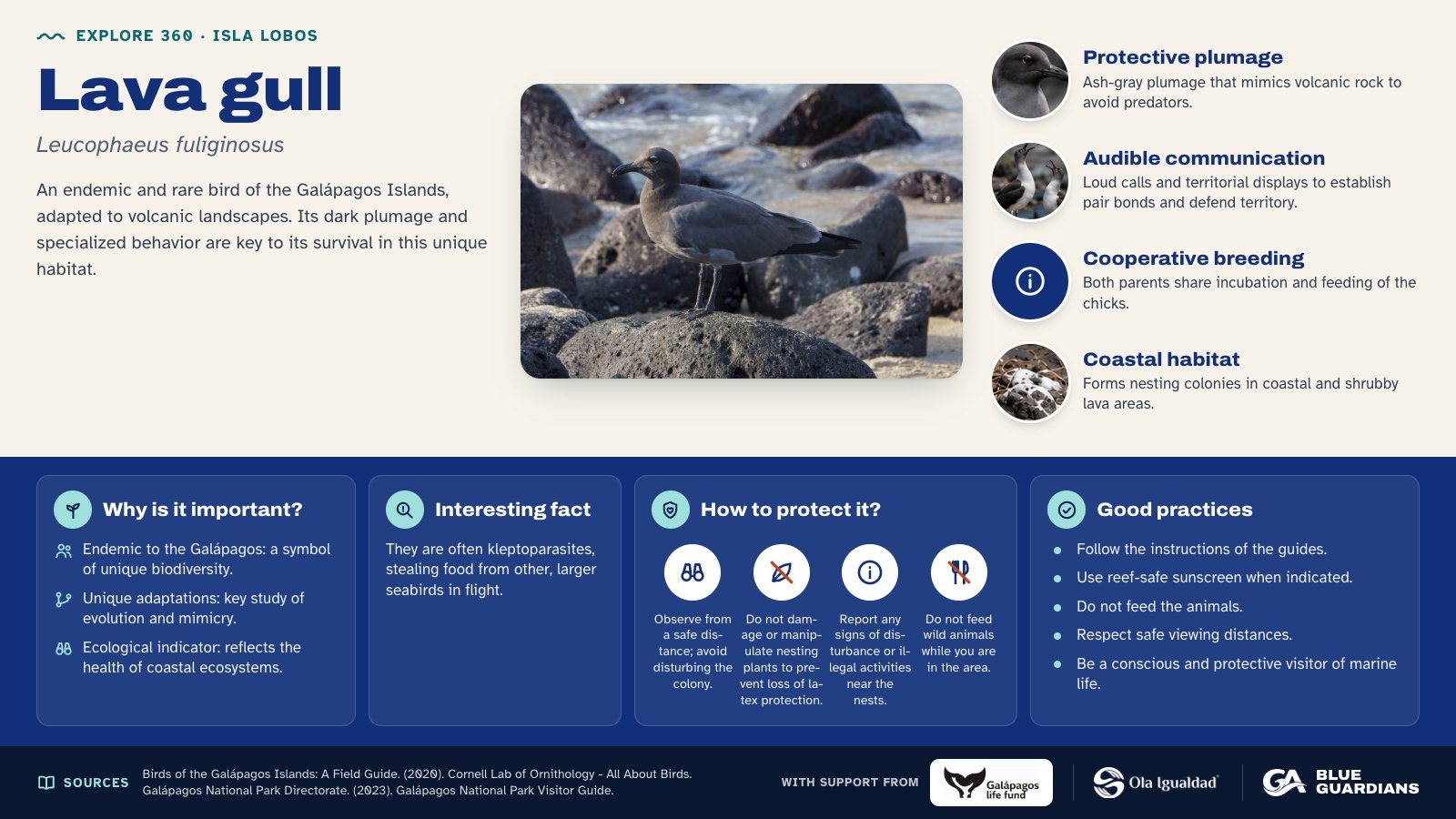
InfographicLava gull

Infographic about Lava gull (Leucophaeus fuliginosus): protective plumage, audible communication, cooperative breeding and coastal habitat. Also covers: why is it important, interesting fact, how to protect it and good practices.

From here you can go to

Back to the list of scenes

Scene 12Lagoon located at Ochoa Beach

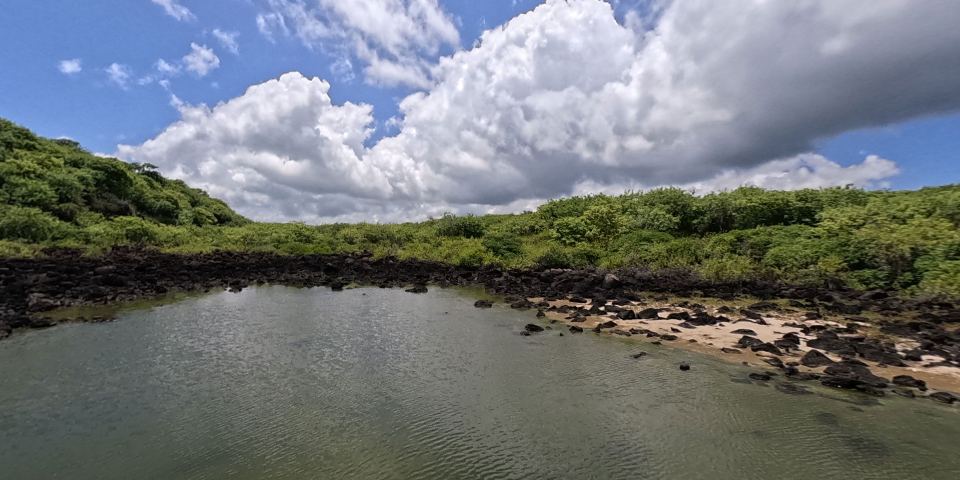
Immersive 360-degree image showing the lagoon located at Ochoa Beach, surrounded by rocks, vegetation, and sand. From here, access points can be seen to explore the beach or return to Isla Lobos.

Points of interest

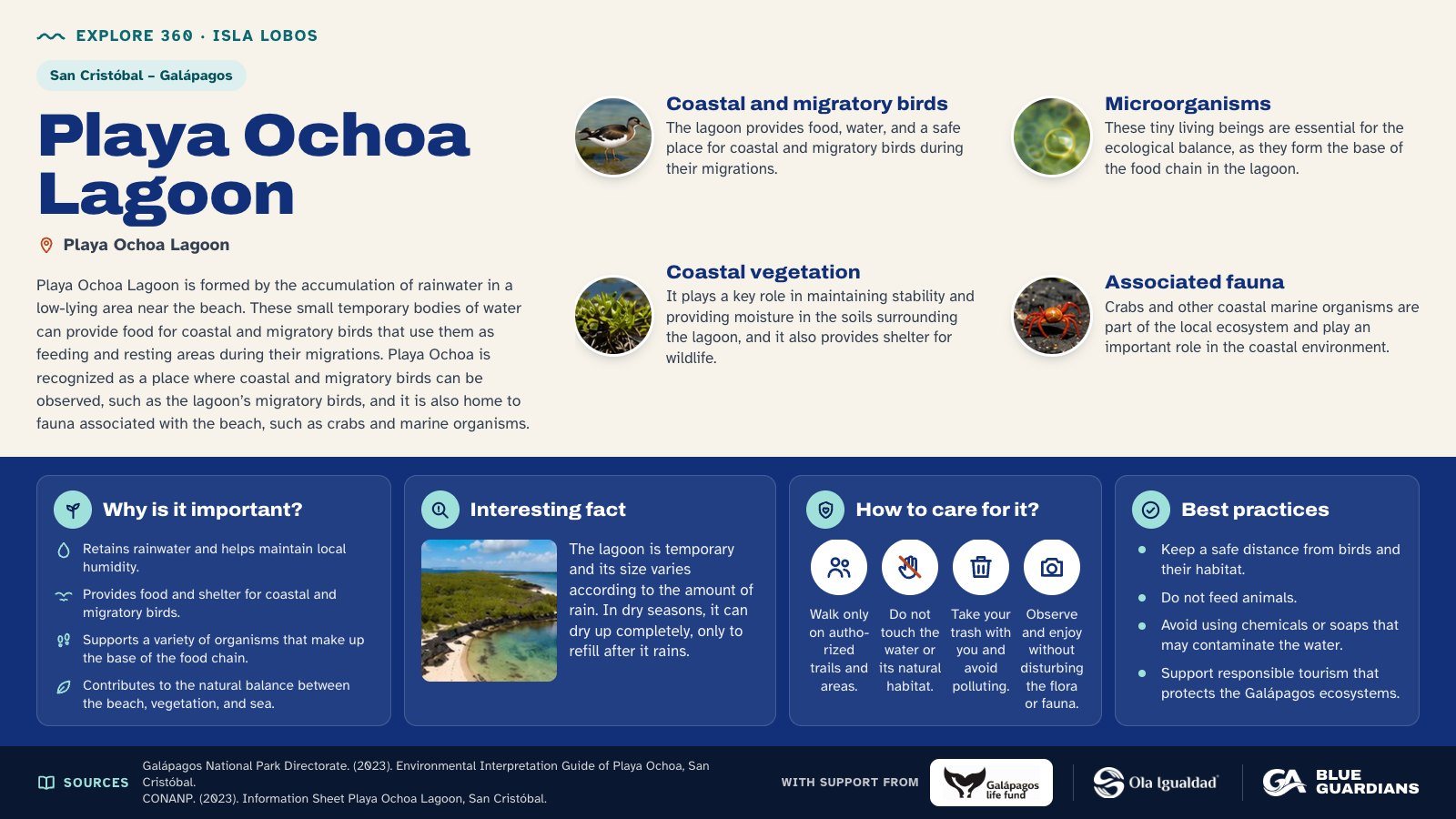
InfographicPlaya Ochoa lagoon

Infographic about Playa Ochoa Lagoon: coastal and migratory birds, microorganisms, coastal vegetation and associated fauna. Also covers: why is it important, interesting fact, how to care for it and best practices.

From here you can go to

Back to the list of scenes